

No Hot Water Anywhere? Check These 5 Things Before You Call for Service

Updated: Aug 31
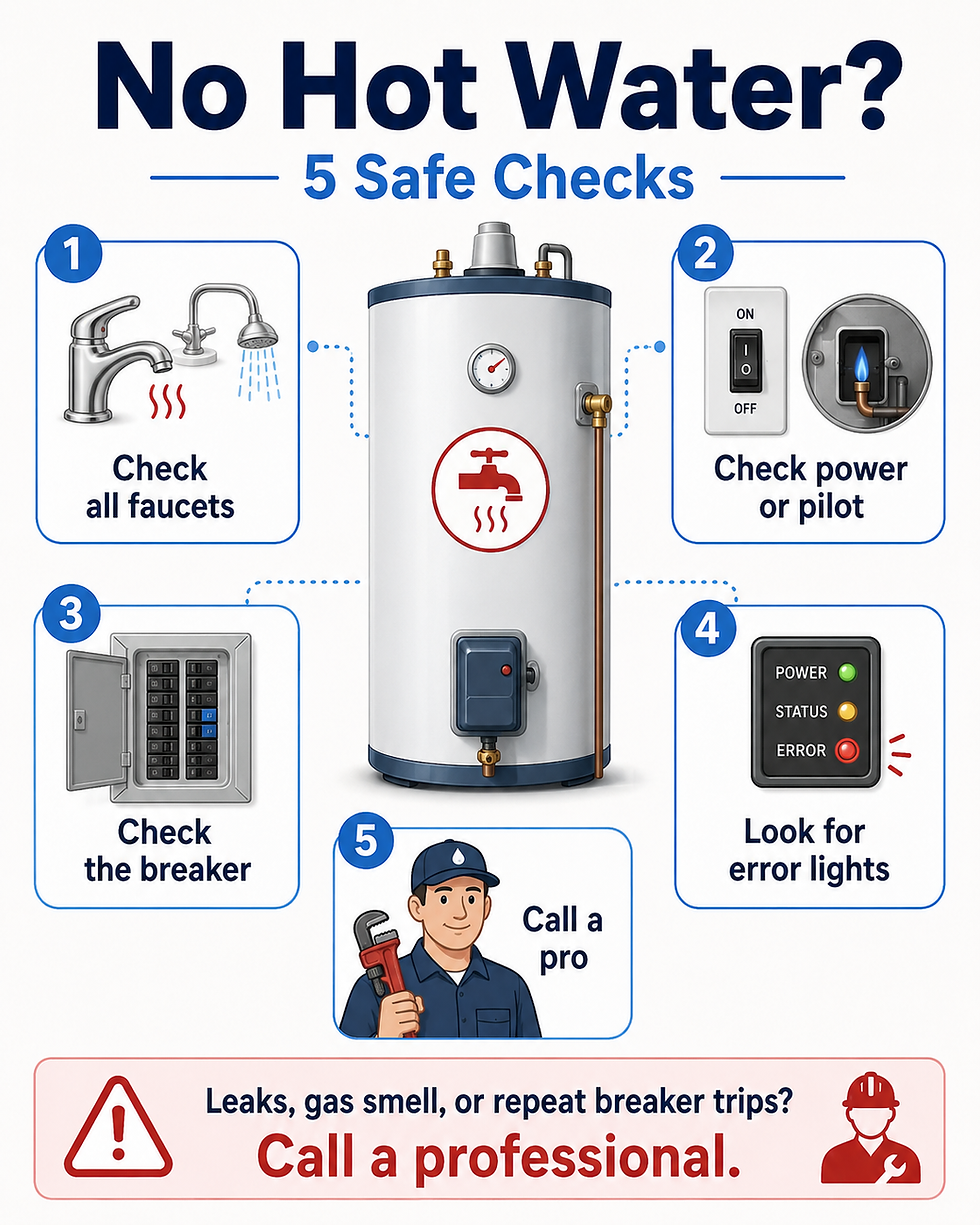
If you have no hot water anywhere in the house, the first likely causes are an interrupted energy supply, a water-heater control or ignition fault, or a failed heating component. First, check a second hot-water faucet so you know the problem is house-wide, then look at the heater from the outside for a normal status light, display, leak, unusual heat, or error message. If there is a gas odor, hissing, sparking, burning smell, active leaking onto electrical equipment, or a breaker that will not stay reset, stop here and get professional help.
What to do next depends on the heater type. Electric tank units can lose hot water after a tripped breaker or failed element. Gas units can lose heat after an ignition or control fault. Tankless and heat-pump models may display a fault code or shut down when a required operating condition is not met. The safe homeowner path is to identify the type, check only external controls and the normal energy supply, and use the unit-specific manual before attempting any reset.
1. Make sure this is a whole-house hot-water problem
Run hot water at two different fixtures. If one fixture is cold while another still gets hot, the water heater may not be the main problem; the affected faucet, shower valve, or local plumbing may need service. If every hot tap stays cold, continue with the water heater checks below.
2. If you have an electric tank water heater
Check the labeled water-heater breaker or disconnect only if the area is dry and there is no burning smell, visible damage, or water near electrical equipment. A.O. Smith troubleshooting guidance for electric units starts with confirming the disconnect is on and checking fuses or breakers. Bradford White service information also lists loss of power and failed heating elements among common no-hot-water causes.
If the breaker is tripped, a single reset may restore power after a one-time event. If it trips again, will not stay on, or the heater still produces no hot water, stop troubleshooting and call a qualified plumber or electrician. Do not remove the heater access panels, probe wiring, test voltage, or press internal high-limit controls unless the manufacturer specifically designs that control for homeowner access; manufacturer service documents warn of high-voltage exposure behind those panels.
3. If you have a gas water heater
Do not troubleshoot ignition if you smell gas or hear gas escaping. Leave the area, avoid switches, phones, flames, or anything that could create a spark until you are safely away, then call 911 and your gas utility. Utility gas-safety guidance from PG&E and Con Edison says to evacuate immediately and report a suspected leak from a safe location.
If there is no gas odor, you can safely observe the heater’s external status light or control display and compare it with the label or owner’s manual. Many gas water heaters use a status light or fault code to indicate whether the pilot or control system is operating normally. If the pilot will not stay lit, the control shows a fault, or the burner does not operate as the manual describes, arrange professional service rather than opening the combustion area or changing gas components.
4. If you have a tankless or heat-pump water heater
Start with the external display. Write down any error code before resetting anything. Confirm the unit has its normal power supply and that no obvious maintenance alert is displayed. Because tankless and heat-pump systems vary widely by model, use the manufacturer’s exact troubleshooting chart for that code. Do not open sealed panels, work on gas valves, refrigerant components, or internal high-voltage parts.
5. Could the heater simply be recovering?
If hot water was used heavily just before the problem started, a storage-tank heater may need time to recover. A.O. Smith notes that a newly energized standard electric tank can take at least about an hour to heat and recommends allowing longer before normal use. If the water never gets warm after a normal recovery period, treat that as a fault rather than repeatedly resetting the unit.
When to stop and call for service
Call a qualified professional if the breaker trips repeatedly, the heater leaks around electrical components, a gas pilot or burner will not operate normally, a fault code returns after the manufacturer-approved reset, the water remains cold after normal recovery, or you would need to remove a panel or test internal components to continue. If the tank itself is leaking, prompt service is especially important because a tank leak can worsen and cause water damage.
What the technician may find
Common professional diagnoses include a failed electric heating element or thermostat, an open high-limit safety device, a gas ignition or control problem, a failed sensor, or another internal fault. Those are not good DIY targets because diagnosis can involve live electrical testing, combustion equipment, or manufacturer-specific service procedures.
Official sources used
A.O. Smith electric water-heater troubleshooting and product documentation: https://www.hotwater.com/products/standard-electric-proline/pnt-30-100/100051510.html
A.O. Smith guidance on turning water heaters on and off: https://www.hotwater.com/info-center/how-to-turn-on-and-off-water-heater.html
Rheem water-heater service guidance: https://www.rheem.com/water-heating/articles/what-to-do-before-calling-a-plumber-or-replacing-your-water-heater/
Bradford White electric water-heater service manual: https://docs.bradfordwhite.com/Service_Manual/238-53684-00_Current.pdf
PG&E gas safety: https://pgealerts.alerts.pge.com/safety/gas/
Con Edison gas-leak guidance: https://www.coned.com/en/safety/energy-safety/gas-safety/gas-leak-faq
Related troubleshooting guides
If you also see water around the heater, see Water Heater Leaking? Do These Safe Checks First.
Browse more Water Heaters troubleshooting guides for related problems and safe checks.

Comments