

Peeling Paint in the Bathroom? Find the Moisture Before You Repaint

Peeling or blistered bathroom paint is usually a symptom, not the whole problem. Moisture may be reaching the coating from steamy air, a plumbing leak, failed caulk, or a damp surface that was painted too soon. Fixing the source first is what keeps a new coat from failing again.
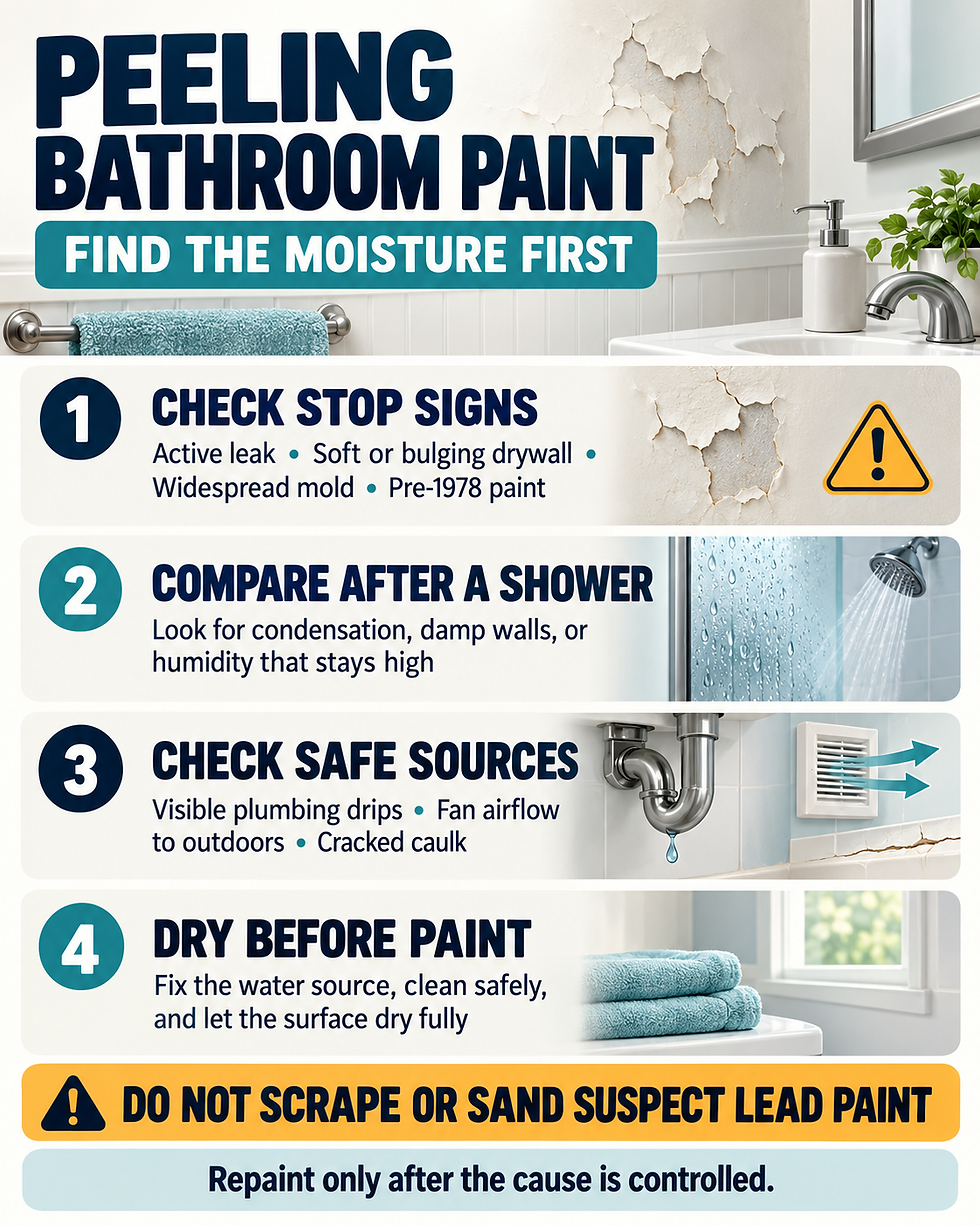
Stop before you scrape, sand, or repaint
Do not disturb the coating yet if the home was built before 1978 or you do not know the age of the paint. EPA warns that renovation or painting work in pre-1978 housing can create hazardous lead dust. A lead-safe certified contractor can evaluate the surface and use the correct work practices.
Also stop and call the appropriate professional if you find any of these conditions:
An active leak, dripping ceiling, or water returning after the room has dried.
Soft, swollen, bulging, sagging, or crumbling drywall or ceiling material.
Moisture at a light, exhaust fan, switch, outlet, or other electrical fixture.
Mold covering more than about 10 square feet, mold after contaminated water, or health symptoms around the area.
A recurring stain or peeling pattern that extends beyond the bathroom surface.
Keep panels and electrical fixtures closed. Do not mix cleaners, and do not paint over visible mold or a wet surface.
What the peeling pattern can tell you
It worsens after showers
If mirrors stay fogged, walls feel damp, or water beads on the ceiling after a shower, the room may be holding moisture longer than the paint system can tolerate. EPA recommends controlling moisture and using bathroom exhaust that sends damp air outdoors. A humidity gauge can help you compare the bathroom with a nearby dry room.
Without touching or removing the fan grille, note whether the fan starts normally, sounds unusually weak, and produces noticeable airflow at the dry grille. You can also time how long condensation remains after a typical shower. A room that stays damp well after use needs a ventilation or moisture-source check, not just another coat of paint.
The damage follows one wall, pipe, or fixture
A concentrated patch below a bathroom above, beside a shower valve wall, around a window, or under a supply line can point to a leak rather than general humidity. Look only for visible drips, fresh stains, cracked caulk, or a wet cabinet floor. Do not open walls, remove plumbing trim, or probe soft material.
The paint lifts in sheets but the wall stays dry
Dry peeling can indicate an adhesion problem: paint applied over a dirty, glossy, or damp surface; incompatible coatings; missing primer; or a coat exposed to moisture before it fully cured. Benjamin Moore notes that moisture, poor preparation, and painting a damp surface can cause blistering that later peels. The cause still needs to be identified before surface preparation begins.
The surface smells musty or shows spotting
Visible mold or a musty odor means the moisture problem comes first. EPA advises cleaning mold and fixing the water source before painting because paint applied over moldy surfaces is likely to peel. Hidden mold investigation can release spores, so avoid removing wallpaper, drywall, or other materials to search behind the surface.
A safe way to narrow the cause
Photograph the area and mark the date so you can see whether the boundary grows.
Compare the surface before and after a shower, then again after the room has had time to dry.
Check visible plumbing connections, caulk lines, and window edges for moisture without removing covers or trim.
Measure relative humidity in the bathroom and a nearby room at the same times. EPA generally recommends keeping indoor humidity below 60 percent, ideally around 30 to 50 percent.
Confirm that the bathroom fan exhausts outdoors through existing documentation or professional inspection. Do not enter an attic or open ductwork just to trace it.
If you rent, report the leak, damaged surface, and dates to the property owner or manager promptly.
When is the wall ready for paint?
Repainting is the last step. The leak or humidity problem should be controlled, visible mold should be handled safely, and the wall should remain dry through repeated bathroom use. Follow the coating manufacturer's instructions for cleaning, primer compatibility, application conditions, and drying time.
If lead paint is possible, do not start scraping or sanding based on a generic online tutorial. Use EPA lead-safe guidance or a certified contractor. If drywall is soft, the damage keeps spreading, or the source cannot be identified without opening a wall, arrange professional inspection before cosmetic work.
Related home checks
If steam lingers after showers, start with Bathroom Stays Humid After a Shower? Test the Fan Before Blaming the Weather.
For moisture affecting more than one room, use Indoor Humidity Too High? Measure It First, Then Find the Moisture Source.
For recurring condensation and surface mold, see Mold on Window Sills? Fix the Moisture Source Before It Comes Back.
Sources
U.S. EPA: Care for Your Air — Indoor Air Quality
Benjamin Moore: Paint Bubbling and Blistering


Comments