
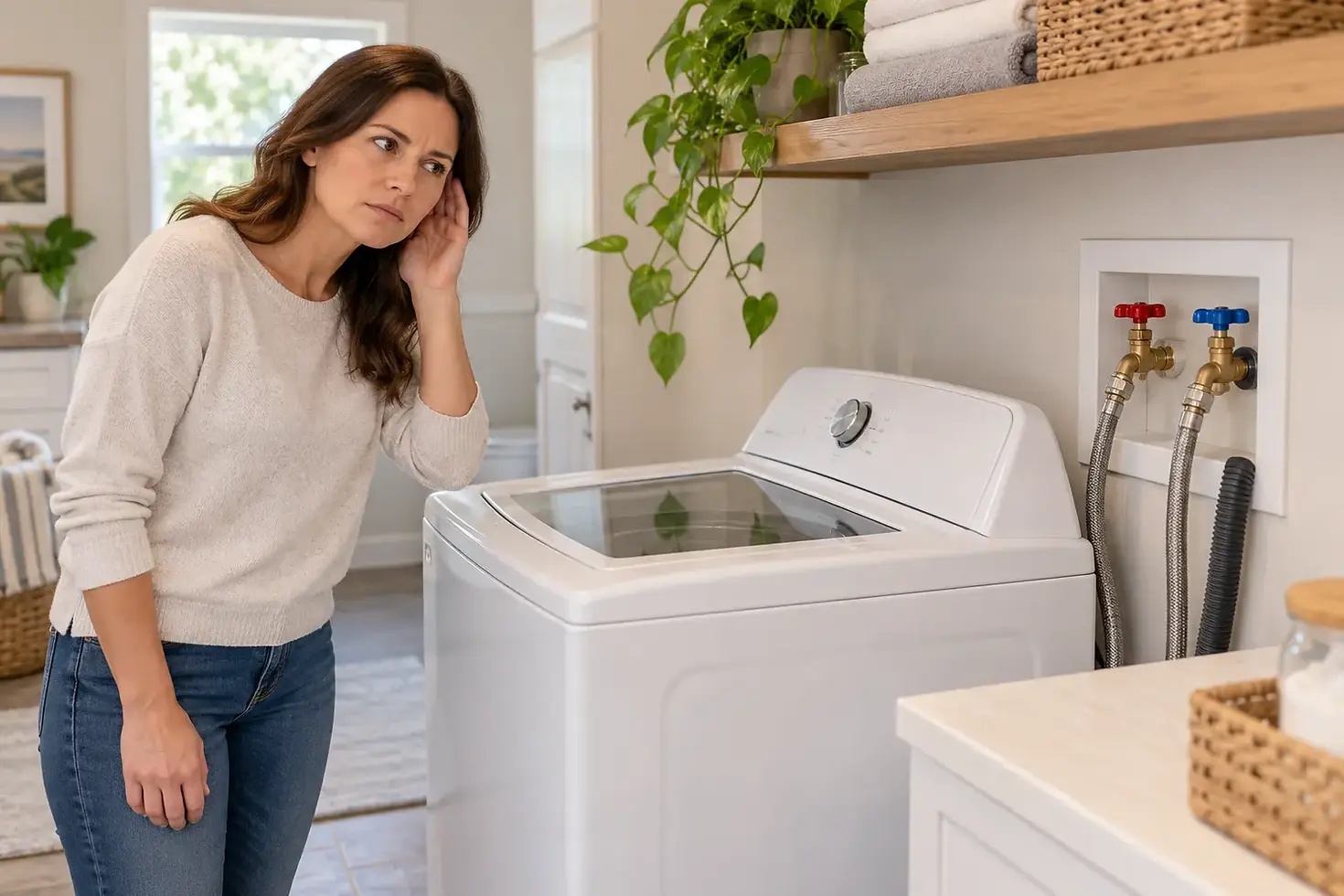
Pipes Bang When Water Turns Off? Trace the Trigger First

A single hard bang that happens exactly when a faucet closes, a toilet finishes filling, or a washer or dishwasher stops taking in water fits a common water-hammer pattern: moving water is stopped quickly and the pressure change makes piping or nearby supports react. The safest first step is to identify the trigger and timing—not to open a wall, adjust house pressure, or add hardware.
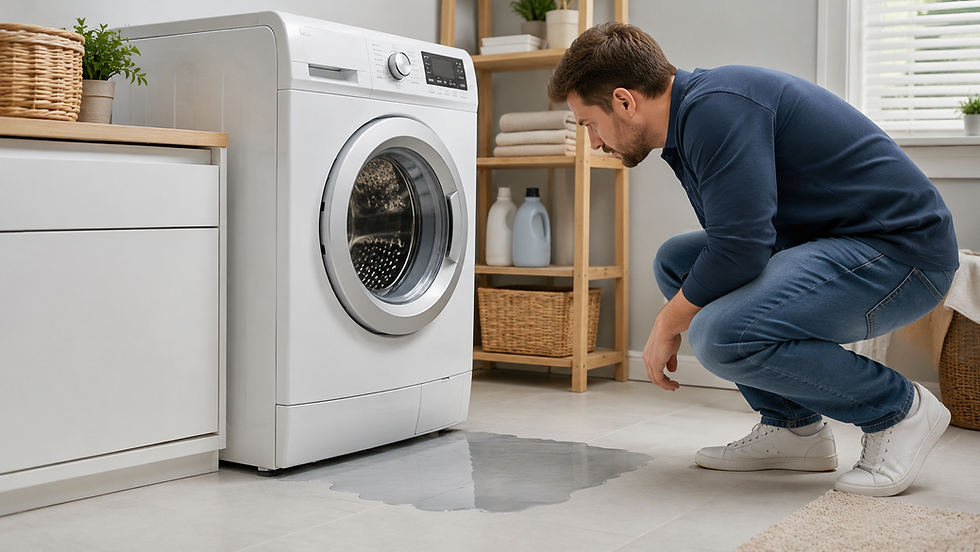
Stop and call a plumber now if you see an active leak, a cracked or bulging appliance hose, a valve or exposed pipe moving strongly, or repeated hard impacts that are getting worse. If water is near an outlet, cord, appliance connection, or service panel, stay clear of the wet area and do not touch electrical equipment. For uncontrolled flooding, use only a normal, safely accessible shutoff you already know how to operate; otherwise call emergency help.
What the timing tells you
Water hammer is a pattern, not a diagnosis you can confirm by sound alone. The most useful clue is the instant the noise happens.
One bang at shutoff: note whether it follows a faucet, toilet fill valve, washing-machine fill, dishwasher fill, or ice-maker cycle.
Several bangs or a rapid rattle: note whether the sound travels along a wall or ceiling and whether anything visible moves.
Noise while water is flowing rather than when it stops: this may point to a different flow, valve, or support issue.
Ticking that appears as hot water warms a pipe and fades later can have a different cause than a sharp shutoff bang.
Do not deliberately slam a faucet or repeat appliance cycles just to recreate a severe impact. Use normal operation and record what you already observe.

1. Find the fixture or appliance that triggers the bang
Start a simple note on your phone. Record the room, the fixture in use, whether the sound occurs when flow starts or stops, and whether it is one bang or a series. That history is more useful to a plumber than a guess about where the hidden pipe runs.
For a manual faucet, compare normal gentle closing with your usual closing motion during ordinary use. If the sharp sound happens only at the instant flow stops, that supports a water-hammer-style pattern. Do not force a handle, partly close the home’s main valve, or change a pressure regulator.
For a toilet, listen when the tank finishes refilling. For a washer or dishwasher, note whether the sound lines up with the machine’s brief fill stops. Appliance inlet valves can close quickly; both LG and GE identify this timing as a possible household-plumbing water-hammer clue rather than proof that the appliance itself is defective.
2. Watch only what is already visible
Stand where you can see accessible supply hoses, shutoff valves, and exposed pipe without reaching behind a running appliance. Watch for a hose tapping the wall, a valve shifting, moisture, corrosion, or a pipe moving at the same moment as the sound.
Keep appliance panels closed.
Do not reach behind a machine while it is operating.
Do not remove pipe straps, open drywall, or cut into cabinetry.
Do not tighten, loosen, or install an arrestor based only on a sound.
Do not test pressure at equipment you are not trained to service.
If a washer hose is leaking or damaged, stop using the machine and follow the safe shutoff guidance in our
washing machine leak guide. If the machine itself is moving rather than the pipe, use our washer vibration checklist to separate load and leveling symptoms from plumbing noise.
3. Check whether the symptom is local or house-wide
A bang tied to one fixture gives a plumber a narrower starting point. A similar bang at several fast-closing fixtures may suggest a broader pressure or piping-support question. Write down which fixtures do and do not trigger it. Also note whether anyone recently replaced a faucet, toilet fill valve, washer, dishwasher, or water-heating equipment.
If the issue is weak flow rather than a bang, use the one-faucet low-pressure guide instead. Low flow at one outlet and a pressure shock at shutoff are different symptoms, even though homeowners often describe both as “pressure problems.”
What a plumber may evaluate
A licensed plumber can measure static and flowing pressure with appropriate equipment, check whether an existing pressure-reducing valve is working as intended, identify inadequately supported piping, and determine whether a listed water-hammer arrestor is appropriate and where it belongs. Product selection and placement matter; an arrestor is not a universal cure for every pipe noise.
Oatey notes that quick-closing valves can create water hammer and reveal loose piping. Manufacturer guidance from Watts likewise describes arrestors as devices for sudden changes in flow velocity. Those points explain why accurate trigger timing matters, but they are not instructions to install or modify piping yourself.
When to stop troubleshooting
There is any leak, spray, damp wall, wet cabinet, or water near electrical equipment.
A braided hose is kinked, blistered, frayed, corroded, or striking hard enough to move its connection.
A visible valve or pipe jumps when the bang occurs.
The noise began after plumbing, appliance, or water-heater work.
The banging is frequent, severe, spreading to more fixtures, or accompanied by poor flow or discolored water.
You cannot identify the trigger without opening a wall, moving a heavy appliance, or altering plumbing.
A short recording made from a safe, dry location can help a plumber hear the pattern. Include the fixture used and the exact point in its cycle. Do not place a phone behind an operating appliance or near water.
Bottom line
When pipes bang as water turns off, the highest-value homeowner check is timing: which fixture stopped flow, what moved visibly, and whether there is any leak. A repeatable shutoff bang can fit water hammer, but the correction may involve pressure, pipe support, valve behavior, or a professionally selected arrestor. Keep the investigation external and observational, and call a plumber when the impact is strong, repeated, wet, or impossible to trace safely.
Official sources
LG USA Support: water-pipe banging during washer fill can be a household water-hammer symptom.
GE Appliances: dishwasher valve closure can trigger pipe rattle; GE recommends calling a plumber.
Oatey: quick-closing valves can create water hammer and expose loose pipes.
Comments