
Power Out in One Room but Breaker Isn’t Tripped? 5 Safe Checks Before You Call an Electrician

If one room is completely dead while the rest of the house still has power, the first safe possibilities to check are a breaker that has tripped into a middle position or a GFCI device that is protecting downstream outlets. First, note exactly which lights and outlets are out and turn off or unplug devices in the affected room. Then reset the affected breaker once—fully OFF, then ON—and reset only normal, dry, accessible GFCIs. If power does not return, the breaker trips again, or you notice heat, a burning odor, buzzing, sparking, moisture, or a shock/tingling sensation, stop and call a licensed electrician. Do not open outlets, switches, wiring boxes, or the electrical panel.
Quick Check: Do This in Order
Stop immediately for smoke, sparking, a burning smell, unusual heat, buzzing or crackling, electrical equipment exposed to moisture, or any shock or tingling. Keep clear and contact a qualified electrician; for an active fire, get out and use emergency services.
Map the outage from a safe distance: are all lights and outlets in the room dead, or is it only one outlet or one fixture?
Turn off or unplug devices in the affected room before touching a breaker handle.
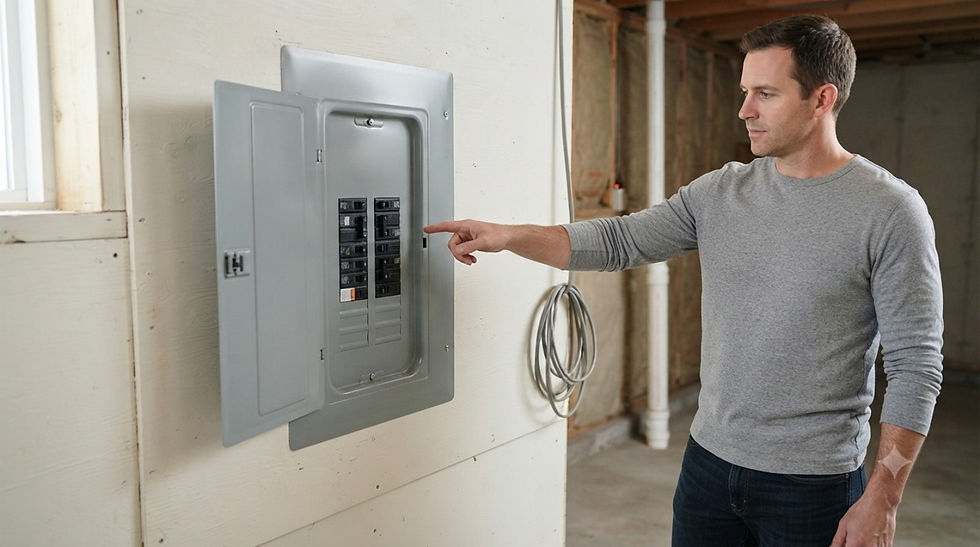
At the closed, intact breaker panel, look only at the breaker handles. A tripped breaker can sit between ON and OFF. Move the affected breaker fully OFF and then ON once.
Check normal, dry, accessible GFCI receptacles with TEST/RESET buttons that could be on the same circuit. Press RESET once. If it will not reset or power stays off, stop troubleshooting and call an electrician.

Why the Breaker Can Look On Even When the Room Has No Power
ESFI notes that a tripped circuit breaker may be in the OFF position or in a middle position between ON and OFF. That is why simply glancing at the panel can miss a trip. Their recommended reset sequence is to turn off or unplug appliances in the room, move the breaker fully OFF, and then move it back ON. If the problem continues, ESFI recommends an electrician rather than repeated resets.
A GFCI Somewhere Else Can Shut Off Downstream Outlets
A GFCI receptacle can protect more than its own face. Leviton’s official guidance shows that a GFCI can protect outlets wired downstream on the same circuit. So a tripped GFCI in another accessible location can explain why several receptacles lose power even when the breaker appears normal. Reset only a dry, undamaged GFCI you can reach normally; never open the device or wiring box.
If the Power Is Still Out After Those Checks
That is the point to stop homeowner troubleshooting. The fault may be inside a device, connection, or branch circuit, and determining which one requires electrical testing and access that should be handled by a qualified professional. CPSC’s home-wiring guidance is explicit that locating and repairing specific electrical defects is work for qualified electrical professionals.
Do Not Do These DIY Electrical Checks
Do not remove the service-panel cover or reach inside the panel.
Do not pull receptacles or switches out of electrical boxes.
Do not probe live outlet slots or exposed wiring with a meter, screwdriver, or improvised tester.
Do not bypass a GFCI, AFCI, breaker, or other protective device.
Do not keep resetting a breaker that trips again.
Choose the Next Guide by the Symptom
If only one outlet or a small outlet group is dead, use our Outlet Not Working but Breaker Isn’t Tripped guide. If the key symptom is a GFCI that will not reset, go to the GFCI Won’t Reset guide. If the breaker comes back on and then trips again, use the Circuit Breaker Keeps Tripping guide instead of resetting it repeatedly.
When to Call an Electrician Right Away
Call a licensed electrician without further DIY troubleshooting if the room remains dead after one breaker/GFCI check, the breaker will not stay on, a GFCI will not reset, the outage began after water exposure or physical damage, or you see or smell any warning sign such as heat, discoloration, burning odor, buzzing, sparking, smoke, or shock/tingling. These symptoms can indicate an electrical fire or shock hazard, and restoring power is less important than keeping the circuit undisturbed and safe.
Official Sources Used
Electrical Safety Foundation International — Understanding Your Home Electrical System
Leviton — GFCI Outlet Protection application note
U.S. Consumer Product Safety Commission — Home Wiring Hazards
U.S. Consumer Product Safety Commission — National Electrical Safety Month warning signs guidance


Comments