
Water Stain on the Ceiling? Check These 4 Clues Before You Paint It

Quick Check: what a ceiling stain usually means
A ceiling water stain means moisture reached the ceiling material. Common source categories include a roof/exterior leak, a plumbing leak above the stain, condensation, or an air-conditioning drain/pan problem. The first safe check is not to open the ceiling—it is to see whether the stain is actively growing or dripping, whether the ceiling is sagging, and what event makes it worse.
Growing, dripping, soft, or sagging: keep people clear of the area and arrange prompt professional evaluation. Do not poke, cut, or load a swollen ceiling.
Worse during or soon after rain: a roof/exterior water path moves higher on the suspect list.
Appears after plumbing use or below a bathroom/kitchen: stop using an obvious suspected fixture if that can be done safely, then have the leak located and repaired.
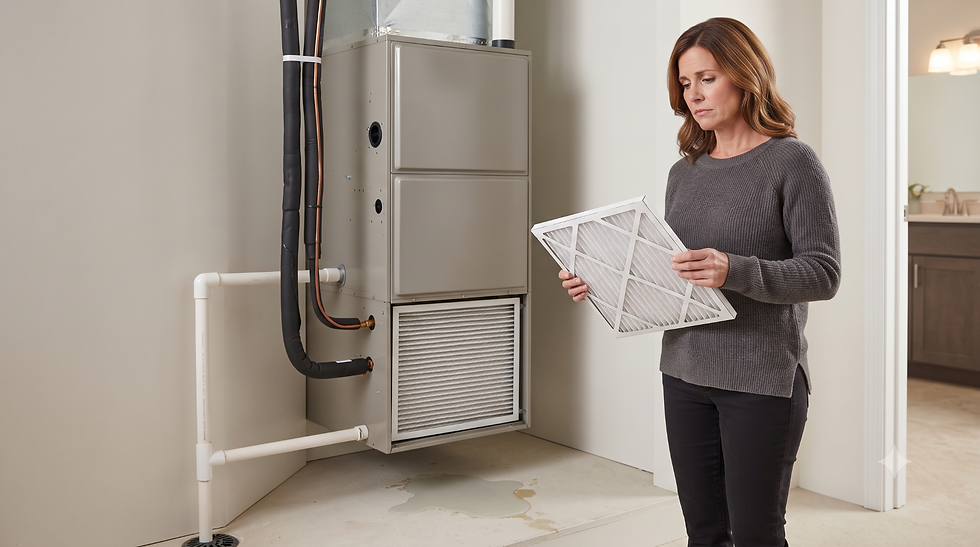
Appears mainly while cooling runs: check the Home Fixes HQ indoor AC water-leak guide; internal HVAC drain, electrical, or refrigerant work belongs to a qualified technician.
If water is on or immediately around a ceiling light, fan, smoke alarm, wiring device, or other electrical equipment, do not touch the wet fixture or wet electrical equipment. Water-damaged electrical equipment should be evaluated by a qualified electrician.

Clue 1: Does it change with rain?
A stain that darkens, spreads, or starts dripping during heavy rain strongly points you toward the roof or another exterior water path. GAF lists ceiling water damage, stains, and dripping during heavy rainfall among signs associated with roof leaks and roof-system damage.
Safe homeowner check: from the ground or another normally accessible dry area, note whether you can see missing roof material, damaged flashing areas, overflowing gutters, or a pattern that follows storms. Do not climb onto a wet, steep, damaged, or otherwise unsafe roof for diagnosis.
Clue 2: What is directly above the stain?
The space above the stain matters. EPA moisture guidance lists roof leaks, slow plumbing leaks, condensation, and HVAC-related moisture among common building moisture sources. A bathroom, kitchen, laundry area, mechanical space, attic, or roof directly above the mark changes which source is most plausible.
A practical test is to track timing rather than dismantle anything. If the mark becomes wet after a specific sink, shower, toilet, or other water-using fixture is used, stop using that suspected source until it can be checked. If the stain changes mainly while the cooling system runs, use the dedicated AC-leak troubleshooting path instead of opening HVAC equipment.
Clue 3: Is the ceiling sagging, bubbling, or actively dripping?
A sagging ceiling is not a cosmetic issue. GAF notes that sagging can accompany damaged roof sheathing, while EPA guidance warns that persistent moisture can contribute to material damage and mold growth. Keep the area below a visibly sagging or heavily water-loaded section clear and arrange professional evaluation rather than cutting into it.
If the ceiling is only stained and completely dry, the leak may be old—but do not assume the problem is solved. Confirm that the moisture source has actually been corrected before sealing or repainting the surface.
Clue 4: Is water close to electrical equipment?
Treat water near electrical equipment as a stop point for DIY diagnosis. ESFI states that water-damaged electrical equipment can present long-term shock and fire risks and recommends evaluation by qualified electricians. Do not remove a light fixture, open a ceiling box, touch wet switches or receptacles, or open an electrical panel to investigate a ceiling leak.
What to do next: a safe resolution path
1. Document the stain: take a photo, note its size, and record whether rain, plumbing use, or AC operation changes it.
2. Stop the obvious water source only when that is simple and safe—for example, stop using a suspected fixture. Do not improvise electrical, roof, structural, or internal HVAC repairs.
3. Match the specialist to the likely source: roofer for storm-linked roof symptoms, plumber for a fixture/pipe source, HVAC technician for cooling-system drainage, and electrician whenever electrical equipment has been wetted.
4. After the source is fixed, dry the damp area promptly. EPA advises drying wet or damp materials within 24–48 hours where practical to reduce mold growth.
5. Repair and repaint only after the material is dry and the moisture source is controlled. EPA specifically advises against painting over moldy surfaces.
When the stain can wait—and when it cannot
A small, dry, unchanged stain with a confirmed repaired source can usually move into the drying and cosmetic-repair phase. An actively growing stain, recurring wetness, sagging, significant ceiling damage, contaminated water, visible mold over a large area, or water contacting electrical equipment needs professional attention rather than a paint-first fix.
If repeated dampness has already caused visible bathroom mold, see Bathroom Mold Keeps Coming Back? Fix the Moisture First.
Browse more safe household troubleshooting in DIY & Home Tips.
Official sources used
U.S. EPA: Mold Course Chapter 1 — moisture sources
U.S. EPA: Ten Things You Should Know About Mold

Comments