
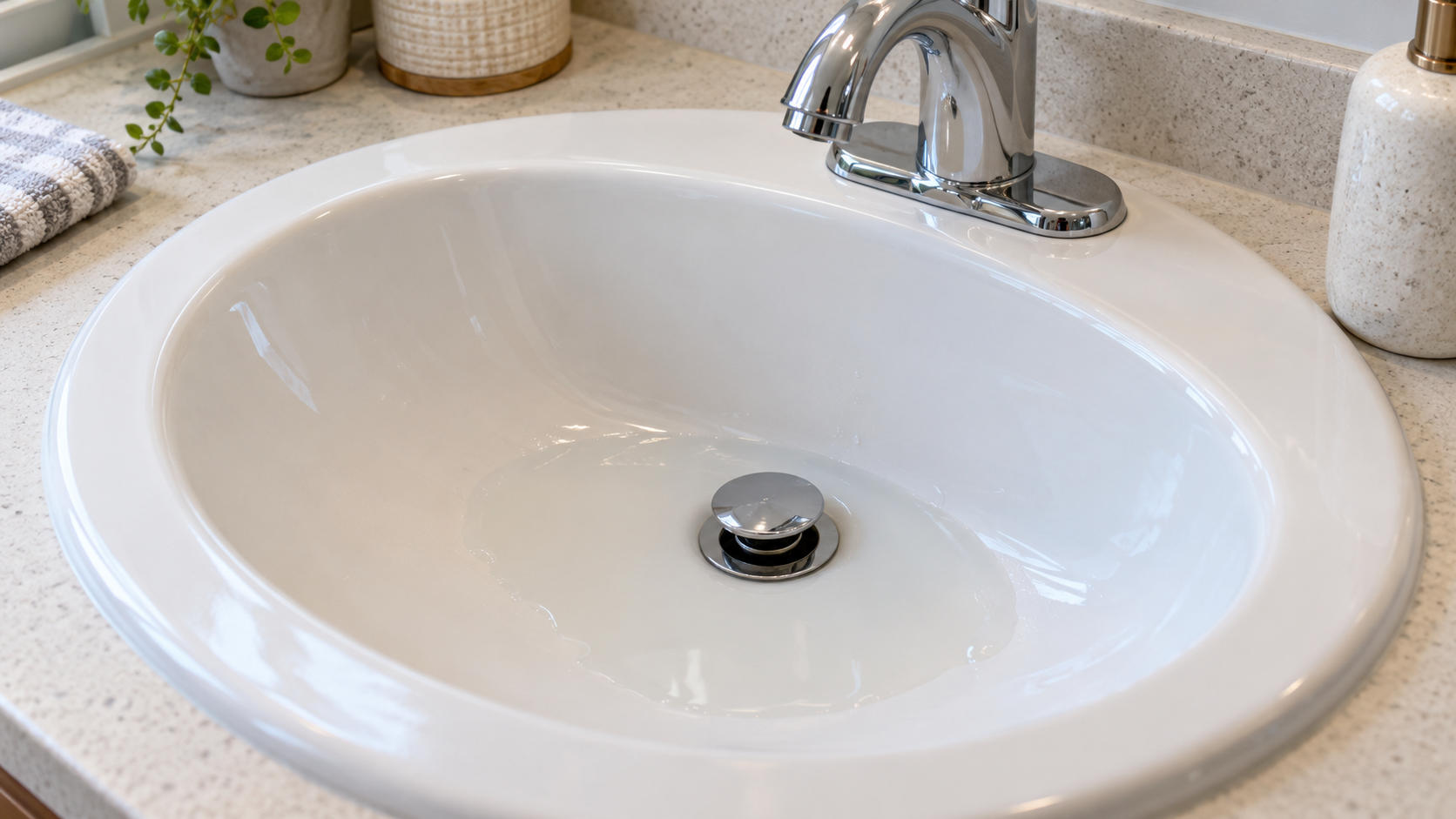
Bathroom Sink Draining Slowly? Check the Stopper Before the Pipe

When a bathroom sink drains slowly, check whether its stopper opens fully before assuming the pipe is clogged. Hair and residue around the stopper are another useful place to look. If the problem affects only this basin, start with normal stopper operation and cleaning parts the manufacturer identifies as removable by the owner.
Do not start a cleaning test if drain cleaner has already been used, water is leaking underneath, or other fixtures are backing up. Those conditions need a different response, explained below.
Find your starting point
Stopper barely rises: Check its normal open position. A movement problem can restrict the opening even without a pipe blockage.
Stopper opens, but this basin is slow: Look for reachable hair or residue; identify the removal method before pulling anything.
Another drain backs up or a toilet gurgles: Stop testing the sink and arrange professional advice.
Chemical drain opener already used: Keep hands and tools out. Do not plunge or add another cleaner.

Why the stopper deserves attention
The narrow space around a bathroom stopper can collect hair, toothpaste, and soap residue. Roto-Rooter describes these materials in its bathroom pop-up drain guidance. Finding that buildup explains why cleaning the basin alone may not improve drainage: the restriction can sit on the stopper below its visible cap.
A slow drain is an observation, not a diagnosis of a failed trap, blocked vent, or damaged sewer line. The checks here help separate an opening problem from a restriction that needs further investigation; they do not identify hidden plumbing faults.
Check movement without taking the drain apart
Operate the stopper using its normal control and watch whether the cap actually rises. On a traditional lift-rod assembly, lowering the rod normally opens the stopper. Pfister identifies insufficient stopper opening as one cause of slow drainage. Its adjustment instructions are product-specific, so do not apply a universal gap measurement or start changing linkage positions on an unfamiliar drain.
If the cap stays low, tilts, or drops shut again, make a note of that behavior. Do not hold it open with a screwdriver, pull against resistance, or loosen the drain body. A plumber or the fixture manufacturer can help identify the mechanism before an adjustment is attempted.
Identify the stopper before trying to remove it
A push-button stopper does not automatically mean a pull-out stopper. For example, Pfister Push & Seal uses an insert that unscrews for access. That is guidance for that design—not permission to twist every chrome drain cap. Confirm your model and its removal instructions first.
A lift-rod stopper may be retained by a pivot rod under the sink. If removal requires undoing that connection, this guide stops there. Leave the assembly intact rather than turning a simple inspection into a potential leak.
A stuck stopper is not always just dirty. Moen notes that a rusted pivot-rod end can make a pop-up stopper stick. A cap that resists normal movement deserves identification or repair, not increasing force. Take a photo of the stopper and its control for manufacturer support.
Clean only the accessible parts, then make one brief comparison
Turn the faucet off and allow standing water to drain. If it does not clear, do not reach into it or continue filling the basin. With no chemical cleaner present, wear household cleaning gloves and remove only a stopper or insert that your exact instructions allow you to remove from above.
Remove visible hair and wipe residue from the removed piece with a cloth, following the finish-care instructions for the fixture. Put collected debris in the trash instead of washing it back into the opening. Keep work on the removable piece and visible rim; do not push an improvised hook or powered cable down the pipe.
Reinstall the piece as directed, operate it to the open position, and run a brief, modest flow of water. Keep the flow comparable to the original observation. Stop promptly if the level rises or you notice a leak; a basin filled to the rim is not needed for this comparison.
Drainage improves: The accessible buildup was likely contributing. Watch whether the improvement lasts during ordinary use.
Only a different stopper position helps: The opening or mechanism still deserves attention; do not keep propping it up.
It stays slow or soon slows again: Surface cleaning has not resolved the cause. Arrange a drain inspection rather than guessing where a deeper restriction is located.
When the problem is bigger than this sink
Multiple backups, water appearing in another fixture, or gurgling associated with a slowdown are reasons to stop adding water. The City of Roseville lists these as sewer-backup warning signs and advises stopping water use during a backup. Keep people and pets away from wastewater.
Contact a qualified plumber or follow your own wastewater utility’s reporting procedure; which service should be called first varies locally. If the slowdown began immediately after a new sink or drain was installed, contact the installer before attempting to modify it. Report any dripping or damp cabinet surfaces as well.
Already poured in drain cleaner? Stop the mechanical checks
Do not reach into the drain, remove its stopper, plunge, or add another product while chemical residue may remain. Drano’s Hair Buster Gel precautions explicitly prohibit plunging during or after use because product may still be trapped in an uncleared drain. They also warn against mixing it with other cleaners.
Follow the product label and tell the plumber exactly what was used and when. This guide does not recommend chemical mixtures or repeated drain-opener treatments as a way to diagnose an unknown blockage.
Choose a different guide when the symptom changes
If the sink drains normally but an odor remains, the bathroom sewer-smell guide follows a different path. If pooling is actually in the shower, use the slow shower-drain guide instead. For other fixture problems, browse the Plumbing troubleshooting library.


Comments