

Shower Draining Slowly? Check the Hair Catcher First

A shower that drains slowly usually has a local restriction at or just below the accessible strainer. Hair catches soap residue, the opening narrows, and water begins to pool around your feet. Start at the surface—not with a bottle of drain cleaner or a tool pushed deep into the pipe.
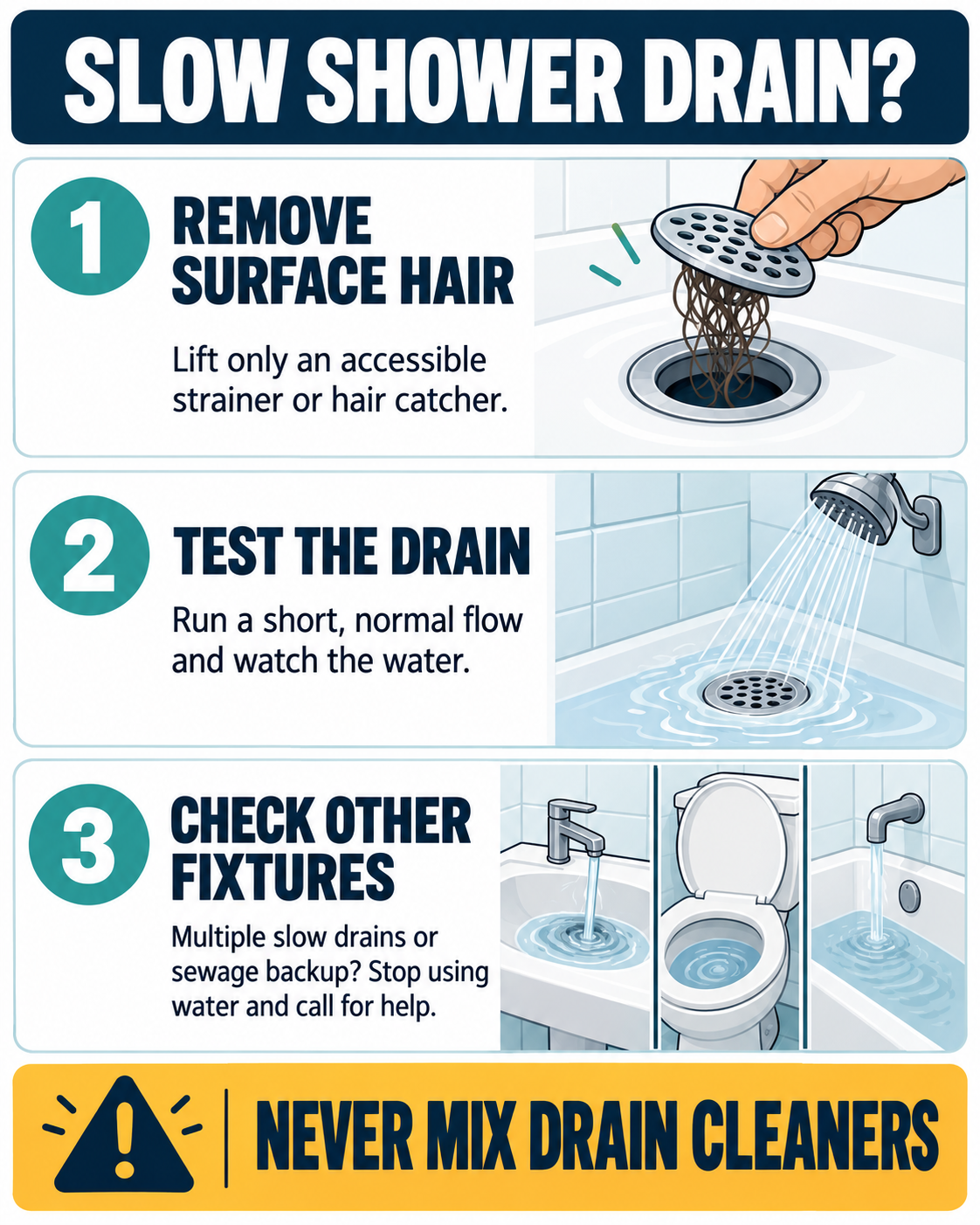
If several fixtures are slow, a toilet gurgles when the shower runs, or wastewater rises from a lower drain, stop using water. Those signs point beyond a simple shower-hair buildup and can turn a small backup into a contaminated overflow.
Stop and call for help first if…
Wastewater or sewage is rising through the shower, tub, floor drain, or toilet.
More than one fixture is slow, fixtures gurgle, or water moves in another drain when the shower runs.
The drain cover is screwed down, sealed, corroded in place, or would require force or internal disassembly.
You already poured a drain cleaner into the drain. Do not add another product, plunge the drain, or reach into the water where chemicals may splash.
The shower is above a finished ceiling and you see staining, dripping, a soft spot, or another sign of a leak. Stop using the shower and arrange a plumbing inspection.
For sewage or widespread backup, keep people and pets away from the water. A licensed plumber or drain professional can determine whether the restriction is in the fixture branch, the building sewer, or a public main. Your local wastewater utility may also have a call-first policy for suspected main-line problems.
First, decide whether the problem is local
When only one shower drains slowly and nearby sinks and toilets behave normally, the restriction is more likely to be local to that shower. When several drains slow at the same time, the pattern matters more than the shower itself. Municipal sewer guidance commonly treats multiple slow fixtures, gurgling, or water entering a lower drain as warning signs of a service-line or main-line problem.
Do not keep running water to prove the point. A short, normal-flow observation is enough. If water begins to rise quickly or another fixture reacts, stop.
1. Let standing water clear
Wait until pooled water has drained. Put on household cleaning gloves and move bottles, bath mats, and electrical grooming devices away from the work area. If water will not clear at all, skip the surface test and call a plumber; reaching through unknown water is not a useful next step.
2. Remove only accessible surface hair
Look for a loose hair catcher or a strainer that lifts out by hand. Remove visible hair and soap residue only from that accessible piece and the top of the drain opening. A paper towel or disposable cloth gives better control than a sharp pick.
Stop if the cover is fastened, sealed, or resistant. Drain assemblies vary, and forcing a cover can damage a finish, disturb a seal, or create a leak. If the manufacturer’s instructions for your exact model describe routine removal, follow those instructions; otherwise leave the assembly in place.
3. Clean the catcher—not the pipe
Wash a removable hair catcher in a sink or utility basin with warm water and a small amount of mild dish soap, then rinse it. Avoid abrasive pads and harsh or caustic cleaners on shower surfaces and trim. Manufacturers set different care limits for finishes, so the product label or model-specific care guide takes priority.
Do not push a wire, screwdriver, improvised hook, or powered snake into the drain. Blind probing can scratch the drain, lodge material deeper, or damage a trap or connection. This guide intentionally stops at accessible surface cleaning.
4. Reinstall and run a short test
Put the clean catcher or lift-out strainer back in its original position. Run the shower at its usual flow for a brief test and watch the water around the drain. You are looking for direction, not a perfect stopwatch result: does pooling shrink, stay the same, or rise faster?
How to read the result
Flow improves: surface hair and soap residue were probably the main restriction. Keep the catcher in place and clean it before buildup becomes compacted.
Only this shower is still slow: a deeper local restriction or a drain-assembly problem is more likely. A plumber or drain professional is the safer next step.
Several fixtures are slow, a toilet gurgles, or wastewater appears: stop using water and call for professional or utility guidance.
Water appears outside the shower or below it: stop using the fixture and arrange a leak inspection rather than continuing drain tests.
Never mix drain cleaners
Do not combine drain cleaner with bleach, toilet-bowl cleaner, vinegar, ammonia, or a second drain product. Household chemicals can react, release irritating or toxic gases, create heat, or cause chemical burns. More product does not make an unknown blockage safer.
If a chemical is already in the drain, keep your face and hands away from the opening, ventilate the room if you can do so without exposure, and follow the product label. Do not plunge or insert a tool, because trapped liquid can splash. For an exposure or suspected poisoning in the United States, contact Poison Control for case-specific guidance; call emergency services for trouble breathing, collapse, or another immediate emergency.
When a plumber is the right next step
Call a licensed plumber or qualified drain professional when surface cleaning does not improve a single slow shower, the stopper or strainer cannot be removed as routine maintenance, the drain repeatedly slows again, or you suspect a leak. Tell the professional whether any chemical product has been used and what it was; that information helps them plan safer work.
For multiple affected fixtures, ask whether your local sewer utility wants residents to call before hiring a private contractor. Responsibility for a blockage varies by location and by whether the problem is in the home’s plumbing, the private service line, or the public main.
Prevent the next slow shower drain
Use a hair catcher that fits without blocking normal flow.
Lift and clean the catcher regularly instead of waiting for standing water.
Keep hair, wipes, cotton swabs, floss, and packaging out of the drain.
Notice changes in more than one fixture; the pattern is often the earliest useful clue.
A safe first response to a slow shower drain is deliberately small: check the whole-home pattern, remove only accessible surface buildup, and test briefly. If the result points deeper—or the warning signs point wider—stop before a minor restriction becomes a messy backup.
Related Home Fixes HQ guides
If the shower stream is weak rather than the drain being slow, use our shower-pressure troubleshooting guide.
If the main symptom is odor, start with the bathroom drain-trap guide.
For a kitchen-only problem, follow the slow kitchen sink safety checks.


Comments