
Dishwasher Not Draining? Follow the Drain Path

Updated: Sep 24
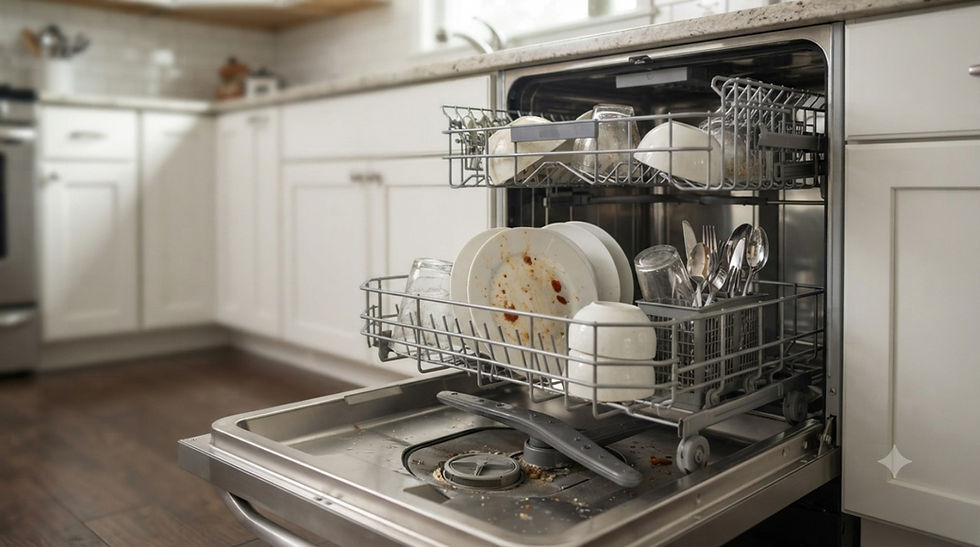
Water left in the dishwasher after the cycle means the drain stage deserves attention. Start with the parts of the drain path you can see and safely clean before assuming the drain pump has failed.
Some models retain a small amount of clean water in the sump or filter area, so compare what you see with the owner’s manual before treating every puddle as a fault.
Check the accessible filter and tub area
First safe check: After the dishwasher has cooled, remove and clean the filter only if the manual identifies it as user maintenance. Clear visible food debris from the tub without reaching into hidden pump openings.
What the result means: A clogged accessible filter can slow or stop drainage. If the filter is clear, the external drain path becomes the next useful clue.
Trace the visible drain path
First safe check: Inspect the accessible drain hose for kinks and check a sink air gap or disposer connection if your installation uses one. Never pour chemical drain cleaner into the dishwasher.
What the result means: A blocked air gap, disposer connection, or household drain can make the dishwasher look faulty even when the pump is trying to drain.
Know when the blockage is no longer external
First safe check: If the filter and visible external path are clear but excessive water remains after repeated cycles, stop there rather than removing the toe kick or pump cover.
What the result means: A clear external path plus persistent standing water shifts the diagnosis toward an internal pump, check valve, control, or wiring issue that needs service.
Compare the tub with the sink drain
Note whether excess water remains in the tub after a completed cycle, whether the sink is also draining slowly, and whether your installation has a visible air gap or disposer connection. A small amount of water in the filter area may be normal for some models; compare it with the owner's manual. A household drain backup and a dishwasher-only drain failure call for different service paths. If the accessible filter and visible external path are clear, describe the remaining water and any error code to service instead of running repeated cycles or opening the pump.
Where this fits in the dishwasher cycle
Return to Dishwasher Troubleshooting: Find the Stage Where the Cycle Fails if the symptom changes or you are not sure which cycle stage is actually failing.
When to stop and call for service
Water is near the cord, receptacle, or electrical area.
Clearing the drain would require removing the toe kick or accessing the internal pump.
The sink or household drain is backing up and needs plumbing service.
The accessible filter and external drain path are clear but the dishwasher still leaves excessive water.


Comments