

Dishwasher Troubleshooting: Find the Stage Where the Cycle Fails

A dishwasher is easiest to troubleshoot when you identify the stage where the normal cycle stops working. Instead of guessing at a pump, valve, heater, or control board, ask a simpler question first: did it start, did it fill, did it actually wash, did it drain, and did it dry?
This cycle-stage approach keeps the early checks external and low-risk. Model-specific floats, filters, error codes, drying systems, drain layouts, and reset procedures vary, so use the owner’s manual whenever a step depends on your exact dishwasher.
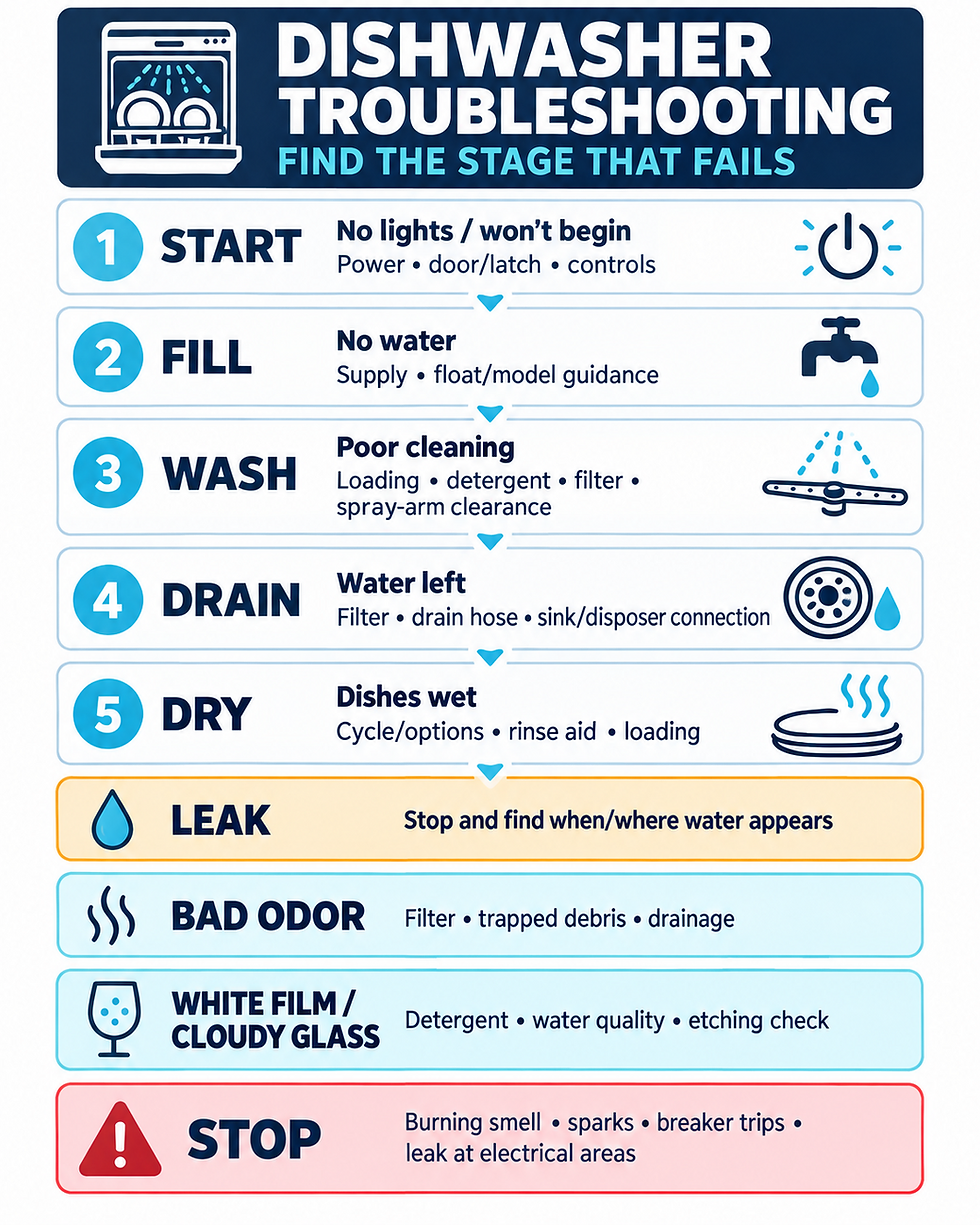
Quick cycle-stage map
Won’t start: power, door/latch, lock settings, cycle controls.
Starts but no water enters: water supply and model-specific fill/float guidance.
Fills but dishes stay dirty: loading, detergent, filter, spray-arm clearance, cycle choice.
Spray arms do not seem to move: check loading obstructions and accessible spray-arm/filter conditions.
Water remains after the cycle: filter, drain hose, air gap/sink/disposer connection.
Dishes are clean but wet: drying cycle/options, rinse aid, unloading/loading clues.
Water leaks out: stop and note when and where the leak begins.
White film/cloudy glasses: separate removable film from permanent etching and review detergent/water conditions.
1. The dishwasher will not start
First safe check: confirm the dishwasher has power, the door closes and latches normally, a Control/Child Lock is not active, and the cycle has actually been selected and started according to the model instructions.
What the result means: no lights or response is a power branch. Lights and controls with no cycle start point more toward door/latch, control settings, or a displayed error rather than a fill problem.
Do not remove the toe kick, open wiring compartments, bypass the door switch, or repeatedly reset a breaker that trips again.
Next guide: Dishwasher Won’t Start.
2. It starts, but no water enters
Likely direction: water supply, a closed shutoff, a visible hose problem, a model-specific flood float, or a drain condition that prevents a new fill on some models.
First safe check: make sure the dishwasher water supply is on if the shutoff is safely accessible, look for a visibly kinked supply line, and check the owner’s manual for any user-accessible float or error-code guidance.
What the result means: a machine that powers up and runs controls but never receives water has moved past the start branch. Do not assume the inlet valve is bad without model-specific diagnosis.
Next guide: Dishwasher Not Filling With Water.
3. It fills, but dishes are still dirty
Likely direction: loading that blocks water, a poor cycle/detergent match, food debris in the accessible filter, blocked spray-arm openings, or a wash-circulation problem that needs service.
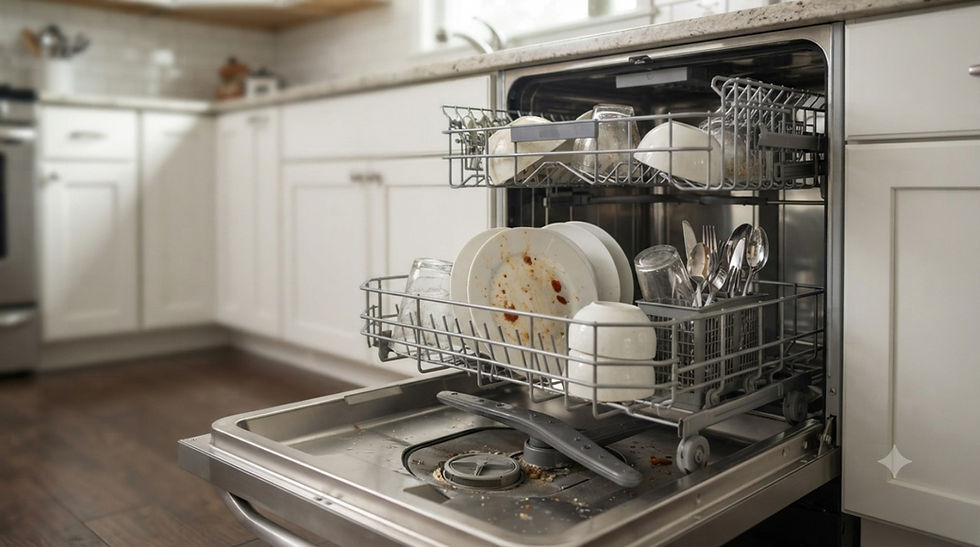
First safe check: make sure dishes are not nested or blocking the spray arms, scrape large food debris, use dishwasher detergent intended for the machine, and clean only filters/spray arms the manual identifies as user-maintenance items.
What the result means: if cleaning improves after correcting loading or accessible maintenance, the problem was likely water reach or wash conditions. If the machine fills but there is little wash action even with clear spray arms, service may be needed.
Next guide: Dishwasher Not Cleaning Dishes.
4. The spray arms do not appear to move
First safe check: with the dishwasher off and cool, check whether a tall pan, utensil, or rack item physically blocks an arm. Follow the manual for accessible spray-arm cleaning only.
What the result means: a loading obstruction is different from an internal circulation failure. Do not open the pump or internal motor area to test it.
Next guide: Dishwasher Spray Arms Not Spinning.
5. Water is left in the bottom after the cycle
A small amount of clean water in a sump/filter area can be normal on some models, so compare what you see with the manual. Excess water covering the tub bottom or an error code belongs on the drain branch.
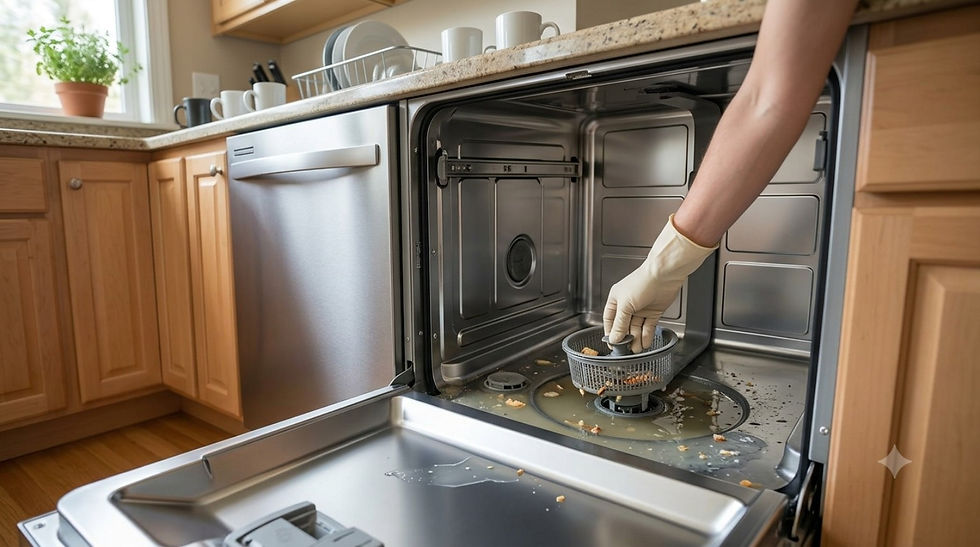
First safe check: after the machine has cooled, clean the accessible filter if your manual calls for it, inspect the visible drain hose for kinks, and check an external sink air gap or disposer connection when applicable. Never pour drain cleaner into the dishwasher.
What the result means: a filter or installation-path obstruction can prevent draining. If the external path is clear and the dishwasher still leaves excessive water, internal pump or wiring diagnosis should be left to service.
Next guide: Dishwasher Not Draining.
6. The dishes are clean but still wet
Likely direction: cycle selection, rinse aid, how items are loaded, plastic items that retain droplets, or the dishwasher’s model-specific drying system.
First safe check: review the selected drying option, rinse-aid guidance, and loading instructions. Check the manual before assuming a heater failure because drying technology differs by model.
Next guide: Dishwasher Not Drying Dishes.
7. Water leaks out
First safe check: stop the cycle if water is spreading and note whether the leak appears during fill, wash, or drain. Check for an obvious item preventing the door from closing and for excessive suds. Keep water away from electrical areas.
What the result means: timing helps separate a door/suds issue from a drain or supply-related leak. Water coming from beneath the machine after visible external checks are dry is a service condition, not a reason to remove panels.
Next guide: Dishwasher Leaking Water.
8. Odor or residue remains after the cycle
Bad odor: check the accessible filter, trapped food, standing water, and whether the dishwasher is actually draining. Use Dishwasher Smells Bad.
White film or cloudy glasses: determine whether the deposit wipes away or appears permanently etched, then review detergent, rinse aid, and water conditions. Use Dishwasher White Residue or Cloudy Glasses.
Stop troubleshooting and arrange qualified service when
You smell burning, see sparking or smoke, or a breaker/GFCI repeatedly trips.
A leak reaches the dishwasher’s electrical area, cord, receptacle, or nearby wiring.
The task requires removing the toe kick, opening the door/control console, testing energized wiring, or bypassing a latch or safety device.
The dishwasher fills but has little or no wash action after loading and accessible maintenance checks.
Excess water remains after the accessible drain path is clear, or a persistent model-specific error returns.
Why the cycle-stage method works
Official dishwasher support from GE Appliances, LG, and Whirlpool separates the same practical stages: starting, filling, washing performance, drainage, and model-specific drying behavior. The exact parts and procedures differ, but observing which stage succeeds and which stage fails gives you a safer and more useful next step than guessing at an internal component.
Official sources used for this decision path
https://www.geappliances.com/ge/service-and-support/dishwashers.htm
https://products.geappliances.com/appliance/gea-support-search-content?contentId=17392
https://products.geappliances.com/appliance/gea-support-search-content?contentId=16240
https://www.lg.com/us/support/help-library/lg-dishwasher-guide-to-error-codes--20154823515108
Browse all Dishwasher troubleshooting guides if your symptom does not match a branch above.

Comments