

Dishwasher Not Filling With Water? Check the Supply Before the Valve

Updated: Sep 24
When a dishwasher powers on and begins a cycle but no water enters, the safest checks start with the household supply and visible inlet path. An internal inlet-valve diagnosis should come later, not first.
Also confirm that the machine has actually moved past the start stage, because a door/latch or control condition can prevent filling entirely.
Confirm water is available to the dishwasher
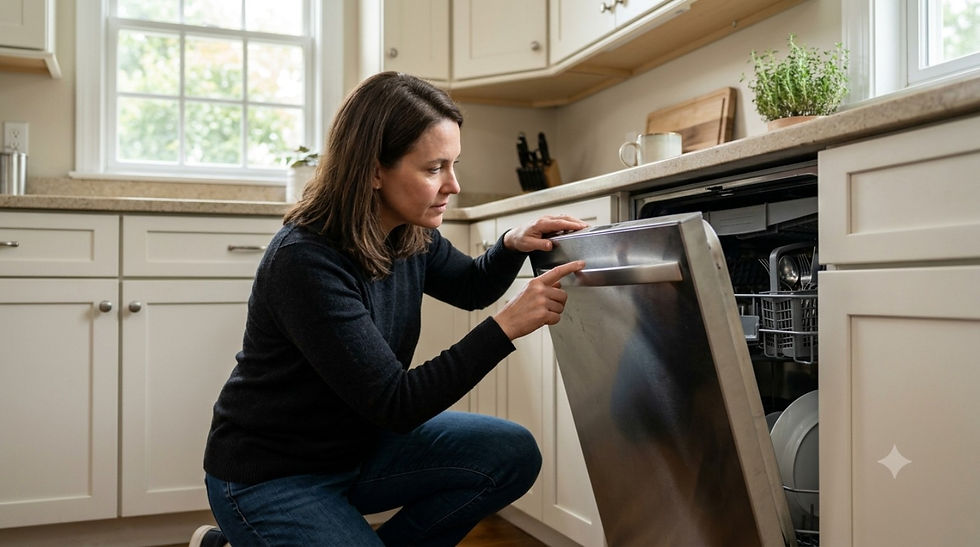
First safe check: If the dishwasher shutoff valve is safely accessible, make sure it is open and that nearby fixtures have normal water flow. Do not loosen pressurized fittings to test them.
What the result means: No water elsewhere or a closed supply points outside the dishwasher. Normal household flow moves the diagnosis toward the visible inlet path and machine conditions.
Inspect the visible supply line
First safe check: Look for a sharply kinked or crushed line where it is accessible without pulling the dishwasher out. Follow only the model’s user instructions for any accessible screen or float check.
What the result means: A visible restriction can explain slow or absent fill. If the line looks normal, do not remove the toe kick to reach the valve or wiring.
Check whether the machine is allowed to fill
First safe check: Confirm the door is latched, no Control Lock is active, and note any error code. Some models use a user-visible float or leak-protection condition; follow the manual for that exact design.
What the result means: If the dishwasher starts normally but still never fills after supply and model-approved checks, the next step is service rather than internal valve testing.
Pinpoint when filling fails
Before assuming an inlet-valve fault, note whether the control panel accepts Start, the door remains latched, and the machine advances beyond any initial drain or sensing stage described in its manual. Record the exact displayed code, if any, and whether a nearby tap has normal flow. A machine that never starts belongs on the start branch; a running cycle that repeatedly reaches the fill stage without water belongs on the supply/fill branch. Avoid repeated trial cycles if a leak-protection message appears or water is collecting nearby.
Where this fits in the dishwasher cycle
Return to Dishwasher Troubleshooting: Find the Stage Where the Cycle Fails if the symptom changes or you are not sure which cycle stage is actually failing.
When to stop and call for service
The supply connection is leaking or cannot be isolated safely.
The dishwasher displays a persistent fill or leak-protection error.
The next check requires removing the toe kick or testing an energized inlet valve.
The household supply is normal but the dishwasher never fills on an appropriate cycle.

Comments