
Dishwasher Spray Arms Not Spinning? Check These 5 Things Before You Call for Service

Updated: Sep 3
Quick answer: If your dishwasher spray arms are not spinning, start with the simplest causes first: a dish or utensil blocking the arm, dirt or mineral buildup in the spray openings, or visible damage to the arm. Before starting a cycle, gently spin the accessible spray arms by hand. If an arm hits anything or does not move freely, reload the rack and check the arm for visible debris or damage. If the arms still do not work after these external checks, stop there and arrange qualified appliance service rather than opening the pump, motor, wiring, or other internal parts.
At a Glance: the safest diagnostic order
1. With the dishwasher off and before starting a cycle, gently spin the accessible spray arms by hand. 2. Move tall pans, utensils, or rack items that interfere with rotation. 3. Inspect the spray-arm openings for visible dirt or deposits and clean only as your model manual allows. 4. Look for cracks, missing pieces, or an arm that will not seat correctly. 5. If the problem remains, use the manufacturer service route or a qualified appliance technician.

1. First, make sure nothing is physically blocking the spray arm
Whirlpool tells owners to spin the middle spray arm by hand before starting a cycle and rearrange dishes if there is resistance. Its loading guidance also warns that large cookware can obstruct spray-arm movement. Bosch likewise lists a blocked spray path—such as a pan handle—as a direct reason a spray arm may not spin properly.
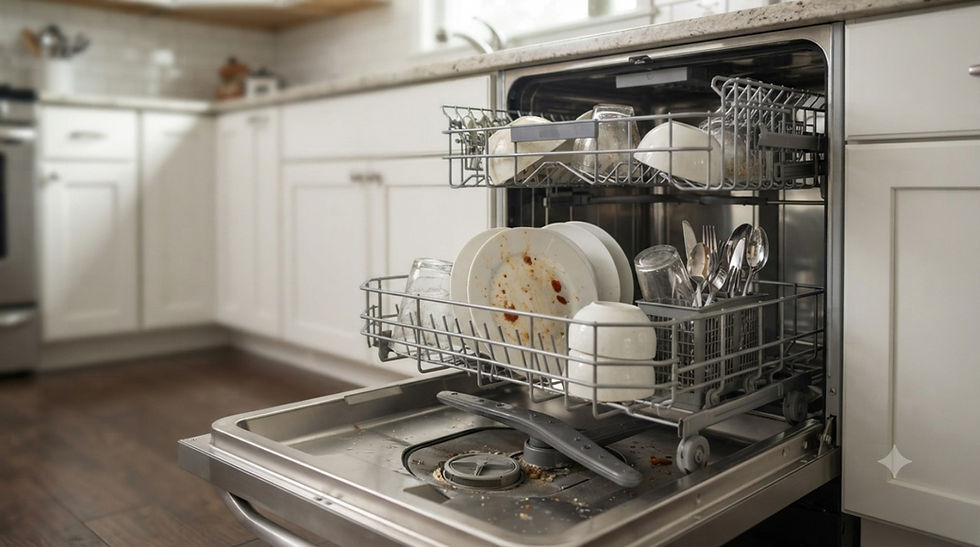
Safe homeowner check: pull the racks into their normal loaded position and look for pot handles, long utensils, cutting boards, or dishes protruding into the arm’s travel path. Do not force an arm past an obstruction. Reposition the item, then gently confirm the arm can rotate freely.
2. Check the spray arm for dirt, food debris, or mineral buildup
Bosch identifies dirt and debris buildup as a leading cause of spray arms not spinning properly and recommends cleaning the arms. Whirlpool also notes that hard-water mineral deposits can build up on internal dishwasher components, including spray arms, and reduce cleaning performance.
Safe homeowner check: inspect the visible spray openings and the outside of the arm. Clean only with the method allowed in your owner’s manual. Because spray-arm removal and cleaning procedures differ by model, use the exact manual for your dishwasher rather than forcing clips, caps, or fittings.
3. Inspect for visible spray-arm damage
Bosch advises checking the upper and lower spray arms for visible damage such as cracks or missing pieces. A damaged arm may not rotate correctly and can reduce cleaning performance.
If the arm is visibly cracked, warped, loose, or missing pieces, do not improvise a repair. Use the manufacturer’s parts lookup or service channel for the correct model-specific replacement or professional service.
4. Check accessible cleaning items only as your manual allows
Whirlpool recommends periodic dishwasher cleaning and, on applicable models, filter maintenance to support proper cleaning performance. A dirty machine can contribute to poor spray performance, but filter access and cleaning steps vary widely by model.
Stay on the homeowner-safe side of the line: clean accessible filters or spray components only when your owner’s manual identifies them as owner-serviceable. Do not remove internal panels or reach into pump, motor, electrical, or wiring areas.
5. If the spray arms still do not spin, stop and arrange service
If the spray arm now spins freely after reloading or cleaning, run a normal cycle and check whether cleaning performance improves. If one rack still cleans poorly, the problem may be isolated to the spray path serving that rack. If both racks clean poorly, or the external checks are normal but the arms still do not operate as expected, move to service instead of deeper DIY disassembly.
Safe homeowner checks vs. professional-only work
Safe homeowner checks: rack loading, hand-spin clearance check before a cycle, visible inspection, and owner-manual-approved external cleaning. Professional-only work: pump or motor access, internal wiring, electrical testing, internal disassembly, or any repair that requires bypassing a safety device.
Stop using the dishwasher and arrange service if you notice burning or electrical odor, smoke, sparking, abnormal heat, repeated breaker tripping, or water contacting electrical parts. Keep clear of the appliance and disconnect power only when it is safe to do so and consistent with manufacturer guidance.
A common misdiagnosis: “the spray arm must be broken”
A stationary arm does not automatically mean the arm itself has failed. Bosch and Whirlpool both place loading interference and cleanliness among the first checks. That is why the best diagnostic order is obstruction first, visible cleaning second, damage third, and service only after those simple checks do not resolve the symptom.
Related dishwasher troubleshooting
Dishwasher not cleaning dishes: Read the troubleshooting guide
Dishwasher not filling with water: Read the troubleshooting guide
Dishwasher leaking water: Read the troubleshooting guide


Comments