
Dryer Not Heating but Still Running

Updated: Aug 31
If your dryer tumbles normally but the clothes stay cold, start with the cycle setting and the dryer’s power or fuel supply before assuming an internal part has failed. A running drum does not always mean an electric dryer is receiving the full voltage needed for heat.
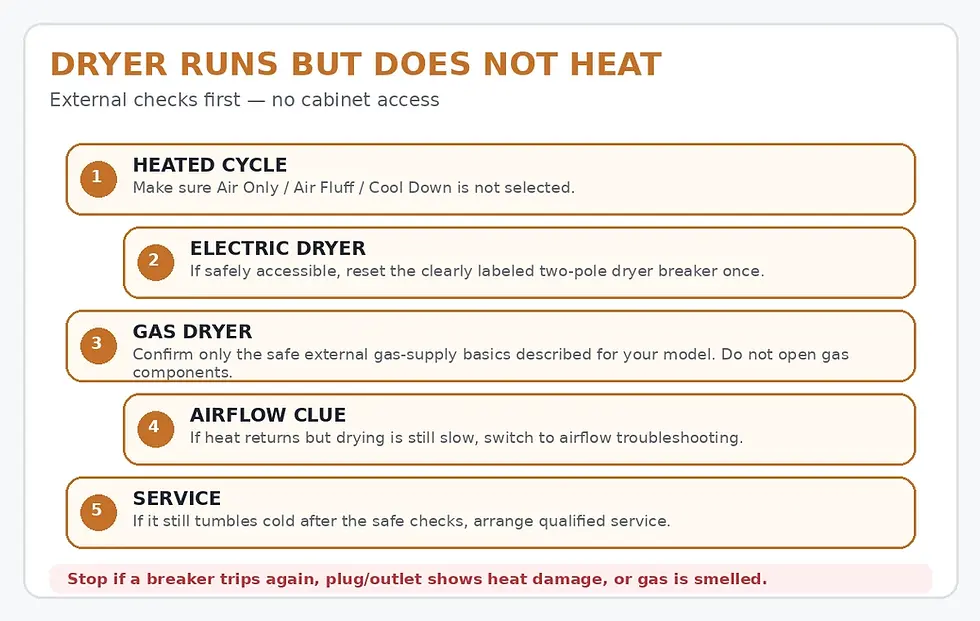
What to Check First
1. Make Sure You Selected a Heated Cycle
Run a heated Timed Dry or similar manual heated cycle with the drum empty for a few minutes, following your owner’s manual. Air Only, Air Fluff, Cool Down, and other no-heat settings are designed to tumble without adding heat. Some models also have energy-saving modes that use little or no heat during part of a cycle.
2. For an Electric Dryer, Check the Dryer Breakers
Many electric dryers use a 208/240-volt supply. One side of that supply can be interrupted while the motor still has enough power to turn the drum. If the dryer is on a clearly labeled two-pole breaker and the area is dry and safe, switch the dryer breaker fully off and then back on once. Do not remove an electrical panel cover or test live voltage yourself.
If the breaker trips again, the outlet or cord shows scorching, or you suspect the home is not supplying the correct voltage, stop using the dryer and have a qualified electrician check the circuit.
3. For a Gas Dryer, Confirm Only the Safe External Basics
A gas dryer can tumble without heating if the gas supply is shut off. If the shutoff valve is readily accessible and your owner’s manual identifies it, confirm that the supply is in its normal operating position. Do not open the burner compartment, adjust gas fittings, or troubleshoot valves, igniters, or other internal gas parts yourself. If you smell gas, do not keep operating or testing the dryer.
4. Check the Lint Filter and Visible Vent Path
A completely cold dryer points more strongly toward the cycle, power, gas supply, or an internal heating fault. But if the dryer warms briefly, takes a very long time, or seems to lose heat during the cycle, restricted airflow deserves attention.
Clean the lint filter before the next test cycle.
Look behind the dryer for a visibly crushed, sharply kinked, or flattened exhaust duct.
While the dryer is running on an Air Dry setting, check whether the outside vent hood can open freely and remove only visible lint around the exterior opening.
If the duct runs through walls or you suspect a hidden blockage, use a professional dryer-vent cleaning service rather than dismantling the vent system blindly.
What the Symptom Can Tell You
If the drum turns but stays completely cold on a confirmed heated cycle, the most useful next distinction is electric versus gas. On an electric model, a partial loss of the dryer’s high-voltage supply is a common external possibility. On a gas model, the external gas supply must be available before any internal burner system can produce heat.
If the dryer starts warm but later becomes cool, or clothes are warm yet remain damp, airflow restriction, cycle settings, sensor behavior, or an overheating protection response may be involved. Those symptoms are different from a dryer that never produces any heat at all.
Do Not Disassemble the Dryer to Chase a No-Heat Fault
Heating elements, thermal fuses, thermostats, igniters, gas-valve components, terminal blocks, and internal wiring are behind service panels and can involve high voltage, hot surfaces, or gas. Home Fixes HQ does not recommend opening the cabinet or testing these parts as a routine homeowner troubleshooting step.
When to Stop Using the Dryer
A breaker trips again after one reset.
You notice a burning or electrical odor, melted plastic, scorch marks, or a damaged power cord or outlet.
You smell gas or suspect a gas-supply problem.
The dryer becomes unusually hot even though the clothes are not drying normally.
The dryer has no heat after the safe external checks above and the same symptom repeats.
For a suspected home electrical-supply problem, use a qualified electrician. For an internal dryer fault, schedule manufacturer or qualified appliance service.
Related dryer guides
Related dryer guides: Dryer Taking Too Long to Dry? Check Airflow Before You Run Another Cycle · Dryer Getting Too Hot? What to Check Before You Run It Again


Comments