
Frozen Pipes? Safe Steps to Reduce Damage Before a Pipe Bursts

If a faucet suddenly slows to a trickle during freezing weather, treat the pipe as frozen until you rule it out. First look for escaping water, know how to close the main shutoff, and keep the affected faucet open. Only try gentle heat on a dry, accessible pipe. If you find a leak, cannot reach the frozen section, or see water near electrical equipment, stop and call a licensed plumber.
First, check whether this is already a leak
A frozen pipe may split before you can see water. The leak can appear only after the ice begins to thaw. Check the visible pipe, nearby fittings, the floor below, cabinets, ceilings, and the water meter area without touching wet electrical equipment.
If water is actively escaping, close the home's main water shutoff if you can reach it safely. Do not keep testing faucets or continue thawing. If water is spreading near wiring, outlets, appliances, or the service panel, stay out of the wet area and contact the appropriate emergency or licensed professional. A new ceiling water stain can be evidence that water has traveled away from the damaged pipe.
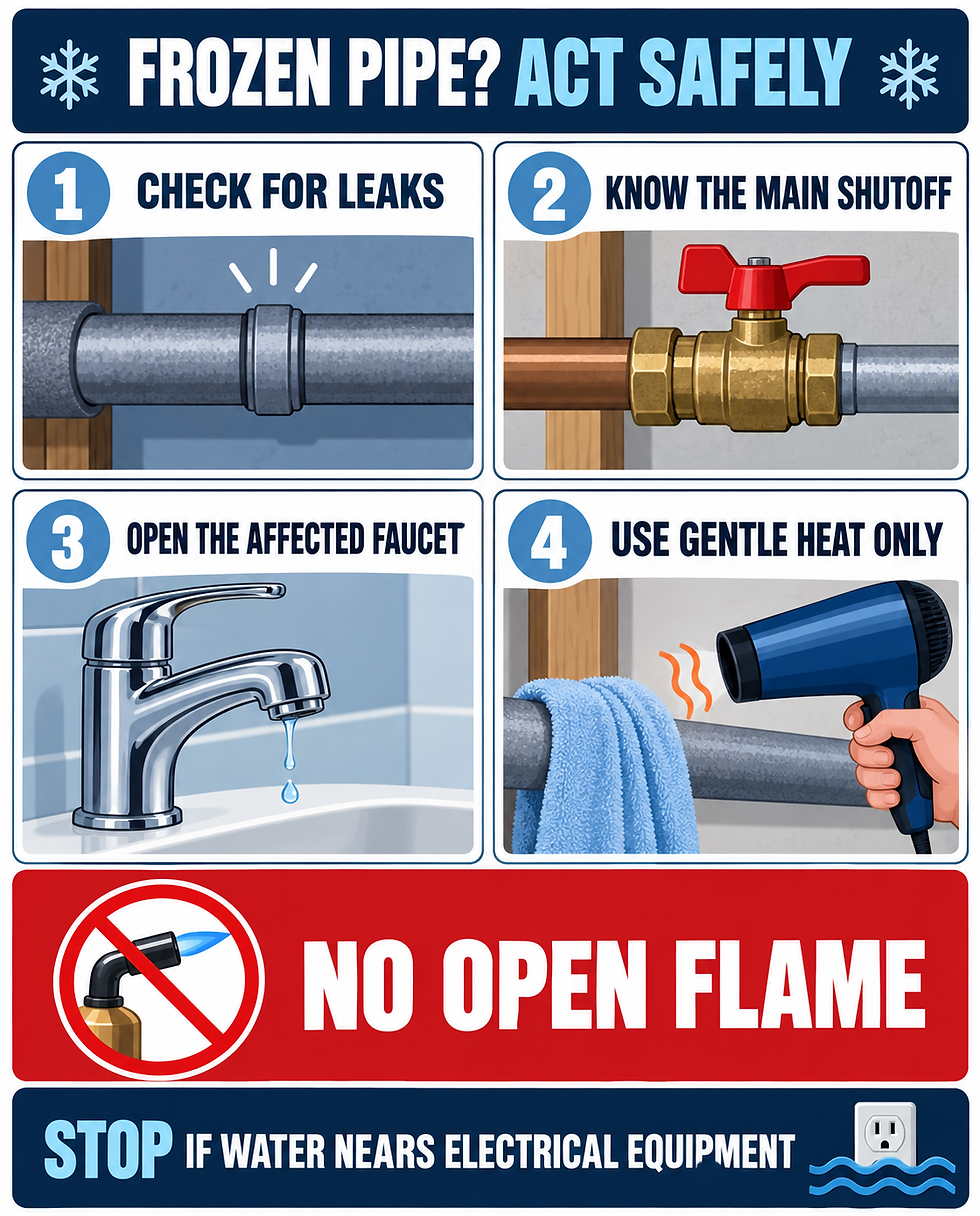
A safe decision path
1. Confirm the symptom. A single weak or dry faucet during a cold snap points toward a localized freeze. If neighbors also have no water, a utility interruption or water-main problem may be more likely.
2. Check all faucets. The American Red Cross advises checking other faucets because more than one pipe can freeze. Note which fixtures have normal flow, a trickle, or no water.
3. Find the main shutoff before adding heat. If the pipe opens and reveals a split, you need to stop the water quickly. Do not force a valve that is corroded, damaged, or unfamiliar.
4. Leave the affected faucet open. As ice melts, the open faucet gives water and pressure a path out. Flow through the pipe also helps the remaining ice melt.
5. Heat only a dry, accessible section. If you cannot identify or reach the frozen area without opening a wall, or the area is wet, skip DIY thawing and call a licensed plumber.
How to warm an accessible frozen pipe
Use slow, even warmth rather than intense heat. Acceptable options described by the American Red Cross include an electric heating pad wrapped around the pipe, a hair dryer, warm-water-soaked towels, or a portable space heater kept away from flammable materials. Keep electrical devices dry, attended, and away from standing or leaking water.
Begin near the open faucet and work gradually toward the colder section. Continue only while the pipe remains dry and stable. Stop if you hear cracking, see swelling or a split, smell overheating material, lose safe footing, or notice water where electricity is present.
Never use a blowtorch, propane or kerosene heater, charcoal stove, heat gun, or any open-flame device. Open flame can start a fire and can damage the pipe before the ice clears.
After water flow returns
Do not assume the pipe is undamaged. Watch the exposed run and nearby fittings while pressure returns. Check below the pipe, inside the cabinet, and in the room beneath it. If you closed the main supply, reopen it slowly only when you can observe the plumbing and shut it again.
Look for drips, spraying, damp insulation, bulging material, falling pressure, or a water meter that keeps moving when fixtures are off. A leak around the water heater needs a different safety check; use the site's guide to a leaking water heater instead of assuming the frozen pipe is the only problem.
If the faucet keeps dripping after normal flow returns, first distinguish residual water from a persistent valve leak using the faucet dripping guide.
When to stop and call a plumber
Call a licensed plumber now if the pipe is split or leaking; the frozen area is inside a wall, ceiling, or other inaccessible space; you cannot identify the frozen section; more than one area remains without water; the main shutoff will not operate safely; the pipe does not thaw with gentle heat; or the freeze keeps returning.
Also stop if the plumbing is near a gas appliance, fire-suppression line, electrical panel, damaged wiring, or standing water. Those conditions need qualified help rather than more homeowner troubleshooting.
Reduce the chance of another freeze
Once the immediate problem is resolved, focus on cold-air exposure. Insulate vulnerable pipes in garages, crawl spaces, attics, basements, and exterior-wall cavities; disconnect outdoor hoses; close garage doors when supply lines run through the garage; and seal drafts around penetrations without blocking required appliance ventilation.
During severe cold, keep indoor heat steady and open sink-cabinet doors so warm room air can reach the plumbing. Move cleaners and chemicals out of children's reach first. For pipes with a history of freezing, ask a plumber to correct the underlying exposure rather than relying on repeated emergency thawing.
Sources and scope
This guide summarizes homeowner-level precautions from the American Red Cross, the Philadelphia Water Department, and the City of Toronto. Local plumbing layouts, codes, and utility responsibilities vary. When the safe boundary is unclear, use a licensed local professional.


Comments