
Furnace Won’t Turn On? Check These 4 Safe Things Before You Call for Service

If your furnace will not turn on at all, start with three homeowner-safe checks: make sure the thermostat is actually calling for heat, confirm the furnace has normal external power, and inspect an accessible air filter. Those are common no-start causes identified in manufacturer troubleshooting guidance. If those checks do not restore heat, the next step is professional diagnosis—not opening the furnace or working on gas, ignition, wiring, controls, or safety switches.
First safe check: set the thermostat to HEAT and set the target temperature above the current room temperature. If your thermostat uses replaceable batteries and the display is blank or weak, install fresh batteries. Then wait a few minutes for the system to respond.
What to do next: if the thermostat is calling for heat but the furnace stays silent, check only the external furnace service switch and the clearly labeled furnace breaker. If power looks normal, inspect the filter if it is designed for normal homeowner access. If the furnace still will not start, or it starts and stops repeatedly, call a qualified HVAC professional.
Emergency stop: if you smell a rotten-egg or sulfur-like gas odor, hear hissing that suggests a gas leak, a carbon-monoxide alarm sounds, or you see smoke or sparks, stop troubleshooting. For a suspected gas leak, get everyone out, avoid switches and other ignition sources until you are safely away, then call 911 and your gas utility from a safe location.
The 4 safe checks, in order
1. Thermostat: select HEAT, raise the setpoint above room temperature, and replace thermostat batteries if your model uses them and the display is weak or blank.
2. External power: confirm the furnace service switch is ON. If a clearly labeled furnace breaker is tripped and there is no burning smell, heat, moisture, smoke, or sparking, reset it once only. If it trips again, stop and call a professional.
3. Filter: if the filter is meant to be accessed by the homeowner, inspect it. Replace a visibly dirty or clogged filter with the correct type and size for your system. Keep furnace access panels closed.
4. Still no heat: stop DIY troubleshooting. Repeated clicking, humming without normal operation, error codes, repeated shutdowns, ignition trouble, or a furnace that remains completely dead after the safe checks needs professional HVAC diagnosis.

1. Make sure the thermostat is really asking for heat
A thermostat can look normal while the system is not actually being told to heat. Confirm the mode is HEAT, not COOL or OFF, and set the temperature above the room temperature. Manufacturer guidance also recommends checking thermostat batteries on models that use them.
If the thermostat display stays blank after fresh batteries, or your thermostat is hardwired and has lost power, do not remove wiring or jump terminals. That moves the problem into electrical/control diagnosis and is a job for a qualified technician.
2. Check only the furnace’s normal external power controls
Many furnaces have a nearby service switch that looks like a normal wall switch. Confirm it has not been accidentally switched off. You can also look at the breaker that is clearly labeled for the furnace.
If the labeled breaker is plainly tripped and there are no danger signs, a single reset is a reasonable homeowner check. If the breaker trips again, do not keep resetting it. Repeated tripping can indicate an electrical fault that needs diagnosis. Do not remove an electrical panel, furnace control cover, or internal wiring cover.
3. Inspect the filter without opening internal furnace compartments
Restricted airflow from a dirty filter can contribute to furnace problems and safety-limit shutdowns. If your filter is in a normal homeowner-access location, remove it as your system instructions allow and replace it if it is visibly dirty or clogged. Use the correct size and type, and restore any normal filter cover or return grille afterward.
Do not open burner, ignition, blower-control, or wiring compartments just to look for a cause. Fuel-burning heating equipment has combustion and safety systems that require proper training and tools to service.
What the symptom tells you about the next step
Thermostat works, furnace is completely silent: after the external switch and labeled breaker check, schedule HVAC service if it remains dead.
Furnace clicks repeatedly but does not start normally: stop at the safe checks. Ignition, gas-valve, flame-sensing, pressure-switch, venting, and control problems are professional-only.
Furnace starts, then shuts down again: confirm the filter is not clogged, but do not defeat, reset, bypass, or hold any safety switch. Repeated shutdown needs service.
Blower runs but the air stays cold: this is a different failure pattern from a totally dead furnace. Safe filter and thermostat checks are fine; combustion, ignition, gas, and internal electrical diagnosis is not.
Breaker trips again, you see sparks, or smell electrical burning: stop using the furnace and contact a qualified HVAC/electrical professional.
Gas odor, hissing that suggests a leak, or a CO alarm: leave the area as appropriate and get emergency help. Do not keep testing the furnace.
What not to DIY
Do not relight or adjust a pilot unless your exact manufacturer’s owner manual explicitly identifies it as an owner procedure and you can follow that manual safely. This guide intentionally does not instruct you to open the burner compartment, adjust a gas valve, clean a flame sensor, test an igniter, jump thermostat wires, bypass a door or rollout switch, probe internal voltage, or work on a control board.
CPSC guidance says modern fuel-burning heating equipment requires special training and tools, and recommends professional inspection and service of fuel-burning appliances. That is why the resolution path here ends at external controls and an accessible filter.
When to call for service
Call an HVAC professional when the thermostat, external power, and accessible filter checks do not restore normal heat; when the furnace repeatedly starts and stops; when a breaker trips more than once; when there are error codes or repeated clicking; or whenever the suspected fault involves gas, ignition, combustion, venting, an internal safety device, the blower motor, control board, or internal wiring.
Before the technician arrives, note what the furnace does: completely silent, click/no start, blower only, starts then stops, or trips power. Also note any visible external error code without opening a panel. That symptom description can make the service call more efficient.
Make sure you actually have a furnace
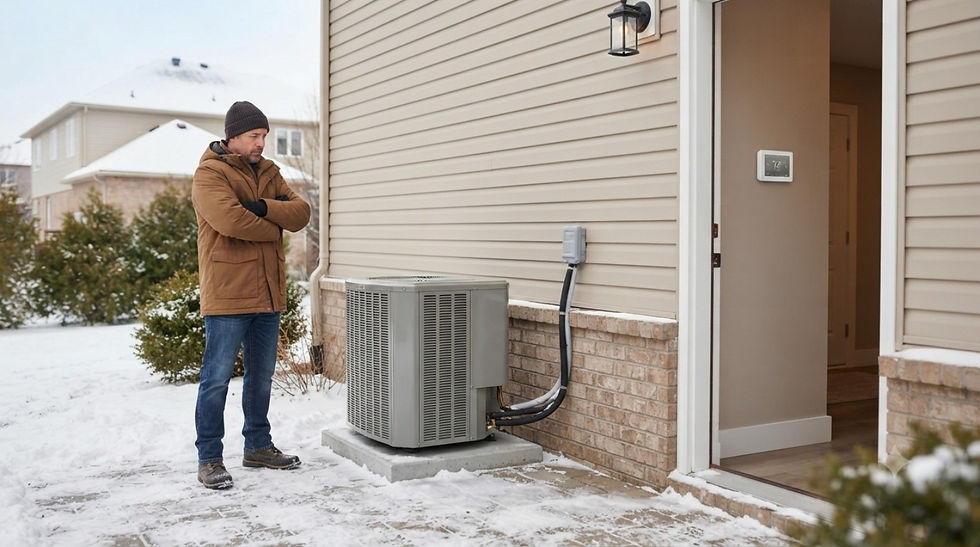
If your home heats with an outdoor heat pump instead of a fuel-burning furnace, use our Heat Pump Not Heating guide because the safe checks and normal operating behavior are different.
For more heating and cooling troubleshooting, browse the HVAC troubleshooting hub.
Comments