
Heat Pump Not Heating? 5 Safe Checks Before Service

Updated: Aug 31
Quick answer: If your heat pump is running but the house is not warming, start with the thermostat, air filter, indoor airflow, and the area around the outdoor unit. A short period of cooler air can be normal during defrost mode. If the system stays cold, repeatedly ices over, makes abnormal noises, or needs electrical or refrigerant work, stop troubleshooting and call a qualified HVAC technician.
Heat pumps also tend to deliver steady warm air rather than the very hot air many people expect from a furnace. Trane’s heat-pump troubleshooting guidance specifically notes that this can make a normally operating heat pump feel less hot at the register.

Start With These 5 Safe Checks
Thermostat: Make sure the system is set to Heat, the set temperature is above the room temperature, and the fan is set to Auto rather than On.
Air filter: Check the normal homeowner-accessible filter and replace or clean it if it is dirty, following your equipment manual.
Indoor airflow: Make sure supply registers and return grilles are open and not blocked by furniture, rugs, or curtains.
Outdoor unit: Look for leaves, loose debris, or snow blocking airflow around the unit. Clear only loose material you can remove safely from outside the cabinet.
Defrost mode: If the system briefly blows cooler air while the outdoor unit defrosts, give the cycle time to finish before deciding the heat pump has failed.
1. Check the Thermostat Before the Equipment
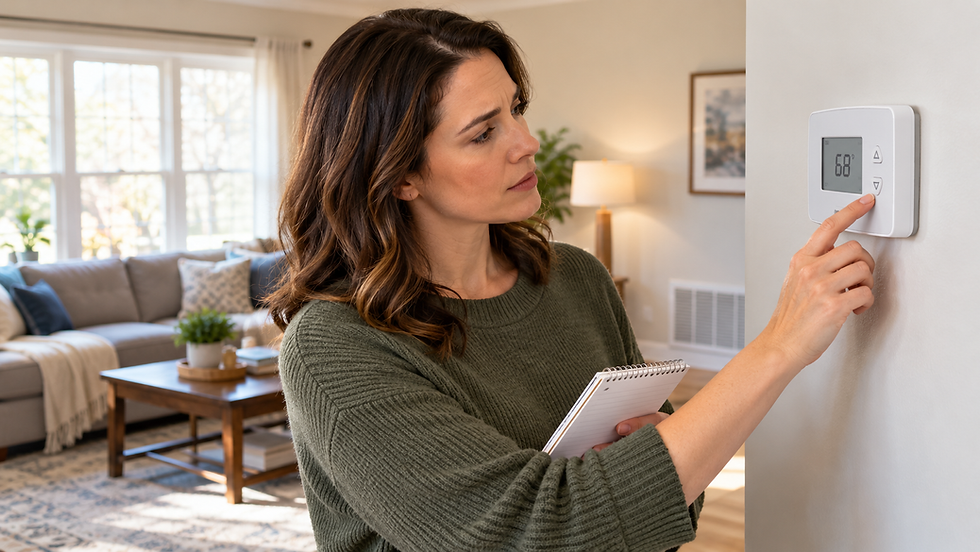
The thermostat is the fastest place to rule out a simple problem. Confirm that it is in Heat mode and that the setpoint is above the current room temperature. If your thermostat has a separate fan setting, use Auto for troubleshooting. With the fan set to On, the blower can circulate room-temperature air even when the heat pump is not actively heating.
If the thermostat display is blank, unresponsive, or showing an error you do not recognize, follow the thermostat manufacturer’s manual. Do not remove HVAC electrical panels or probe wiring to diagnose a no-heat problem.
2. Check the Air Filter and Indoor Airflow
A dirty filter can restrict airflow enough to reduce heating performance and can contribute to system shutdowns or icing. Check the filter only at its normal homeowner-accessible location. If it is dirty, replace it with the type and size specified for your system.
Also look at the room side of the system: open supply registers, uncover return grilles, and move obvious obstructions away. The U.S. Department of Energy includes filter maintenance as a basic part of keeping heat-pump and HVAC systems operating efficiently; see its HVAC preventative-maintenance resources.
3. Look for Outdoor Airflow Blockage — Without Opening the Unit
From a safe distance, look around the outdoor heat-pump unit. Leaves, windblown debris, or accumulated snow can restrict airflow. Remove only loose debris around the outside of the unit when you can do so safely. Keep hands, tools, and objects away from the fan and do not remove panels.
Do not chip ice off the coil, pour hot water on the equipment, or try to force a frozen unit to run. If heavy ice remains or quickly returns, the problem can involve airflow, the defrost system, or refrigerant and should be diagnosed by a qualified HVAC technician.
4. A Short Defrost Cycle Can Feel Like “No Heat”
In heating mode, moisture can frost the outdoor coil. Heat pumps periodically use a defrost cycle to remove that frost. During defrost, indoor air may briefly feel cooler. Both Carrier and Trane identify temporary cool air during defrost as normal behavior.
What is not normal is a unit that stays heavily iced, never returns to normal heating, or repeatedly loses heat. Those symptoms need service rather than more homeowner troubleshooting.
5. Decide Whether the System Is Actually Falling Behind
Heat pumps move heat rather than creating it by combustion, so their heating output can feel different from a furnace. The U.S. Department of Energy heat-pump overview explains how air-source heat pumps transfer heat between indoor and outdoor air. Modern cold-climate systems can continue operating in very low temperatures, but performance and backup-heat behavior vary by equipment and installation.
Use the house temperature as the practical test. If the thermostat is calling for heat but the indoor temperature keeps falling or never approaches the setpoint after the safe checks above, the system needs diagnosis. If your thermostat shows AUX or supplemental heat, consult the system manual before changing special modes; do not assume that forcing emergency heat is the right fix for every system.
Problems That Usually Need HVAC Service
When simple settings and airflow checks do not solve the problem, the fault may be inside the system. Manufacturer guidance identifies issues such as low refrigerant charge, a refrigerant leak, a reversing-valve problem, a defrost-control fault, or electrical/component failure as service-level problems.
The heat pump runs but continues blowing cold or room-temperature air after normal defrost behavior should have ended.
The outdoor unit develops heavy ice or repeatedly freezes again.
You hear hissing, grinding, or another new abnormal sound.
The system shuts down repeatedly or will not respond to a normal thermostat call.
You smell burning, see smoke or sparking, or notice unusual heat around electrical equipment. Stop using the system and contact a qualified professional.
What Not to Do
Do not open electrical compartments, test capacitors or contactors, bypass safety controls, handle refrigerant, connect gauges, repair a reversing valve, or repeatedly reset a tripping electrical circuit. These are not safe homeowner checks. Refrigerant and internal electrical work require the correct training, equipment, and service procedures.
Bottom Line
For a heat pump that is not heating, start with Heat mode, fan Auto, the air filter, open vents, and clear outdoor airflow. Allow a normal defrost cycle to finish. If the home still is not warming, the outdoor unit stays iced, or the problem points to refrigerant or electrical components, stop there and schedule qualified HVAC service.
Official Sources
Related troubleshooting guides
If the HVAC system will not start at all, see AC Won’t Turn On? Check These 5 Safe Things Before You Call for Service.
If it runs but does not cool properly in warm weather, see AC Running but Not Cooling? 5 Safe Checks Before You Call for Service.
Browse more HVAC troubleshooting guides for related problems and safe checks.


Comments