
Refrigerator Freezing Food? Fix the Cold Spot Before You Adjust It Again

Quick answer
Food usually freezes in the refrigerator section because the temperature is set too cold, a rapid-cooling mode is active, food is sitting directly in a cold-air stream, a vent or temperature sensor is blocked, or the cabinet is loaded in a way that creates very cold pockets. If food freezes throughout the compartment after these checks, an internal airflow-control or sensing problem may require service.

First safe check: Note exactly what freezes and where. If only eggs, drinks, leafy vegetables, or other high-moisture foods freeze beside a rear wall, top shelf, bottom shelf, or visible vent, move them to a different shelf and clear space around the vent without removing any cover.
Next action: Confirm the refrigerator and freezer settings in your model’s manual, turn off any temporary rapid-cooling mode, make only one small warmer adjustment, and allow the manufacturer’s full stabilization period before changing it again. Verify the result with an appliance thermometer while keeping the refrigerator at 40°F or below for food safety.
Stop before you troubleshoot
Do not remove an interior panel, vent cover, control housing, fan cover, ice-maker assembly, or rear machine compartment. Do not test wiring, bypass a switch, chip ice with a sharp tool, or use a hair dryer or heat gun inside the cabinet.
If there is a burning smell, smoke, repeated breaker tripping, damaged wiring, or water at an electrical control, stop using the appliance and arrange qualified service. Keep children away and do not touch wet electrical parts.
Internal dampers, thermistors, control boards, fans, heaters, wiring, compressors, and refrigerant systems are professional-only. This guide covers settings, food placement, visible airflow obstructions, door closure, and temperature monitoring.
Why the location of the frozen food matters
Many refrigerators make cold air in the freezer and route some of it into the fresh-food compartment through supply and return vents. Food placed directly in that stream can freeze even when the average cabinet temperature is reasonable.
A refrigerator that is packed tightly can block return airflow and create both warm and frozen areas. On some models, a large package placed close to the temperature sensor can also prevent the appliance from sensing cabinet temperature correctly.
If one drawer freezes food, that drawer may have its own temperature or airflow control. If nearly every shelf freezes food, settings, temporary cooling modes, the freezer control, or an internal control problem become more likely.
Five safe checks before service
1. Map the cold spot
Write down which foods freeze and their shelf, drawer, and distance from the back wall or visible air outlet. Move temperature-sensitive food away from the coldest spot. Do not cover or tape over a vent; the goal is to leave airflow open, not stop it.
High-moisture foods freeze first, so a frozen lettuce leaf or drink beside a vent does not automatically mean the entire refrigerator is below 32°F. A separate thermometer helps distinguish a local cold stream from whole-compartment overcooling.
2. Check settings and temporary modes
Use the owner’s manual for your exact model because controls differ. Whirlpool commonly recommends about 38°F to 40°F for the refrigerator, while several manufacturers use 37°F as a normal factory setting. FDA’s food-safety ceiling remains 40°F or below.
Look for Power Cool, Quick Cool, Turbo Cool, Max Cool, or a similar temporary mode and turn it off according to the manual if it is active. Also confirm that a drawer has not been set for meat or another extra-cold mode when it holds produce or drinks.
Adjust only one control or one level at a time. Some manufacturers instruct users to wait up to 24 hours before judging a change. Repeated large adjustments make it difficult to identify the cause and may let other areas become too warm.
3. Clear visible vents and sensor areas
Locate the fresh-food supply and return vents using the manual or visible labels. Move packages, bags, and tall containers so air can circulate around shelves and the back wall. Keep eggs, liquids, and delicate produce out of the direct air path.
Some GE bottom-freezer models have a slotted temperature-sensor housing near the ceiling of the fresh-food compartment. GE advises leaving clearance around that sensor on applicable models. Do not assume your refrigerator uses the same location—check the model documentation and never remove the housing.
4. Check loading and door closure
Avoid both tightly overpacking the compartment and pressing food against the back or side walls. Leave small gaps between containers so supply and return air can move as designed.
Check that bottles, drawers, shelves, or food packages are not preventing the door from closing. Wipe an accessible dirty gasket with the method allowed in the manual and look for obvious tears or deformation, but do not remove the door or gasket during this check.
If your model has an ice maker that is switched on without a connected water supply, consult its manual. Whirlpool notes that this condition can make some compatible models run too cold. Use only the model-specific switch or menu; do not access the ice maker internally.
5. Measure before making another adjustment
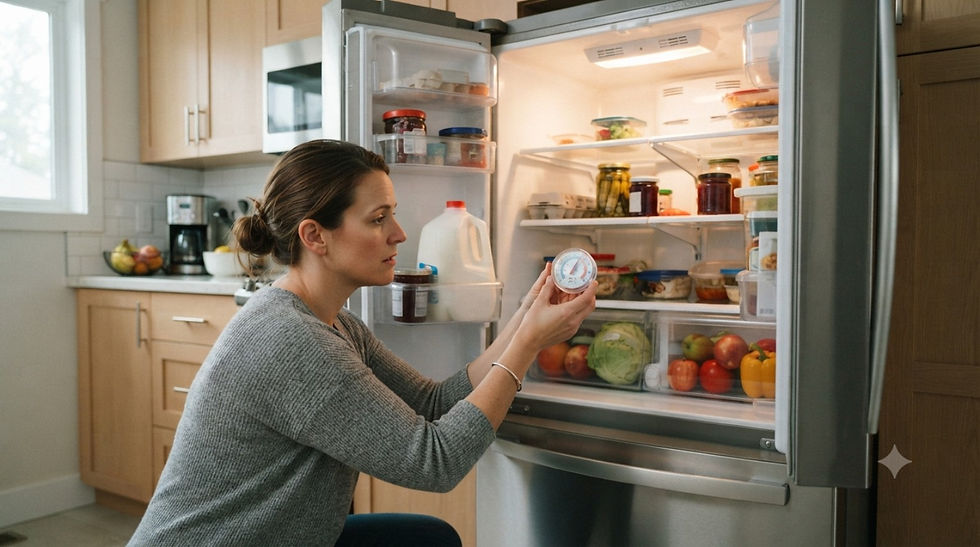
Use a freestanding appliance thermometer rather than judging only by one frozen item or the control display. FDA recommends an appliance thermometer to confirm that a refrigerator stays at 40°F or below.
Place the thermometer in the central food-storage area according to its instructions, keep the door closed as much as practical, and record readings after the refrigerator has had time to stabilize. USDA describes a glass-of-water method with a 5-to-8-hour wait, but always follow the thermometer and refrigerator instructions.
Do not raise the setting until the cabinet becomes unsafe for other food. If the measured temperature is above 40°F, move perishable food to safe refrigeration and correct the cooling problem rather than continuing to warm the control.
What your result probably means
Only food beside a vent freezes: Placement or blocked airflow is the leading explanation. Keep the vent open and move sensitive items away.
Only one adjustable drawer freezes: Confirm the drawer mode and use it for the foods specified in the manual.
The whole fresh-food section is too cold: Return the controls to the recommended range, disable rapid cooling, wait the full stabilization period, and schedule service if the problem remains.
Some areas freeze while others exceed 40°F: Stop making repeated control changes. Uneven airflow, sensing, or damper operation may need professional diagnosis.
The problem returns after a temporary improvement: Record the settings, thermometer readings, affected shelves, and timing. This gives a technician more useful evidence than replacing parts by guesswork.
When to book refrigerator service
Arrange qualified service when food freezes across multiple shelves at recommended settings; thermometer readings remain near or below freezing; the temperature alternates between freezing and unsafe warmth; controls do not respond; or the problem persists after correct placement, loading, and the full waiting period.
A technician may evaluate the damper, thermistor, control system, fan operation, or model-specific cooling components. These checks can involve line voltage, moving parts, heaters, sealed-system pressure, and refrigerant, so they are not homeowner procedures.
Related troubleshooting guides
If the refrigerator becomes warm or stops cooling instead of freezing food, follow Refrigerator Running but Not Cooling?
If the separate problem is heavy ice accumulation in the freezer, use Freezer Frost Buildup: Why Ice Keeps Forming
Browse the Refrigerators & Freezers hub for other symptom-specific guides.

Comments