
Refrigerator Running but Not Cooling? Check Both Compartments First

Updated: Sep 24
A refrigerator can sound like it is running and still fail to keep food safely cold. The first useful question is whether both the refrigerator and freezer are too warm, because that points to a broader cooling problem than a warm fresh-food section with a cold freezer.
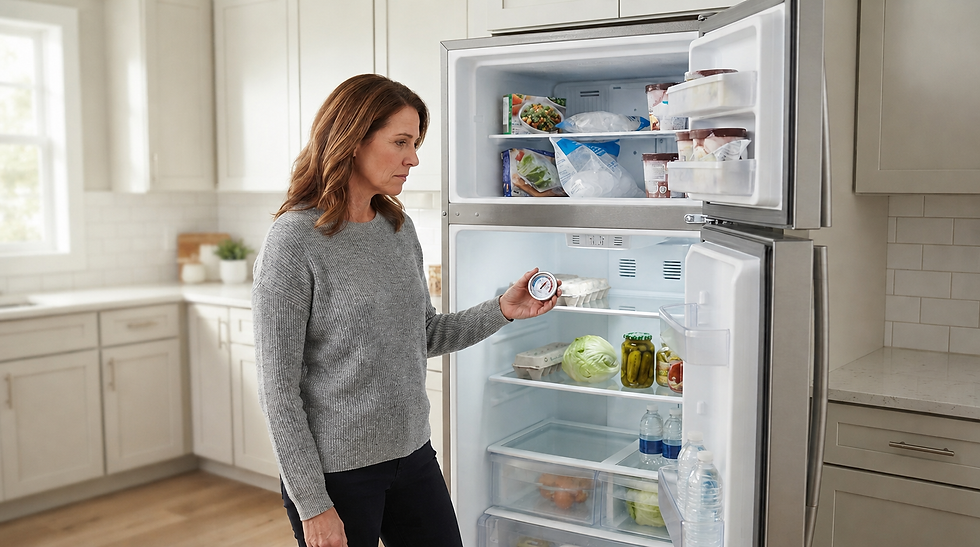
Use an appliance thermometer instead of judging by touch alone. If the refrigerator is above 40°F (4.4°C), treat food safety as a separate priority while you troubleshoot the appliance.
Measure before changing settings
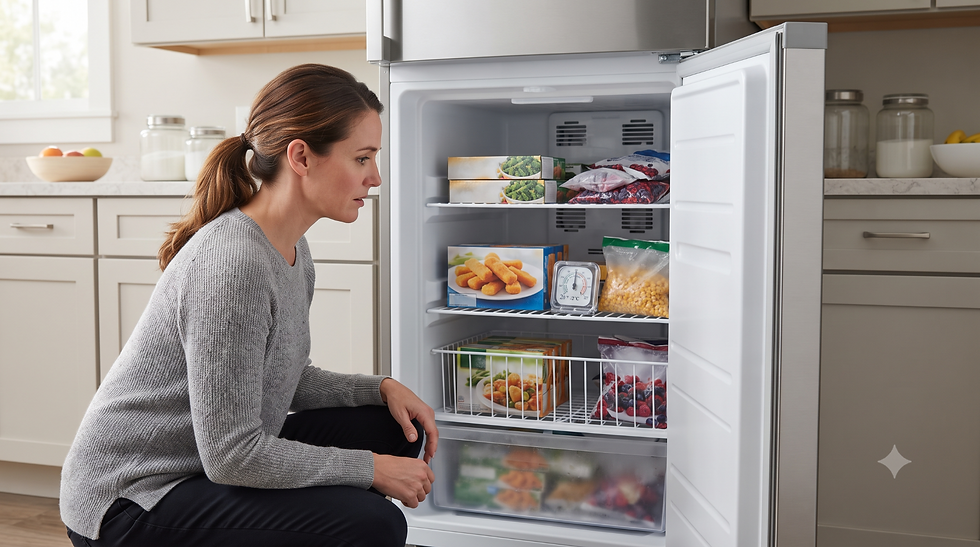
First safe check: Check the actual refrigerator temperature and, if possible, the freezer temperature too. Confirm the controls are set for normal cooling and were not changed recently.
What the result means: If both sections are warm, stay on the whole-unit cooling path. If the freezer is still cold while the refrigerator is warm, switch to the airflow/compartment guide instead.
Check doors, loading, and airflow
First safe check: Make sure both doors close fully, packages do not block visible air vents, and the refrigerator is not packed so tightly that air cannot circulate. Give the appliance time to recover after a large grocery load or prolonged door opening.
What the result means: A temperature problem that follows heavy loading or a door-left-open event may improve after normal stabilization. Persistent warming with normal doors and airflow is a stronger service clue.
Use only model-approved maintenance
First safe check: If the owner’s manual identifies an accessible condenser-cleaning step for your model, follow it with power disconnected. Do not remove panels or reach internal fans, wiring, or refrigerant components.
What the result means: If safe external conditions are correct but both compartments remain too warm, internal fan, control, compressor, or sealed-system diagnosis should be left to qualified service.
Build a temperature pattern before service
Record the actual readings in both compartments and the time of each reading, along with any recent door-left-open event or large warm grocery load. A cold freezer with a warm refrigerator belongs on the airflow branch; both compartments warming despite closed doors and normal settings is a different service clue. Do not treat the sound of a running fan or compressor as proof that food is being kept cold. Prioritize the safe handling of perishable food whenever the refrigerator temperature is above the recommended range; the appliance diagnosis can follow.
Where this fits in the refrigerator decision path
Return to Refrigerator Troubleshooting: Read the Temperature and Compartment Clues if more than one symptom is happening or the temperature pattern changes.
When to stop and call for service
Perishable food is above 40°F and has been warm long enough to create a food-safety concern.
You smell burning, see sparking, or a breaker/GFCI repeatedly trips.
Both compartments remain too warm after settings, door closure, airflow, and stabilization checks.
The next step would require refrigerant, compressor, internal fan, or energized electrical diagnosis.

Comments