
Refrigerator Leaking Water? Trace Where and When It Appears

Updated: Sep 24
A refrigerator leak is easier to narrow down when you identify the first wet location and what the appliance was doing when the water appeared. Water near a dispenser or supply connection follows a different path from water that appears after defrosting or from beneath the cabinet.
Keep water away from the plug, receptacle, and electrical areas. If the leak is active and the refrigerator has a water supply, shut that supply off only if the valve is safe and accessible.
Water starts near the supply line or rear connection
First safe check: Inspect only the visible external water line and fittings for fresh moisture, damage, or a kink. Do not disconnect a pressurized line just to investigate it.
What the result means: A wet external connection keeps the problem on the supply side. If the visible line stays dry, the dispenser, interior drainage, or under-cabinet branch becomes more relevant.
Water appears during or after dispensing
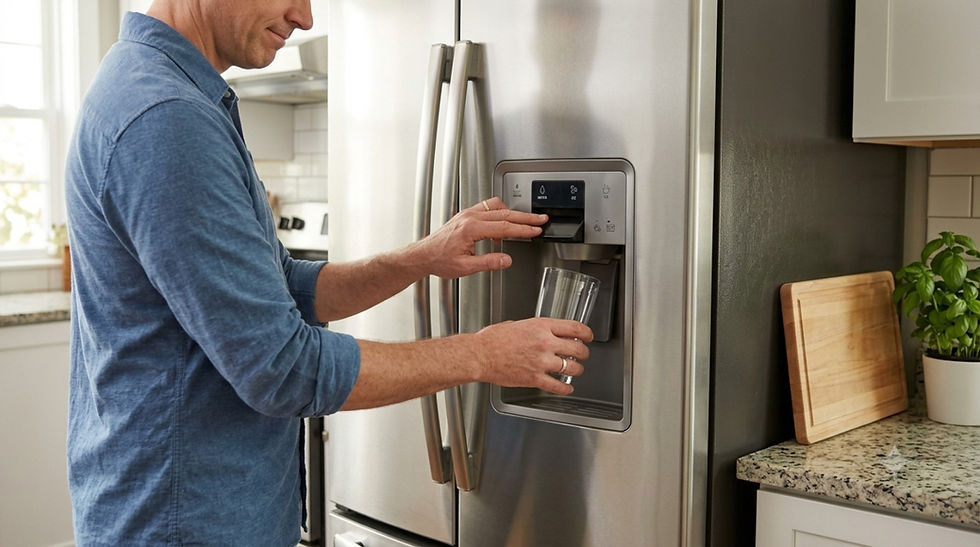
First safe check: Stop using the dispenser temporarily and note whether dripping continues. Check that the filter is installed according to the model instructions and that the dispenser area is not simply holding spilled water.
What the result means: A leak that occurs only with dispensing points toward the water/ice system rather than a general cooling problem. Internal tubing or valves should not be accessed through panels.
Water appears underneath or after defrosting
First safe check: Look for the first visible wet point without moving or tilting the refrigerator. If all external water connections are dry and water repeatedly comes from beneath the cabinet, stop there.
What the result means: The exact defrost drain, pan, tubing, and service access differ by model. Persistent under-cabinet leakage is a service condition rather than a reason to remove covers.
Make a safe leak map
If the floor and electrical area are dry enough to observe safely, note the first wet spot without moving the refrigerator: at the dispenser, an accessible rear supply connection, inside the cabinet, or beneath the unit. Record whether the leak appeared after dispensing, after an ice-making period, or without water use. A photo taken from a safe location can help service identify the path. Stop observing if water spreads or approaches the cord or receptacle; do not run extra dispensing or defrost cycles to reproduce an active leak.
Where this fits in the refrigerator decision path
Return to Refrigerator Troubleshooting: Read the Temperature and Compartment Clues if more than one symptom is happening or the temperature pattern changes.
When to stop and call for service
Water reaches the plug, receptacle, power cord, or electrical components.
A large leak continues or the shutoff valve cannot be operated safely.
All visible external connections are dry but water repeatedly comes from beneath the cabinet.
Finding the source would require moving a heavy refrigerator unsafely or opening internal plumbing/electrical panels.


Comments