
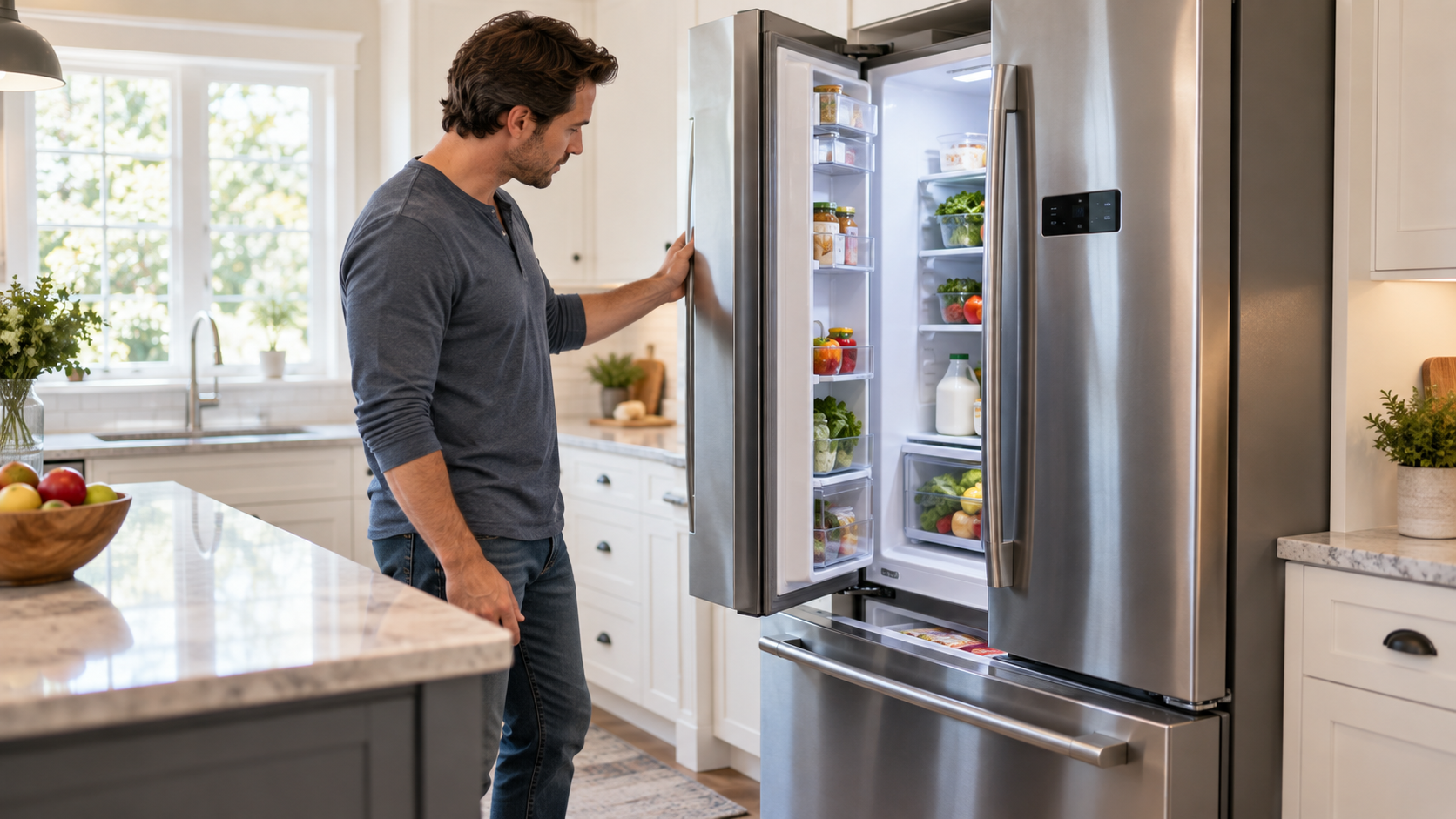
Refrigerator Troubleshooting: Read the Temperature and Compartment Clues

Refrigerator troubleshooting starts with a measurement, not a guess. First verify whether the appliance has power and whether food is actually staying cold enough. Then identify which compartment is affected: both sections, only the refrigerator, only the freezer, or a separate water, ice, frost, or leak system.
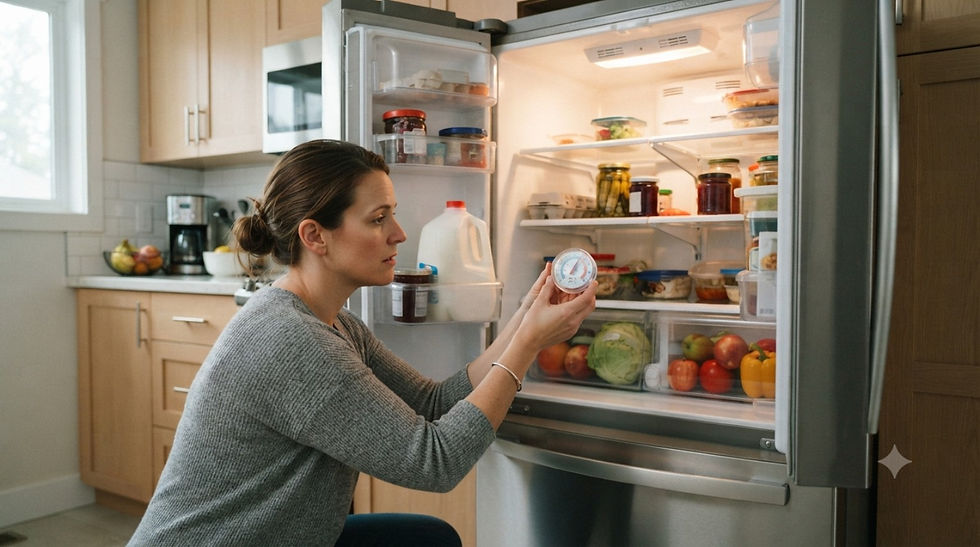
For food safety, use an appliance thermometer rather than relying only on how cold a package feels. USDA guidance says the refrigerator should stay at 40°F (4.4°C) or below. If perishable food has been above 40°F for more than about two hours, use food-safety guidance rather than waiting for the appliance diagnosis.
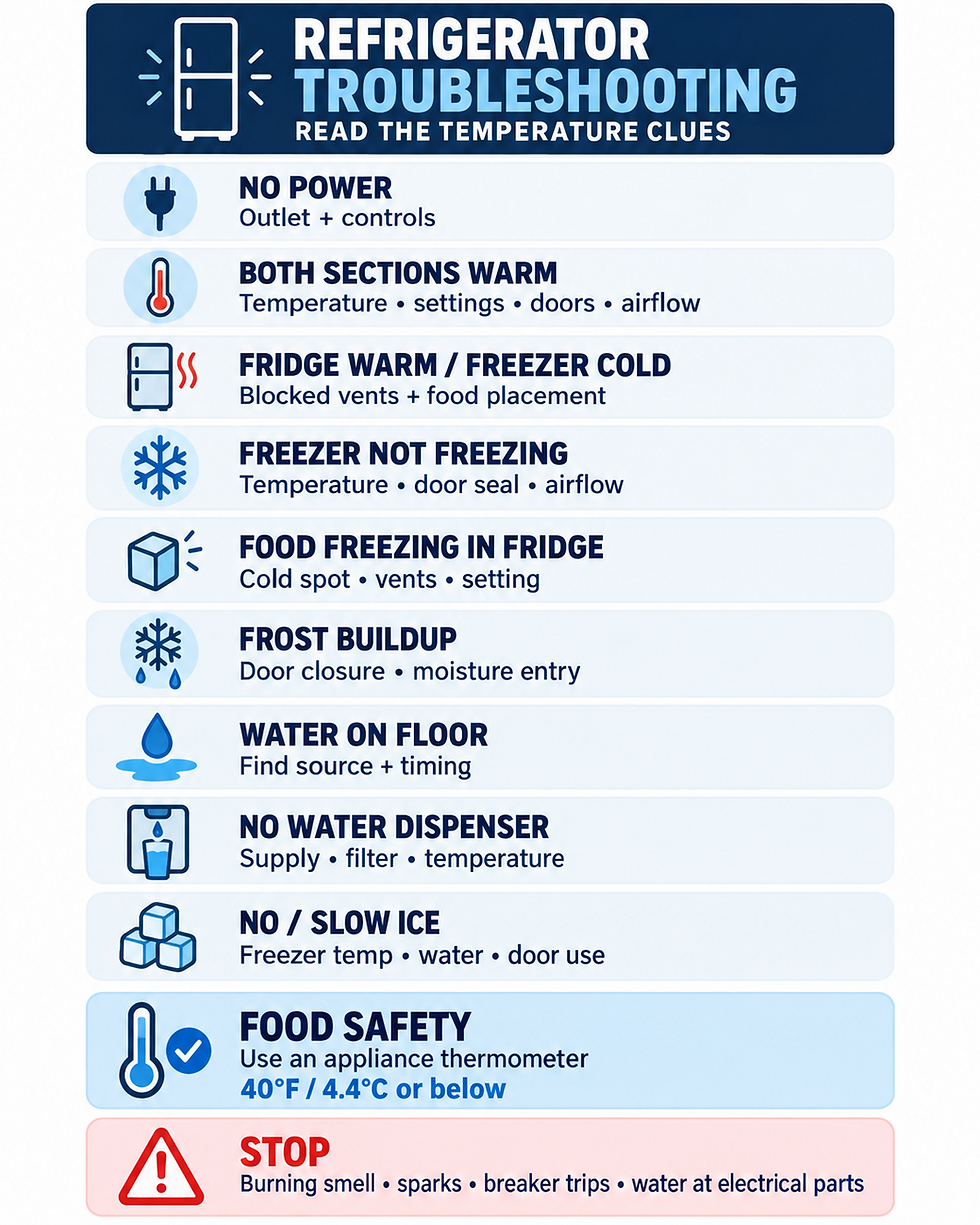
Quick temperature-and-compartment map
No lights or display: use the power branch.
Both refrigerator and freezer are too warm: check temperature, settings, door closure, airflow, recent loading, and installation conditions.
Refrigerator warm but freezer still cold: focus on airflow between compartments and blocked vents.
Freezer is not freezing: verify actual freezer temperature, door closure, loading, and airflow.
Food freezes in the refrigerator: look for cold spots, blocked/overexposed vents, and settings before repeatedly changing the thermostat.
Frost or icicles build up: think moisture entering through the door, warm food, or a closure problem.
Water appears on the floor: find where it begins and whether it is linked to dispensing, defrosting, or an external connection.
Water dispenser does not work: separate water-supply/filter clues from a broader cooling problem.
Ice maker makes no ice or too little ice: check freezer temperature, water flow, and door-use clues.
1. Start with food safety and actual temperature
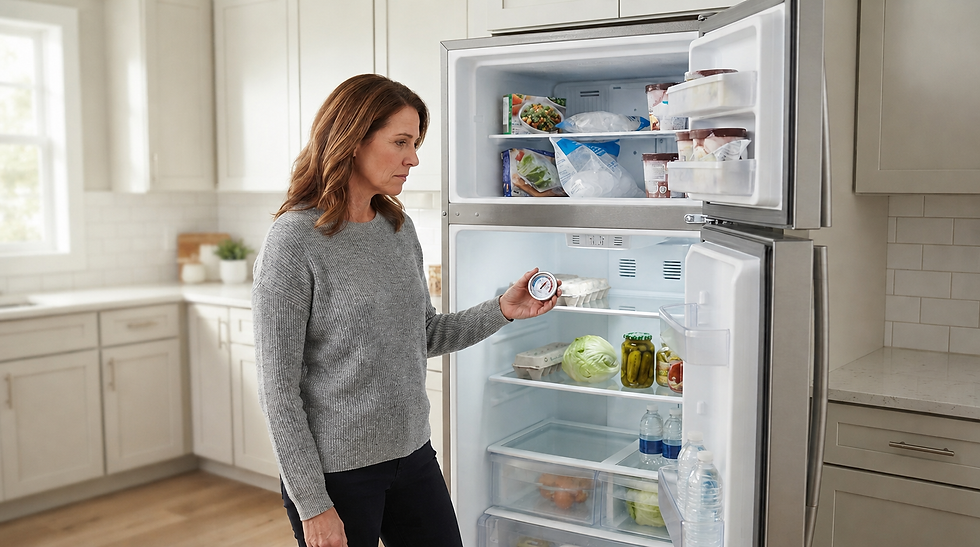
First safe check: place an appliance thermometer in the refrigerator and verify the temperature rather than judging by touch. If the freezer is part of the problem, check it separately.
What the result means: a refrigerator that is above 40°F is both a troubleshooting issue and a food-safety issue. If both compartments are warm, stay on the whole-unit cooling path. If only one compartment is off, the temperature difference itself is a diagnostic clue.
Temperature displays can be useful, but the displayed set point is not always the same as the actual food temperature. Give the refrigerator time to stabilize after a large grocery load, a door-left-open event, installation, or a setting change.
2. No power: separate an electrical-supply problem from a cooling problem
First safe check: look for interior lights, display activity, fan or compressor sounds, and verify the plug/outlet only if safely accessible. Do not open electrical panels or repeatedly reset a breaker that trips again.
What the result means: a completely dead refrigerator belongs on the power path. A refrigerator with lights and controls but no adequate cooling belongs on one of the temperature paths below.
Next guide: Refrigerator Won’t Turn On.
3. Both the refrigerator and freezer are too warm
Likely direction: temperature settings, cooling mode, doors not closing fully, blocked interior airflow, a recent heavy food load, room/installation conditions, or a problem that needs service.
First safe check: verify the controls are set for normal cooling, doors close completely, packages are not blocking vents, and the appliance has had enough time to recover after loading or installation. Follow the owner’s manual before cleaning any model-specific condenser area.
What the result means: if both compartments remain warm after the safe external checks, the issue is broader than one blocked refrigerator vent. Avoid guessing at refrigerant, compressor, fan, or sealed-system repairs.
Next guide: Refrigerator Running but Not Cooling.
4. Refrigerator is warm but the freezer still works
Likely direction: cold air is being made, but it may not be reaching or circulating through the fresh-food compartment normally. Loading and vent blockage become more informative clues than a whole-unit power failure.
First safe check: look for food pushed tightly against vents or packed so densely that air cannot circulate. Check that the refrigerator door closes fully and that the temperature control has not been changed accidentally.
What the result means: a cold freezer plus a warm refrigerator is a distinct branch. It should not be treated as identical to both sections being warm.
Next guide: Refrigerator Not Cooling but Freezer Works.
5. The freezer is not freezing
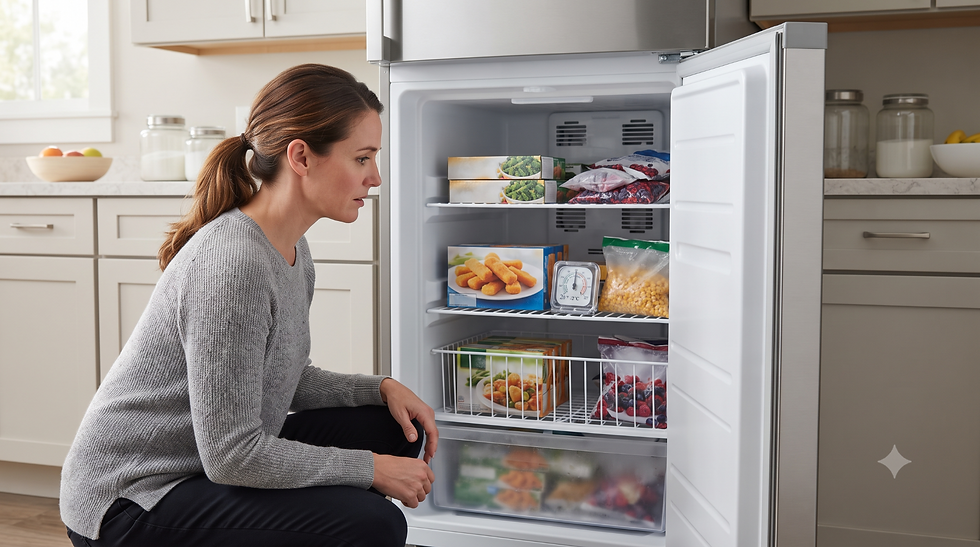
First safe check: verify the freezer’s actual temperature, make sure the door closes tightly, remove packages that obstruct vents, and note whether frost, soft food, or repeated door openings are part of the symptom.
What the result means: a freezer that is only slightly warm after heavy loading is different from one that cannot keep food frozen for hours. If the refrigerator section is also warm, return to the whole-unit cooling path.
Next guide: Freezer Not Freezing.
6. Food is freezing in the refrigerator
First safe check: move delicate food away from direct cold-air outlets and check whether containers are blocking airflow or sitting in an unusually cold zone. Confirm the setting before making another adjustment.
What the result means: food freezing near one vent can point to placement or airflow, while freezing throughout the compartment despite normal settings may need model-specific service.
Next guide: Refrigerator Freezing Food.
7. Frost or icicles are building up
Likely direction: warm, humid air entering the freezer, a door that did not close completely, hot/wet food placed inside, or a model-specific defrost/airflow issue.
First safe check: inspect the door opening for packages or debris preventing closure, minimize unnecessary door openings, and note where the frost forms. Do not chip ice with sharp tools or use unapproved heaters.
What the result means: frost concentrated near a door or after a closure problem supports moisture entry; heavy recurring frost after normal use may need service.
Next guide: Freezer Frost Buildup.
8. Water or ice-system symptoms
Cooling and water symptoms can overlap, but they are not the same branch. A water dispenser problem may involve the supply, filter, tubing conditions, or a frozen water path on some models. Ice production also depends on adequate freezer temperature and water supply.
No water from the dispenser: use Refrigerator Water Dispenser Not Working.
No ice: use Ice Maker Not Making Ice.
Ice is produced, but too slowly: use Ice Maker Making Ice Slowly.
9. Water is leaking
First safe check: keep water away from the plug and receptacle, stop using the dispenser if the leak happens during dispensing, and identify the first visible location rather than pulling the refrigerator apart.
What the result means: a leak tied to a dispenser or external water connection follows a different path from water that appears after defrosting or from beneath the cabinet. Internal access should be left to qualified service.
Next guide: Refrigerator Leaking Water.
Stop troubleshooting and arrange qualified service when
You smell burning, see smoke or sparking, or a breaker/GFCI repeatedly trips.
Water reaches the power cord, plug, receptacle, or electrical components.
Both compartments remain too warm after the safe external checks and adequate stabilization time.
A recurring heavy frost condition, severe noise, or cooling failure requires internal fan, compressor, refrigerant, wiring, or sealed-system diagnosis.
The owner’s manual does not identify the next step as normal user maintenance.
Why temperature and compartment clues come first
Official refrigerator support from GE Appliances, Whirlpool, Samsung, and LG consistently separates concerns such as settings, door closure, loading and airflow, installation conditions, and whether one or both compartments are affected. USDA adds the food-safety requirement to verify that the refrigerator remains at 40°F or below. The exact controls and service procedures vary by brand and model, so this hub uses those broad observations only to choose the correct next guide.
Official sources used for this decision path
Browse all Refrigerator & Freezer troubleshooting guides if your symptom does not match a branch above.
Comments