

Kitchen Sink Draining Slowly? Safe Checks Before It Clogs

A kitchen sink that drains slowly is usually telling you that a restriction is building somewhere near that fixture. Start by checking whether the problem affects one bowl, both bowls, or other fixtures. Then remove only visible debris and use one gentle, surface-level method. If several drains are slow, sewage backs up, or water is leaking under the sink, stop and call a licensed plumber.
Stop before troubleshooting if you see a hazard
Stop using the sink if wastewater comes back up, water is leaking onto cabinets or the floor, several fixtures are slow at the same time, or a toilet gurgles when the sink drains. These clues can point to a larger drain or sewer problem. Keep people and pets away from contaminated water and arrange professional service.
If the sink has a garbage disposal, dishwasher connection, nearby outlet, or switch, do not work around wet electrical parts. Never put a hand into a disposal, reach through the drain opening, remove wiring, bypass a switch, or run a disposal that hums, leaks, smells hot, sparks, or repeatedly trips power. Turn the unit off and follow the exact manufacturer procedure only when the area and controls are dry and safely accessible.
Do not pour in a chemical drain opener, and never mix drain products, bleach, acids, ammonia, or other cleaners. Chemical residue can splash during later work, damage some plumbing, create dangerous fumes, and complicate a plumber's job.
Quick answer: find the scope before trying a fix
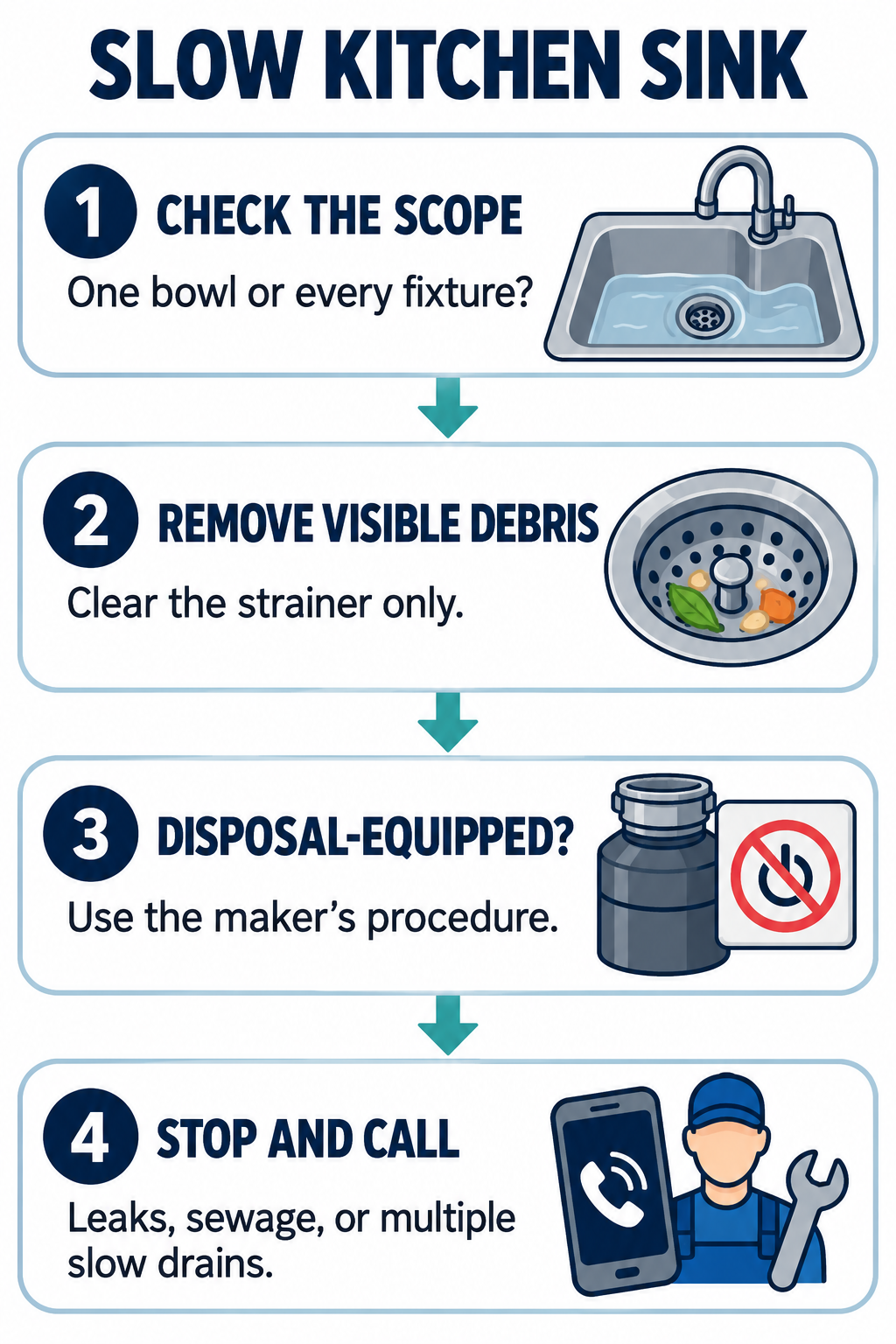
Run a small amount of water and watch the pattern. If only one kitchen sink bowl drains slowly while nearby fixtures are normal, a local restriction near the strainer, branch, trap, or disposal connection is more likely. If both bowls share the same slowdown, the restriction may be downstream of their connection. If a bathroom fixture, floor drain, or toilet is also affected, stop treating this as a simple kitchen-sink clog and call a plumber.
1. Remove only what you can see from above
Take out the removable basket or strainer if it lifts out normally. Remove visible food scraps and wipe the rim. Use tongs or a paper towel for reachable debris; do not push fingers into a drain opening or disposal. Replace the strainer and test with a modest flow of water.
If drainage improves, the obstruction was probably at the surface. Prevent a repeat by scraping plates into the trash or compost and keeping fats, oils, grease, coffee grounds, fibrous scraps, and large food particles out of the drain.
2. Check whether the sink has a garbage disposal
A disposal-equipped sink needs a different branch. If the motor runs but water will not drain, stop the unit and use the dedicated guide: Garbage Disposal Runs but the Sink Won't Drain? Follow the Water, Not the Motor.
Use only the jam-clearing or clog procedure published for your disposal model. The manufacturer may direct you to remove visible debris with tools, clear the discharge path, or use an external wrench point. Do not improvise with your hand, a broom handle, internal disassembly, or repeated starts.
If you see moisture around the unit, stop running it and locate the drip without touching electrical connections. The location-first checks in Garbage Disposal Leaking? Find the Source Before You Tighten Anything can help you describe the problem before service.
3. Try one gentle surface-level mechanical check
If no chemical cleaner has been used, there is no disposal hazard, and the sink is not leaking, a sink plunger can sometimes move a shallow restriction. Use a clean cup-style plunger reserved for sinks. Add only enough water to cover the cup, seal the other bowl or overflow opening if applicable, and use a few controlled strokes. Stop if a joint leaks, the cabinet gets wet, or dirty water appears elsewhere.
A hand drain snake may be appropriate only when the drain opening is designed for it and the manufacturer's instructions allow it. Do not remove a trap, open a wall, force a cable through a disposal, or use powered drain equipment as a general DIY step. If access is unclear, call a plumber.
4. Rinse carefully and test once
After visible debris is removed or a gentle plunge succeeds, run warm tap water and watch the flow. Avoid pouring boiling water into an unknown sink, disposal, seal, or plastic drain assembly. Test once with a moderate flow rather than filling the basin to the rim.
A drain that returns to normal and stays normal likely had a small local buildup. A drain that slows again within minutes or days probably has a deeper restriction that needs proper cleaning. Repeating chemicals or forceful plunging is not a durable diagnosis.
What the pattern usually means
One bowl is slow, the other is normal: look first at the affected strainer and the branch serving that bowl. Keep work above the drain opening.
Both bowls are slow: the shared branch or downstream piping may be restricted. Stop if plunging one bowl pushes dirty water into the other.
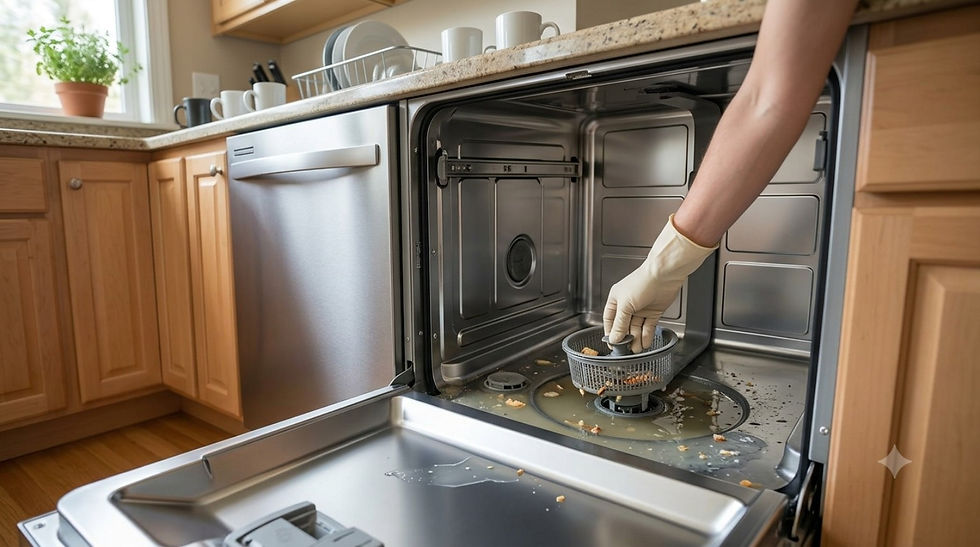
The sink is slow only when the dishwasher drains: the dishwasher hose, air gap, disposal inlet, or shared drain path may be involved. Follow the appliance manual and do not open electrical or hidden plumbing parts.
The dishwasher also holds water: use Dishwasher Not Draining? Follow the Drain Path to separate an appliance symptom from a household drain problem.
Several fixtures are slow or gurgling: a larger branch, vent, sewer, or septic problem is possible. Stop local DIY attempts and call a licensed plumber.
What not to do
Do not mix cleaners, pour more product on top of an earlier drain chemical, reach into a disposal, remove panels or wiring, loosen pipes above stored chemicals, or use a powered auger without training. Do not keep filling a sink that is already close to overflowing. Avoid repeated disposal resets or starts when the unit hums, trips power, leaks, or smells hot.
When to call a plumber
Call promptly when water leaks below the sink, wastewater or sewage backs up, multiple fixtures are affected, the problem returns quickly, a trap or pipe must be removed, or you cannot identify a safe access point. Tell the plumber which bowls and fixtures are affected, whether a disposal or dishwasher is connected, what products have already gone into the drain, and whether you heard gurgling.
If chemical drain opener is already in the sink or pipe, do not plunge or disassemble anything. Keep others away and tell the plumber exactly which product and how much was used.
Frequently asked questions
Can I pour boiling water down a slow kitchen sink?
Use caution. Very hot water may not be suitable for every sink, seal, disposal, or plastic drain system, and it does not solve every type of restriction. Warm tap water after visible debris removal is the safer general check; follow the fixture or disposal manufacturer's guidance for your exact setup.
Why does one side of my double sink drain slowly?
A restriction may be in that bowl's strainer or branch before the two sides join. If both sides become slow, the shared downstream drain is more likely. Stop if testing one side makes dirty water rise in the other.
Should I use baking soda and vinegar?
The foaming reaction may loosen light residue, but it is not a reliable fix for grease, a solid obstruction, damaged piping, or a deeper blockage. Do not combine it with any drain cleaner, bleach, acid, or unknown product already in the pipe.
When is a slow drain a sewer problem?
Treat it as more than a local sink problem when several fixtures slow down, toilets gurgle, water rises in another drain, or sewage appears. Stop using water where practical and call a licensed plumber or your local sewer authority.
Official sources
Plumbing layouts, disposal designs, and local codes vary. Use the instructions for your exact product and call a licensed professional when they differ from this general safety guide.


Comments