
AC Freezing Up? Check Airflow Before You Restart It

Updated: Sep 24
If your AC is freezing up while cooling, turn cooling off before troubleshooting. Ice on the indoor coil cabinet or a refrigerant line is a reason to stop—not to lower the thermostat and keep the system running.
Continuing to cool with a frozen evaporator coil can damage the equipment. Trane’s frozen evaporator-coil guidance recommends shutting cooling down and correcting the cause rather than simply running through the ice.
Quick Check
Confirm the operating mode and ice location. Cooling-mode ice and outdoor heat-pump frost during heating need different troubleshooting paths.
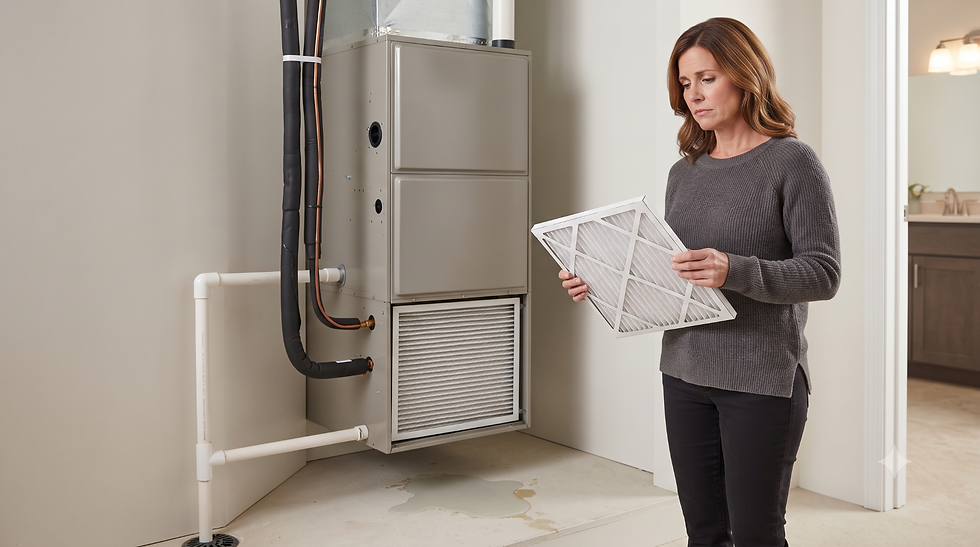
With cooling off, check the normal homeowner-accessible filter and visible blocked return or supply grilles.
Do not assume thawing fixes the problem. Recurring ice or a cause you cannot identify safely needs professional diagnosis.
Stop all troubleshooting if there is a burning smell, smoke, sparking, repeated breaker tripping, or water at electrical parts. Keep clear of wet or damaged equipment. Do not run the fan to help thaw it under those conditions. For active fire or smoke, leave the area and contact emergency services.
This guide focuses on central air conditioners and heat pumps operating in cooling mode. The outdoor heat-pump frost exception is explained below.
How Can You Tell If Your AC Is Frozen?
Look only at equipment and piping you can see without opening service panels or entering an unsafe space.
Useful warning signs include visible ice around the indoor coil or air-handler cabinet, frost or ice on a refrigerant line, weaker cooling or airflow, and water appearing as the ice melts. Trane’s air-handler troubleshooting guide lists visible ice and related airflow symptoms as clues to an icing problem.
Weak airflow, a warm house, or a water leak alone does not prove the coil is frozen. Treat those as clues, not a confirmed diagnosis.
Ice on a line beside the outdoor unit does not, by itself, identify a failed compressor. Note where the ice is and whether the thermostat was set to COOL or HEAT. A photograph taken from a safe position can help a technician understand the pattern.
Do not remove the cabinet cover just to confirm that ice is inside.
What to Check Before Restarting a Frozen AC
1. Inspect the Filter Using the Equipment’s Maintenance Instructions
With the system shut down as directed by its manufacturer, check a filter intended for homeowner access.
A clogged filter restricts airflow. Use the specified replacement size and type, and follow the equipment’s instructions for installation and airflow direction. Carrier’s filter guidance emphasizes shutting the system down and using a correctly sized replacement.
Do not reach into a blower compartment or remove an electrical cover to find the filter. If you cannot identify a normal owner-accessible filter location, have the equipment checked.
2. Clear Obvious Obstructions at Room Grilles
Check whether furniture, curtains, rugs, or stored items are blocking return grilles or supply registers. Restore ordinary adjustable registers to their normal operating position according to the system’s guidance.
Do not dismantle ductwork or adjust unfamiliar internal dampers. Keeping the visible air path clear is a homeowner check; investigating airflow inside the equipment is not.
3. Let the Ice Melt Without Tools or Added Heat
Keep cooling off. Do not chip or scrape the ice, use a hair dryer or space heater, or pour hot water onto the equipment. Carrier’s frozen-AC guidance explains that thawing can take hours and that the underlying cause still needs to be addressed.
Elapsed time alone is not permission to restart; the equipment must be fully thawed and free of unsafe meltwater conditions.
4. Treat Fan Operation as a Model-Specific Option
Some manufacturer guidance, including Carrier’s frozen-AC instructions, describes fan-only operation with cooling off as one possible way to help thaw a frozen coil.
Use that option only when your equipment’s guidance permits it, the fan operates normally, and there are no electrical, overheating, or water hazards. Otherwise, leave the system off and contact service. A malfunctioning indoor fan can itself contribute to freezing.
5. Do Not Restart Simply Because the Visible Ice Disappeared
Consider a monitored restart only after complete thawing, correction of an obvious homeowner-accessible restriction, and confirmation that the manufacturer’s instructions permit it and meltwater is not overflowing.
If the cause remains unclear, leave cooling off. If ice returns after restarting, stop cooling and arrange service rather than repeating thaw-and-restart cycles.
Match the Next Step to What You Notice
The Filter Is Clean, but Airflow Is Still Weak
A clean filter does not clear the rest of the system. An indoor blower problem or another restriction can still prevent adequate airflow. Trane’s air-handler fan troubleshooting treats abnormal blower operation as a service issue rather than a reason for repeated cooling attempts.
Use our Weak Airflow From AC Vents guide to compare whole-home airflow with room-specific problems. Use it for the next observations—not as a reason to keep operating a frozen system.
Water Appears Around the Indoor Unit After Thawing
Melting ice can produce water, but indoor leakage can also involve a blocked drain or an overflowing or damaged pan. Trane’s AC water-leak guidance recommends separating the water symptom from the original cooling fault.
Keep cooling off if water is overflowing or leaking indoors. Follow the Indoor AC Unit Leaking Water guide for external observations, and keep away from water near electrical equipment.
The Ice Is Gone, but the House Still Is Not Cooling
Thawing removes the ice; it does not establish that the underlying fault has been repaired. Persistent poor cooling still needs attention.
Use AC Running but Not Cooling to separate the remaining airflow, thermostat, and outdoor-unit clues. Do not keep lowering the thermostat or repeatedly restarting equipment that begins icing again.
The AC Freezes Again With No Obvious External Blockage
A dirty indoor coil, abnormal blower performance, controls, or a refrigerant-side fault may remain even when the filter and room grilles look clear. Recurring freezing is the point to stop homeowner testing and have the system professionally evaluated.
Does Ice Mean the AC Needs More Refrigerant?
Not necessarily. Ice alone cannot distinguish restricted airflow from a refrigerant problem. Trane’s frozen evaporator-coil guidance explains that low refrigerant can result from a leak or an improper charge.
A technician needs to identify the cause rather than simply assume that adding refrigerant is the repair. Do not attach gauges, open refrigerant connections, or attempt to recharge the system.
In the United States, work that can release refrigerant from covered equipment is subject to EPA Section 608 technician-certification requirements.
What If the Ice Is on an Outdoor Heat Pump During Heating?
Outdoor frost during heating is a different situation from an indoor coil freezing during cooling.
A heat pump can develop frost on its outdoor coil in cold, humid conditions, and its automatic defrost cycle may clear that frost. Trane’s heat-pump defrost explanation describes this normal operating process.
Exact timing and behavior vary by equipment, so do not apply one universal defrost time limit. Heavy ice that keeps accumulating, frost that does not clear, or declining heating performance warrants service.
Do not chip the coil, bypass defrost controls, or force the equipment into another operating mode to thaw it.
When to Call an HVAC Professional
Arrange service when ice recurs, airflow remains weak, the indoor fan does not operate normally, or you cannot find a clear homeowner-accessible cause.
Leave access-panel removal, blower and control testing, internal coil cleaning, electrical measurements, refrigerant gauges, leak detection, evacuation, charging, and sealed-system repairs to qualified personnel. Do not bypass a safety switch or repeatedly reset a tripping breaker.
Before the visit, write down what you observed: operating mode, ice location, filter condition, affected rooms, error messages, water leakage, and whether freezing returned after a previous thaw. Report the sequence of events rather than guessing which part failed.
Bottom Line
A frozen AC needs its cause addressed, not just its ice removed.
For cooling-mode ice, stop cooling and limit your checks to accessible filters, visible airflow obstructions, and safe observations. Follow the equipment’s thawing instructions, and seek service when the cause is unclear or the freezing returns.
Outdoor heat-pump frost during heating belongs to a separate defrost check.


Comments