

Dishwasher Not Drying Dishes? Check the Cycle and Rinse-Aid Clues

Updated: Sep 24
Wet dishes do not automatically point to a failed heater. Dishwashers use different drying systems, and the result can change with the selected cycle, rinse-aid setting, loading pattern, and whether the items are plastic or heat-retaining materials.
The first safe checks are therefore about the cycle and load, not opening the machine to test a heating element.
Confirm the drying option actually ran
First safe check: Check the selected cycle and drying option in the owner’s manual. Eco, air-dry, or shortened cycles may intentionally use less heat or a different drying method.
What the result means: If dishes dry better with the manufacturer’s recommended drying option, the symptom may be cycle-related rather than a hardware failure.
Check rinse aid and loading
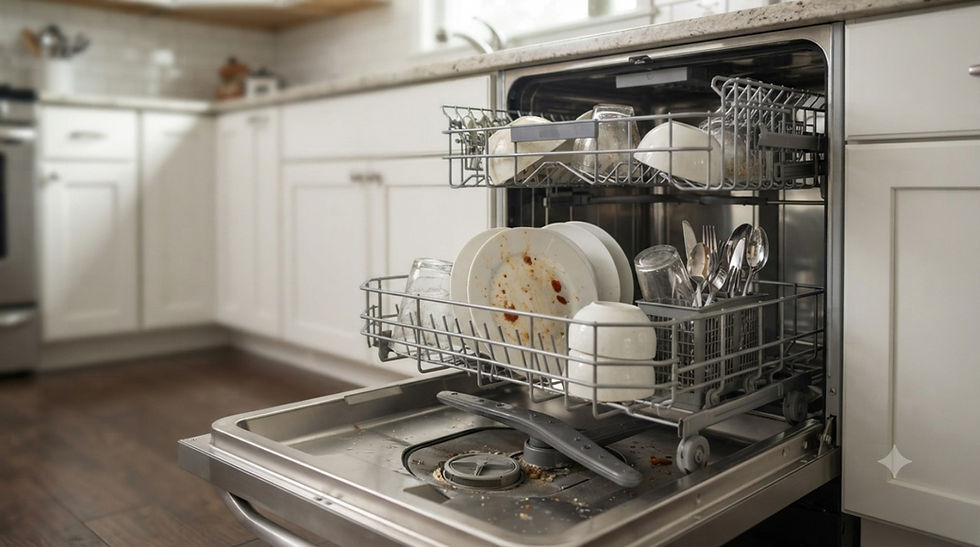
First safe check: Use rinse aid if the manufacturer recommends it and make sure bowls, cups, and plastics are angled so water can drain instead of pooling. Avoid nesting items that trap water.
What the result means: Water pooling on the tops of cups or lightweight plastic can be a loading/material issue even when the dishwasher is working normally.
Separate drying trouble from poor washing or draining
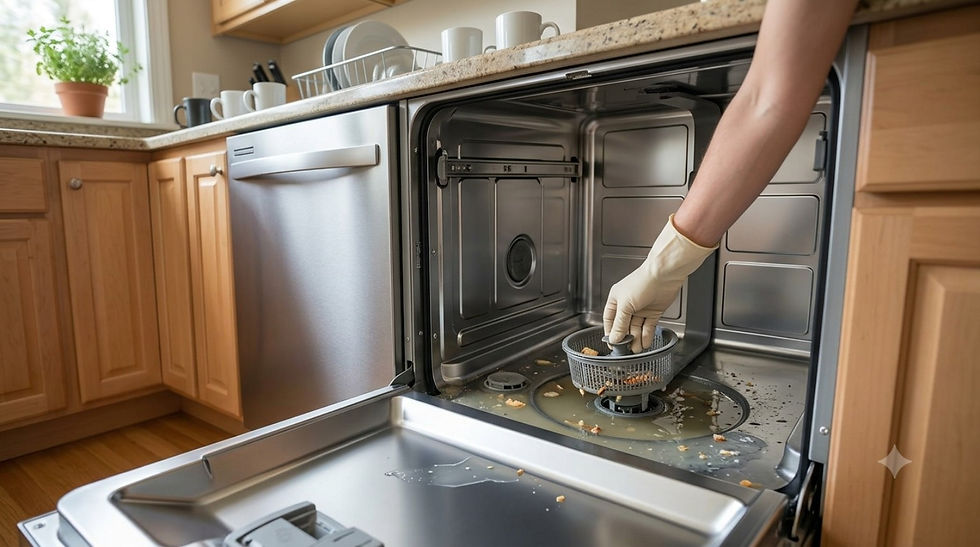
First safe check: If dishes are still dirty or standing water remains in the tub, solve the wash or drain problem first. Do not test heaters or energized wiring from inside the appliance.
What the result means: A dishwasher that cleans and drains normally but consistently fails to dry after the correct options and rinse-aid checks may need model-specific service.
Compare materials and water pooling
On a normal completed cycle, note whether glass and ceramic items are mostly dry while lightweight plastics remain wet, or whether every rack is uniformly wet. Also distinguish droplets on an item from water trapped in a cup base or concave lid. Record the chosen drying option and whether rinse aid was available, using only settings recommended for that model. A material- or shape-specific pattern makes a cycle or loading explanation more plausible; uniformly poor drying after the correct settings is a better reason to request model-specific service.
Where this fits in the dishwasher cycle
Return to Dishwasher Troubleshooting: Find the Stage Where the Cycle Fails if the symptom changes or you are not sure which cycle stage is actually failing.
When to stop and call for service
The next step would require testing the heater, fan, wiring, or control system.
You smell burning or see signs of overheating.
The dishwasher is also failing to drain, which should be diagnosed first.
Correct cycle, rinse-aid, and loading practices do not improve drying over repeated normal cycles.

Comments