

Dishwasher Smells Bad? Check These 4 Odor Sources Before You Call for Service

Updated: Sep 1
Most dishwasher odors come from trapped food in the filter, water that is not draining properly, or greasy residue on interior surfaces. Start with the filter only if your owner’s manual says it is removable, then confirm the dishwasher fully drains. If you smell burning or electrical odor, see smoke or sparking, or the machine is overheating, stop using it and arrange qualified service instead of continuing to troubleshoot.
Quick Check: What to Do First
1. Let the dishwasher finish and cool, then check whether water is left in the bottom.
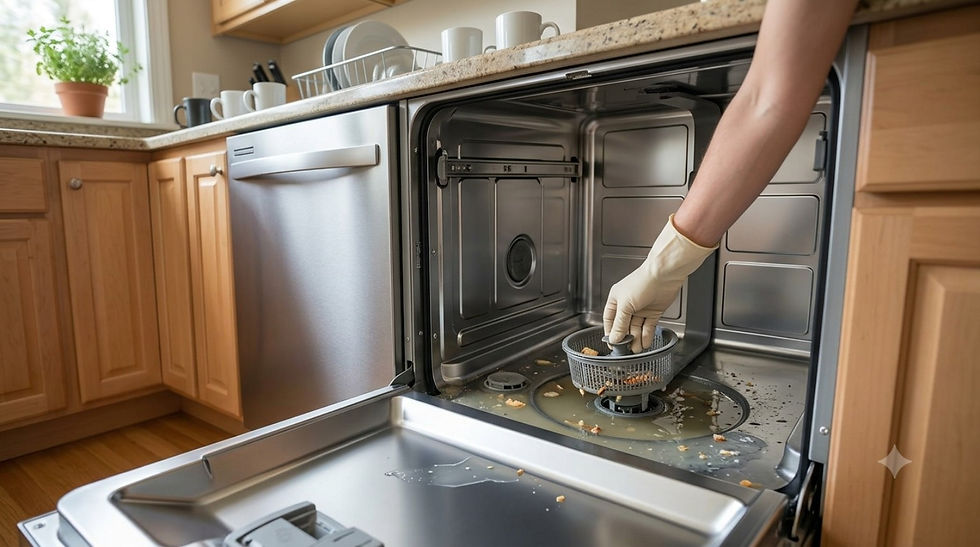
2. If your model has a removable filter, follow the owner’s manual to remove it, rinse away food debris, and reinstall it correctly.
3. Run a normal cycle and check whether the odor and any standing water return.
4. If water remains, move to the dishwasher-not-draining guide instead of repeatedly masking the smell with cleaner.
5. Stop immediately for burning/electrical smell, smoke, sparking, or abnormal heat.

1. Food or Sour Smell: Check the Filter First
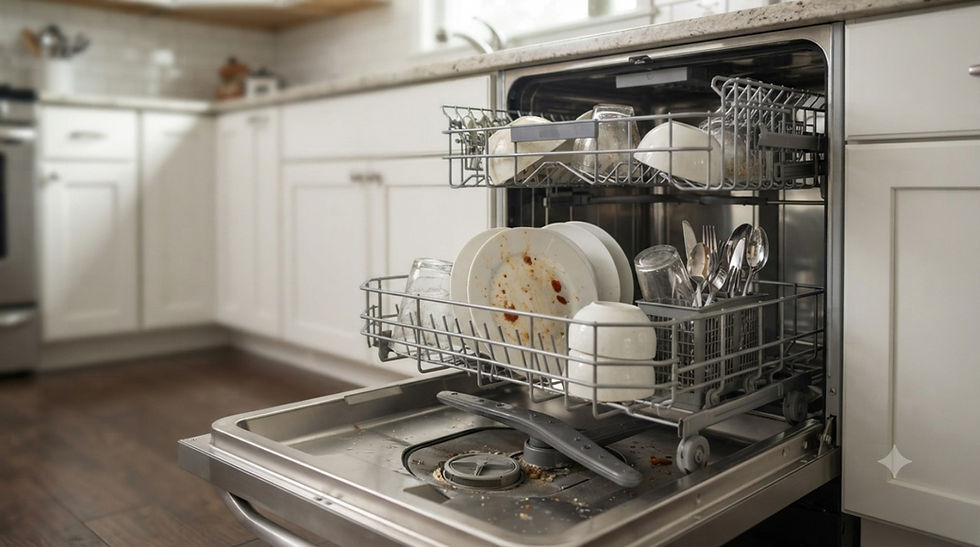
Bosch and Whirlpool both identify trapped food and debris in the filter area as a common source of dishwasher odor. Filter designs vary, so do not force a filter out if your manual does not show it as removable. If it is removable, rinse it under running water and use a soft brush if the manufacturer allows it.
If the smell improves after filter cleaning, the problem was probably residue rather than a failed component. For model-specific removal and cleaning steps, use your owner’s manual. Bosch dishwasher odor guidance
2. Standing Water or Sewage-Like Odor: Treat It as a Drainage Clue
Whirlpool notes that stagnant water can worsen odors and that drainage restrictions can involve the filter, drain path, disposal connection, or other components. A small amount of water in a designed sump can be normal on some models, but obvious standing water after the cycle should not be ignored.
If water is still sitting in the tub, use our Dishwasher Not Draining guide for the next safe checks. Do not pour chemical drain opener into the dishwasher; Whirlpool specifically warns against drain-opening chemicals inside the appliance.
3. Greasy or Musty Smell: Clean the Surfaces the Manufacturer Allows
Grease and food residue can collect on the filter, door gasket, spray-arm area, and interior surfaces. Whirlpool recommends wiping the door seals and interior with a damp cloth and mild detergent; GE also points owners toward filter cleaning and approved dishwasher-cleaning methods for odor-causing buildup.
Use only a dishwasher cleaner or cleaning method allowed by your appliance manual or manufacturer. Avoid mixing cleaners or improvising with harsh chemicals.
4. Odor After a New Garbage Disposal or Poor Draining
If the dishwasher drains through a garbage disposal, food waste or a problem at that connection can contribute to odor. Whirlpool recommends clearing the disposer of obstructions. KitchenAid also notes that a newly installed disposal must have the dishwasher inlet knockout plug removed for the connection to work correctly.
You can safely run the disposer according to its own instructions if it is simply holding food waste. If the odor began after plumbing or disposal installation and the dishwasher is not draining correctly, stop at external checks and have the drain connection or installation inspected rather than disassembling plumbing or appliance components.
When the Smell Means Stop Using the Dishwasher
A burning or electrical smell is not a cleaning problem. If there is smoke, sparking, flames, melting, or abnormal heat, stop using the dishwasher. CPSC dishwasher recalls have documented burning smells, smoking, overheating, and fire hazards caused by electrical or heating-component failures. Do not open panels, access wiring, bypass safety devices, or continue test cycles.
Disconnect power only when it is safe to do so and consistent with the appliance’s instructions; otherwise keep clear and contact the manufacturer, a qualified appliance technician, or emergency services if there is an active fire or immediate danger.
If the Dishwasher Still Smells After Cleaning
Odor is gone and the tub drains normally: resume normal use and follow the manufacturer’s filter/cleaning schedule.
Odor returns with standing water: troubleshoot the drain path; do not keep covering the symptom with cleaner.
Dishes also come out dirty: check the separate dishwasher-not-cleaning guide because poor spray or filtration can overlap with odor complaints.
Musty residue returns despite normal draining and cleaning: use manufacturer-approved cleaner and service if the odor persists.
Burning/electrical odor, smoke, sparking, or abnormal heat: stop use and arrange qualified service.
Official Sources Used
Bosch: filter debris, filter cleaning, spray-arm cleaning, and manufacturer-approved dishwasher cleaning. Official source
Whirlpool: odor causes, filter and interior cleaning, standing water, and disposal checks. Official source
Whirlpool drainage guidance: drainage restrictions, filter/drain path checks, and warning against drain-opening chemicals. Official source
GE Appliances: filter care and approved dishwasher-cleaning guidance. Official source
U.S. CPSC: documented dishwasher burning smell, smoking, flame, and fire-hazard stop-use context. Official source
Related Dishwasher Guides
If the main symptom is water left in the tub, go to Dishwasher Not Draining. If the dishwasher drains but dishes stay dirty, use Dishwasher Not Cleaning Dishes. Browse the Dishwashers hub for adjacent troubleshooting guides.

Comments