
Freezer Not Freezing? Verify Temperature, Door Seal, and Airflow

Updated: Sep 24
Food that feels soft is a warning sign, but the best starting point is the freezer’s actual temperature. A thermometer tells you whether the problem is a brief recovery after loading or a continuing loss of freezing performance.
Once you know the temperature, check the simple things that change how cold air stays inside: door closure, loading, visible vents, and unusual frost.
Verify the freezer temperature
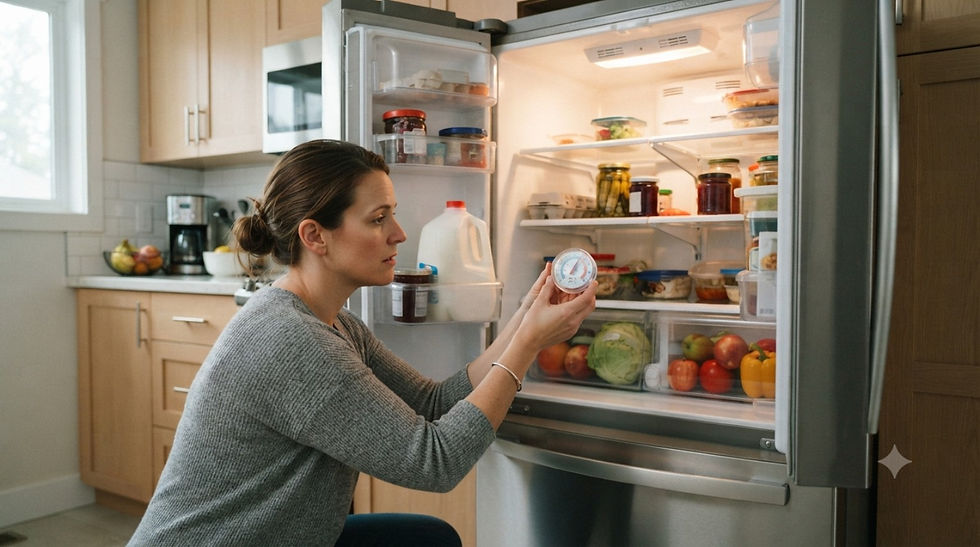
First safe check: Use an appliance thermometer and compare the reading with the setting and the owner’s manual. USDA recommends keeping a freezer at 0°F (-18°C) for food quality and safety management.
What the result means: A freezer near its normal target after a recent door opening or grocery load may only need recovery time. A temperature that continues rising is a stronger appliance-failure clue.
Check the door and loading pattern
First safe check: Make sure packaging is not keeping the door ajar, the gasket contacts the cabinet, and food is not packed against visible air outlets. Avoid repeatedly opening the door while evaluating recovery.
What the result means: If the temperature improves once the door closes correctly or airflow is restored, the symptom may be use- or loading-related. If not, look for frost and broader refrigerator symptoms.
Look for frost or a second warm compartment
First safe check: Note whether heavy frost is blocking visible areas and whether the refrigerator section is also warming. Do not chip ice with sharp tools or apply unapproved heat.
What the result means: Both compartments warming points toward a broader cooling problem. Heavy recurring frost after normal door checks is a model-specific service clue rather than a reason for DIY defrost-component testing.
Separate appliance diagnosis from food decisions
Record the freezer thermometer reading and whether it is stable, rising, or recovering after a known door or loading event. Compare the refrigerator section if the appliance has one, and note any visible frost or door-seal obstruction. This gives a technician a temperature pattern rather than a single impression that food feels soft. For food, follow USDA guidance for the actual temperature and exposure history; do not assume that refreezing or a later cold reading makes previously thawed perishables safe. Keep the door closed as much as practical while arranging help.
Where this fits in the refrigerator decision path
Return to Refrigerator Troubleshooting: Read the Temperature and Compartment Clues if more than one symptom is happening or the temperature pattern changes.
When to stop and call for service
Frozen food is thawing and food-safety decisions are needed.
The freezer and refrigerator are both warming despite correct settings and closed doors.
You see electrical damage, smell burning, or a breaker repeatedly trips.
The next diagnosis would require refrigerant, compressor, fan, wiring, or defrost-system access.


Comments