
Furnace Blowing Cold Air? Check These 5 Safe Things First

Quick answer: A furnace that blows cool or room-temperature air is often circulating air between heat cycles because the thermostat fan is set to ON. Other common paths are a dirty filter or blocked airflow, a normal brief startup/cooldown period, or a heating/ignition fault that needs professional service.
First safe check: Set the thermostat to HEAT, raise the set temperature above the room temperature, and set FAN to AUTO—not ON.

Next action: Let one complete heating call run. If the air never becomes warm, check only an accessible filter and visible vents. If those are clear and the furnace still blows cold air, stop testing and call a qualified HVAC technician.
Stop First if You Notice a Safety Warning
Leave the home and call emergency services or the gas utility from a safe location if you smell gas or a carbon monoxide alarm sounds. Do not operate switches, light flames, or try to find the leak.
Stop using the furnace and arrange qualified service for smoke, a burning electrical odor, visible soot, unusual overheating, or a breaker that trips again. Never bypass a safety switch or continue resetting the system.
Carbon monoxide has no color or smell. Headache, dizziness, weakness, nausea, chest pain, or confusion can be signs of exposure; get into fresh air and seek emergency help.
The 5 Safe Checks to Make
1. Make sure this is a furnace—not a heat pump
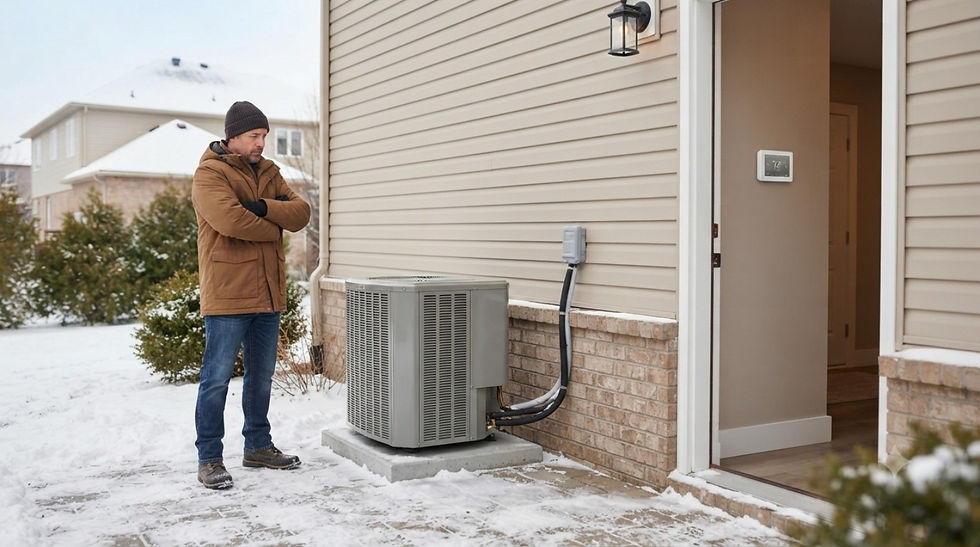
A heat pump can deliver air that feels cooler than furnace air, and it can briefly blow cooler air during a normal defrost cycle. If your system is a heat pump, follow our Heat Pump Not Heating guide instead. Do not use furnace ignition advice on a heat pump.
2. Check HEAT, setpoint, and FAN AUTO
Confirm the thermostat is in HEAT mode and the target temperature is above the current room temperature. Then change the fan setting from ON to AUTO. With FAN ON, the blower can circulate unheated room air even while the furnace is between heating cycles.
If the thermostat uses batteries and shows a low-battery warning, replace them only as directed by the thermostat manufacturer. Do not remove wiring or jump thermostat terminals.
3. Give one full heating call time to develop
A short burst of cool air at the beginning or end of a cycle can be normal as air already in the ducts moves. Watch one complete heating call from the thermostat. The air should become warm during the call; continuous cool air is not a normal result.
4. Inspect only the accessible air filter
Turn the system off at the thermostat before handling the filter. If the filter is accessible without opening a furnace service panel, compare it with the replacement interval and procedure in the equipment manual. Replace a visibly dirty disposable filter with the same size and an approved type, installed in the marked airflow direction.
Do not run the furnace without a filter. A clogged filter slows airflow and can make the system work harder; restricted airflow can also contribute to overheating and a safety shutdown while the blower continues to move cooler air.
5. Open and uncover normal supply and return vents
Make sure ordinary room supply registers are open and not covered by rugs, furniture, or curtains. Check that return grilles are not blocked. Do not reach into ducts, remove furnace panels, or change balancing dampers you cannot identify.
What the Pattern Usually Means
Cool air only briefly at startup or shutdown: often normal duct-air movement. Confirm that warm air follows during the heating call.
Cool air runs constantly, even between heat calls: the thermostat fan may be set to ON instead of AUTO.
Air starts warm, then turns cool before the room reaches the setpoint: restricted airflow or a furnace safety control may be stopping heat while the blower continues. Check the accessible filter and vents once, then call for service if it repeats.
Airflow is weak at most vents: inspect the filter and visible blockages. Persistent weak airflow needs professional airflow and duct evaluation.
The blower runs but heat never starts: an ignition, flame-sensing, fuel-supply, control, limit-switch, or other internal fault may be present. These are professional-only checks.
The furnace does not start at all: use our separate no-start guide because the diagnostic path is different.
If there is no blower and no heating response, go to Furnace Won’t Turn On? Check These 4 Safe Things.
What Not to Repair Yourself
Do not open burner or electrical compartments, clean or replace a flame sensor, relight a pilot unless the exact manufacturer manual explicitly assigns that task to the homeowner, adjust a gas valve, handle oil-firing parts, probe wiring, replace a limit switch or igniter, alter venting, clear an internal condensate system, or bypass a door or safety switch.
Those parts control fuel, flame, combustion, electrical power, and safe shutdown. A qualified HVAC technician should diagnose repeated ignition failures, internal fault codes, combustion problems, cracked or corroded components, and abnormal cycling.
When to Call an HVAC Professional
The furnace still blows cool air after HEAT/FAN AUTO, one full heating call, a correct clean filter, and open visible vents.
Warm air starts and then repeatedly turns cool before the thermostat is satisfied.
The system repeatedly stops, locks out, or requires a reset.
You see an external fault code, water around the furnace, soot, scorch marks, or damaged venting.
The filter becomes abnormally dirty quickly or airflow remains weak after replacement.
You are unsure whether the equipment is a furnace, heat pump, or combined dual-fuel system.
A Simple Resolution Path
Handle any gas, carbon monoxide, smoke, or electrical warning first.
Confirm the equipment type.
Set the thermostat to HEAT and FAN AUTO.
Observe one complete heating call.
Check only the accessible filter and visible room vents.
If heat does not return—or the problem repeats—stop and book qualified HVAC service.
For more symptom-specific guidance, visit the HVAC troubleshooting hub.
Official Sources
Carrier: Why Is My Furnace Blowing Cold Air? — thermostat fan settings, filter restriction, limit-switch behavior, and professional-service thresholds.
ENERGY STAR: Heat & Cool Efficiently — regular filter checks and the airflow/efficiency impact of a dirty filter.
NFPA: Heating Safety — fuel-burning equipment, carbon monoxide alarms, and gas-odor emergency guidance.
CDC: Carbon Monoxide Poisoning Basics — carbon monoxide properties, symptoms, and health risk.
Sources and guidance reviewed September 5, 2026.

Comments