

Ice Maker Not Making Ice? 6 Safe Checks Before You Call for Service

If your refrigerator ice maker has stopped making ice, start with the simple conditions that can stop production before assuming the ice maker itself has failed. The most likely owner-checkable causes are an ice maker that is switched off, a freezer that is too warm, water not reaching the refrigerator because of a supply or filter problem, a door or ice bin that is not seated correctly, or a refrigerator that has not had enough time after installation or a reset.
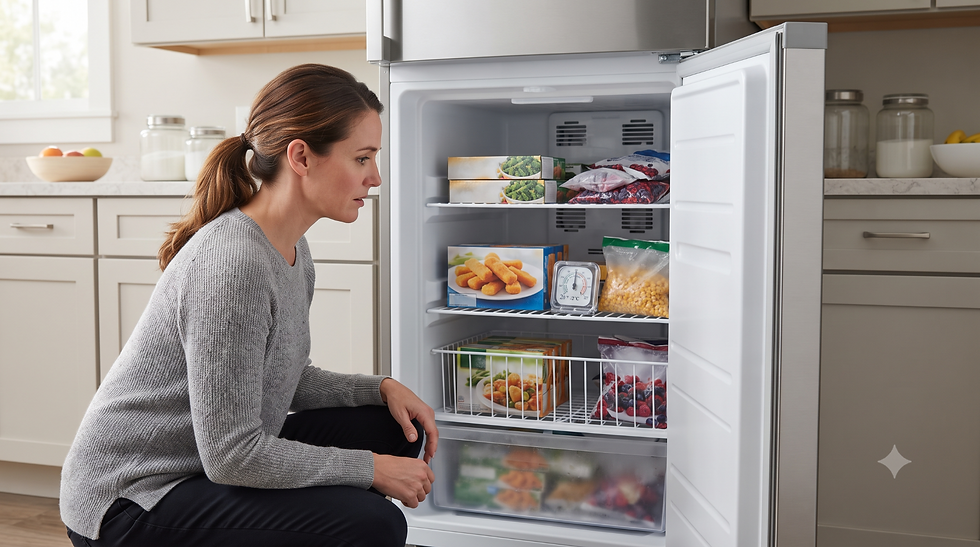
First safe check: confirm the ice maker is ON and check the freezer temperature against your model’s manual. Samsung says its ice makers need the freezer to reach 0°F or lower; LG guidance can vary by model and in some cases recommends a colder setting for ice production. If the freezer is warmer than its set temperature, solve the cooling problem first. If temperature is correct, check whether water is reaching the refrigerator and whether the filter is overdue.
What to do next: if the freezer is cold enough and the refrigerator can dispense water normally, continue with the door, bin, and model-specific reset checks below. If the freezer cannot get cold, there is no water flow, the refrigerator is leaking, or the ice maker still does not cycle after the manufacturer’s waiting period, stop at the appropriate step and arrange service rather than opening panels or testing internal electrical parts.
1. Confirm the ice maker is actually turned on
This sounds obvious, but it is a common first check in manufacturer troubleshooting. Samsung notes that many models show an Ice Off icon when ice production is disabled. LG likewise directs owners to confirm the ice maker or Ice On/Off control is enabled.
Look for an Ice Off, Ice On, or similar indicator on the control panel.
If your model uses a physical switch or feeler arm, use the owner’s manual to identify the normal ON position.
Do not force an arm, switch, or mechanism that does not move normally.
2. Check the freezer temperature before blaming the ice maker
Ice production depends on the refrigerator reaching the temperature range its manufacturer expects. Samsung’s current support guidance says the freezer needs to reach 0°F or lower to produce ice. LG’s support flow also treats freezer temperature as an early diagnostic step and notes that ice production slows or stops when conditions are too warm.
If the freezer display is noticeably warmer than the setting, food is softening, or frost is building around the door, the root problem may be cooling or sealing rather than the ice maker. See our guide to freezer frost buildup if heavy frost is part of the symptom.
3. Check whether water is reaching the refrigerator
A no-water condition can stop ice production even when the freezer is cold. Manufacturer guidance commonly points to the household water supply, a clogged or overdue filter, or low water flow as possible causes. GE specifically lists refrigerator temperature and the water filter among the first icemaker checks, while Samsung notes that low water pressure or a filter issue can reduce or stop ice production.
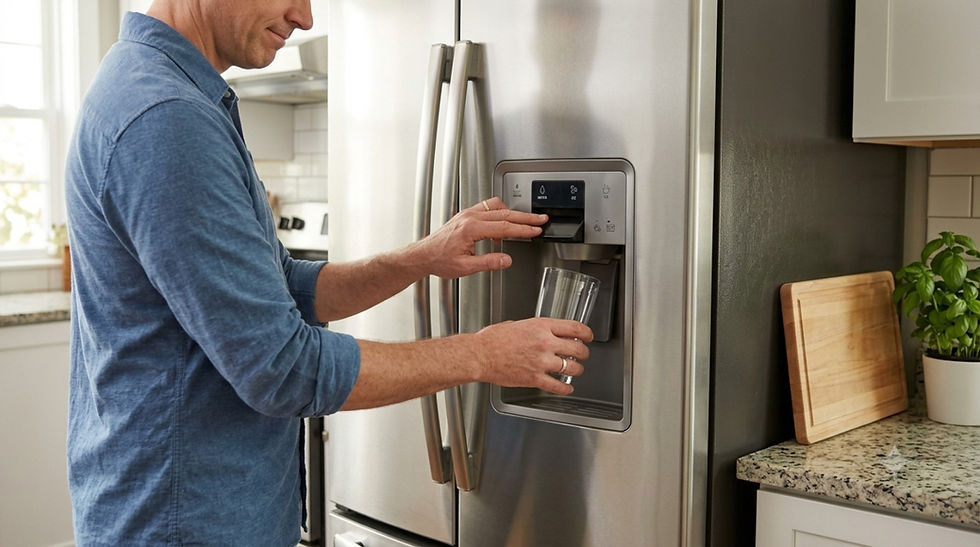
If your refrigerator has a water dispenser, test it. Normal water flow makes a total household supply interruption less likely, though it does not rule out an ice-maker-specific fault.
Make sure the household refrigerator water shutoff has not been accidentally closed. Only inspect accessible, visible tubing for obvious kinks or leaks; do not disconnect internal lines.
If the filter indicator says replacement is due, or the manual’s replacement interval has passed, use the correct approved filter for your model and follow the manufacturer’s replacement procedure.
If the water dispenser is also not working, use the separate refrigerator water dispenser troubleshooting guide to narrow the water-supply side first.
4. Make sure the freezer door and ice bin are seated correctly
Warm air entering around a door seal can interfere with ice production. Samsung also notes that on some designs the ice bucket must be fully seated and locked in its proper position. LG has model-specific guidance showing that an incorrectly installed ice bin can also prevent production.
Close the freezer door and verify nothing is preventing a full seal.
Remove loose packaging or food that blocks the bin or door, but do not pry ice from mechanisms with a sharp tool.
If your manual shows a removable ice bucket, reinstall it in the documented orientation and make sure it sits fully in place.
5. Give a new or recently reset refrigerator enough time
A newly installed refrigerator may not make ice immediately. LG says a new unit can take up to about 24–48 hours, depending on the model and conditions, to cool down and begin normal ice production. The safest rule is to follow your model’s stated waiting period rather than repeatedly resetting the ice maker.
If the refrigerator was just installed, recently lost power, had the filter changed, or was reset, avoid repeated test cycles. Samsung specifically warns against pressing an ice-maker Test button repeatedly after the tray has filled because water can overflow or ice can jam.
6. Use only the reset or test procedure for your exact model
Reset procedures are not universal. Samsung and LG publish model-specific instructions that use different buttons, timing, and sequences. If your owner’s manual or the manufacturer’s support page gives a reset or test procedure for your exact refrigerator, follow it once and then allow the stated time for a new cycle.
Do not remove electrical covers, probe a water inlet valve with a meter, bypass a door or ice sensor, force the harvest mechanism, or use a heat gun, hair dryer, knife, or chisel inside the ice maker. Those actions can create shock, fire, water-damage, or component-damage risk and are outside safe homeowner troubleshooting.
When the problem points to professional service
Book manufacturer or qualified appliance service when the freezer is at the correct temperature, water flow is normal, the ice maker is enabled, the door and bin are correctly seated, and the unit still will not cycle after the manufacturer’s waiting period. Internal water inlet valves, wiring, sensors, control boards, sealed cooling components, and ice-maker assemblies should be diagnosed with the appliance de-energized and with the model-specific service information available.
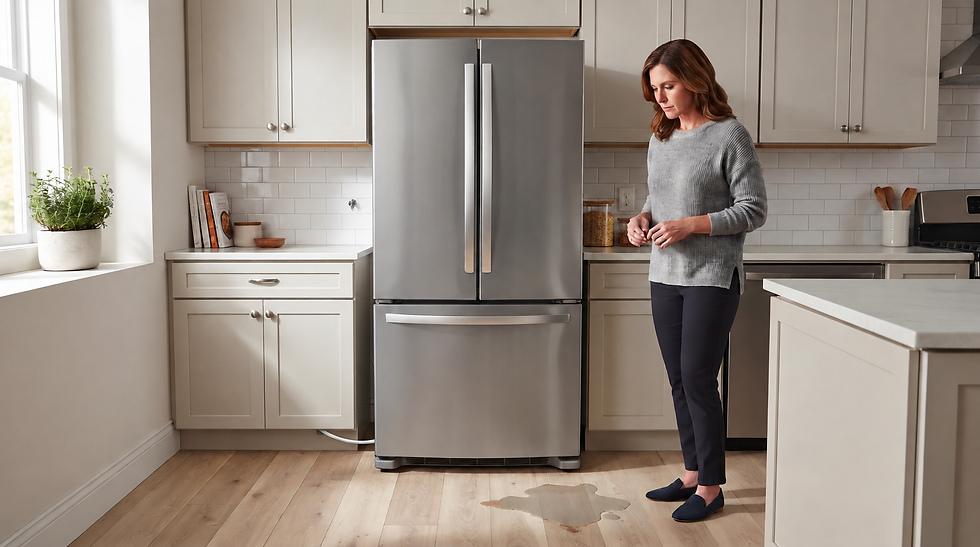
Stop using the appliance and seek prompt service if you notice electrical burning odor, sparking, abnormal heat, water reaching electrical parts or the outlet, or a significant active leak. Disconnect power only if you can do so safely without contacting water or a damaged electrical connection.
A quick symptom-to-next-step guide
Ice maker is off → turn it on using the model’s documented control and allow time for a cycle.
Freezer is too warm → troubleshoot the cooling or door-seal problem first.
Water dispenser is also weak or dead → investigate the refrigerator water supply and filter first.
Freezer is cold and water works, but no ice → verify bin/door position, then use one model-specific reset or test if officially documented.
All safe checks pass but no cycle occurs → schedule appliance service; internal component testing is the next step, not further DIY disassembly.
Comments