
Refrigerator Warm but Freezer Cold? Follow the Airflow Clues

Updated: Sep 24
A warm refrigerator section with a still-cold freezer is a useful clue: the appliance is producing cold somewhere, but the fresh-food compartment may not be receiving or circulating it normally.
That makes airflow, loading, door closure, and visible frost more informative first checks than treating the entire refrigerator as a no-cooling failure.
Look for blocked air paths
First safe check: Move packages that are pressed directly against visible vents or packed tightly enough to prevent circulation. Do not remove vent covers or internal panels.
What the result means: If temperatures improve after restoring space around the vents, food placement was likely part of the problem. If the vents are clear and the refrigerator stays warm, keep following the compartment-specific path.
Check door closure and recent use
First safe check: Make sure the refrigerator door seals against the cabinet all the way around and that drawers, bins, or food are not preventing closure. Consider whether the door was left open or the compartment was recently loaded with warm food.
What the result means: A temporary warm-up after heavy use may recover with time. A persistent warm fresh-food section with a normally cold freezer suggests a model-specific airflow or control issue.
Use frost as a clue, not something to chip away
First safe check: Note any unusual frost near vents or inside the freezer. Do not use knives, heat guns, or unapproved heaters to remove it.
What the result means: Heavy recurring frost can interfere with airflow on some designs, but the cause and repair differ by model. If frost returns after normal door-use checks, service is safer than internal defrost-system testing.
Compare both compartments over time
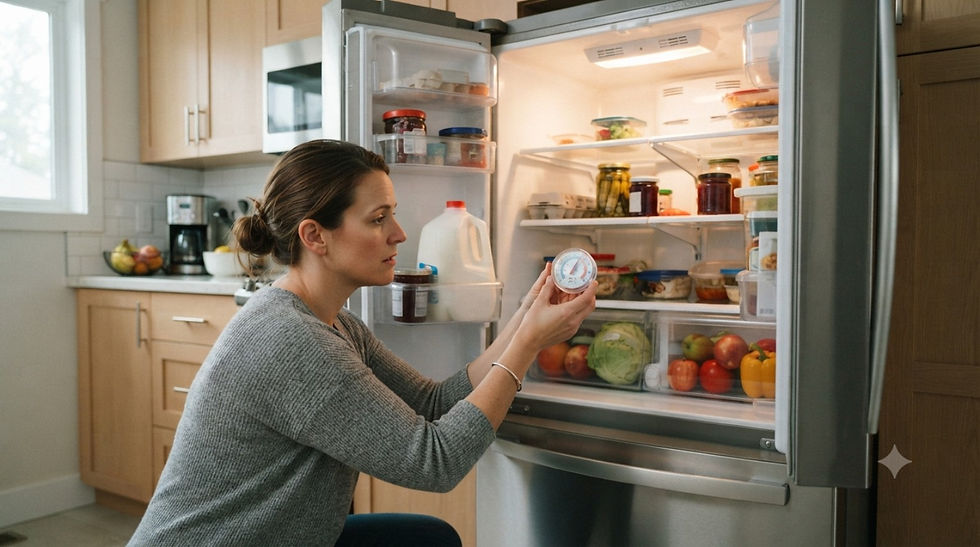
Place separate appliance thermometers in the fresh-food and freezer sections, then note both readings and when the doors were last left open or heavily loaded. A cold freezer reading alongside a persistently warm refrigerator supports the compartment-airflow path; two warming compartments belong on the whole-unit cooling path. Record whether visible frost is near an air opening and whether packages block it. This pattern is more useful to a service technician than a report that the appliance simply feels warm. Make food-safety decisions separately; a later temperature recovery does not establish that food held warm is safe.
Where this fits in the refrigerator decision path
Return to Refrigerator Troubleshooting: Read the Temperature and Compartment Clues if more than one symptom is happening or the temperature pattern changes.
When to stop and call for service
The refrigerator section remains above 40°F long enough to create a food-safety concern.
Heavy frost repeatedly returns despite normal door closure and use.
Troubleshooting would require removing internal ducting, fans, dampers, wiring, or defrost components.
The freezer also becomes too warm, which moves the problem to the whole-unit cooling path.


Comments