
Washing Machine Smells Bad: Where the Odor Comes From

Updated: Sep 23
A bad smell from a washing machine usually comes from moisture and residue, not a major mechanical failure. Common causes include detergent or fabric-softener buildup, wet laundry left in the drum, a dirty dispenser or door area, and water that is not draining completely. Start with the simple checks below before assuming the washer needs repair.
If the odor smells burnt, electrical, or like hot wiring rather than musty or stale, stop using the washer. Disconnect power if you can do so safely and arrange qualified service instead of opening the machine or bypassing a safety device.

First, identify the kind of smell
The odor itself can point you toward the safest first check:
Musty or mildew-like: usually points to trapped moisture, detergent residue, or buildup inside areas that stay damp.
Sour or stale: often follows wet laundry sitting too long or water remaining in the washer after a cycle.
Drain or sewer-like: can be related to standing drain water or the way the external drain hose is installed. Installation requirements vary by model.
Burning or electrical: is not a cleaning problem. Stop the washer and have the appliance or electrical supply checked.
The most common causes of washer odor
1. Moisture stays trapped between loads
A closed washer can stay damp long after the cycle ends. Whirlpool and LG both advise allowing the interior to dry between loads where the model instructions permit it. Removing laundry promptly also reduces the time moisture and soils remain in the drum.
2. Too much detergent or fabric softener
More detergent does not necessarily mean a cleaner washer. Manufacturer guidance from Whirlpool, LG, and GE Appliances notes that excess or incorrect detergent can leave residue that contributes to odor. Use the detergent type and amount specified for your washer and the product label, especially on high-efficiency machines.
3. Residue collects in easy-to-miss areas
Depending on the washer design, residue can collect around the detergent dispenser, door or lid area, rubber gasket, and an accessible drain-pump filter. Only remove or clean parts that your owner’s manual describes as routine user maintenance. You do not need to open the cabinet or remove internal components to troubleshoot a smell.
4. Water is not leaving the washer completely
If the odor appears together with slow draining, water left in the drum, or unusually wet clothes, the smell may be a drainage symptom rather than just a cleaning issue. Work through the safe checks in our Washing Machine Not Draining guide before repeatedly running cleaning cycles.
5. The external drain hose may need attention
GE Appliances notes that on some washer installations, a drain hose pushed too far into the standpipe can allow drained water to siphon back toward the washer and contribute to a musty odor. Do not change the hose position based on a universal measurement: check the installation instructions for your exact model first.
What to check safely, in order
Remove wet laundry promptly. If clothes have been sitting in the washer, take them out and let the drum air out.
Look for visible moisture and residue. Wipe the door or lid area and any user-accessible gasket surfaces with a soft damp cloth, following the manual for your model.
Clean the detergent dispenser if the manual says it is removable. Rinse away old detergent and fabric-softener residue and reinstall it correctly.
Run the washer’s dedicated cleaning cycle. Look for names such as Tub Clean, Clean Washer, Basket Clean, or Self Clean. Run it with an empty drum and use only a cleaner or procedure approved in the owner’s manual.
Check an accessible drain-pump filter if your model has one. Only use the owner’s-manual procedure. Have towels or a shallow container ready because retained water may come out.
Inspect the visible drain hose. Look for obvious kinks, crushing, or an installation that does not match the manual. Do not dismantle the pump or internal drain system.
Do not mix cleaning chemicals
Do not combine bleach with vinegar, ammonia, or other household cleaners. The CDC warns that household bleach should not be mixed with other cleaners or disinfectants because dangerous vapors can be released. Follow one manufacturer-approved washer-cleaning method at a time.
When the smell means you should call a professional
Stop DIY troubleshooting and arrange service if the washer has a burning or electrical smell, repeatedly trips a breaker or GFCI, leaks near electrical components, will not drain after the normal user checks, or develops a strong odor that returns immediately after the manufacturer-recommended cleaning procedure.
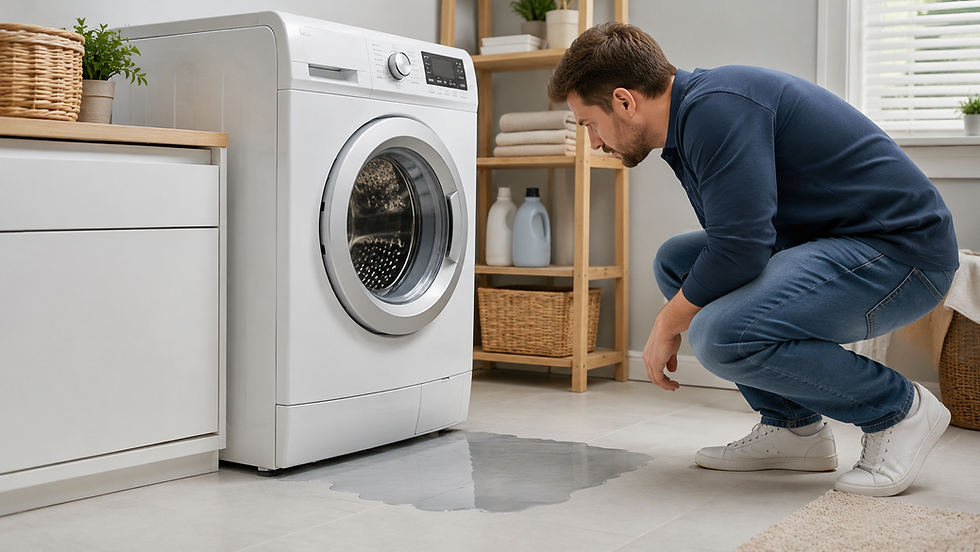
If you also notice water on the floor, identify where it starts before using the washer again. Our Washing Machine Leaking Water guide explains the safe external checks by leak location.
How to keep the smell from coming back
Remove laundry soon after the cycle ends.
Let the washer interior dry between loads when your model instructions allow it.
Use the correct detergent type and measured amount.
Clean the dispenser, gasket or lid area, and any user-serviceable filter on the schedule in the owner’s manual.
Run the manufacturer’s washer-cleaning cycle at the recommended interval.
Investigate slow drainage instead of trying to cover the smell with fragrance or repeated detergent.
Manufacturer guidance used for this article
Cleaning instructions and acceptable cleaning products vary by washer model. When your owner’s manual differs from general guidance, follow the manual for your specific machine.
If odor is only one of several washer symptoms, return to Washing Machine Troubleshooting: Start With the Symptom to choose the most useful troubleshooting path.
Comments