
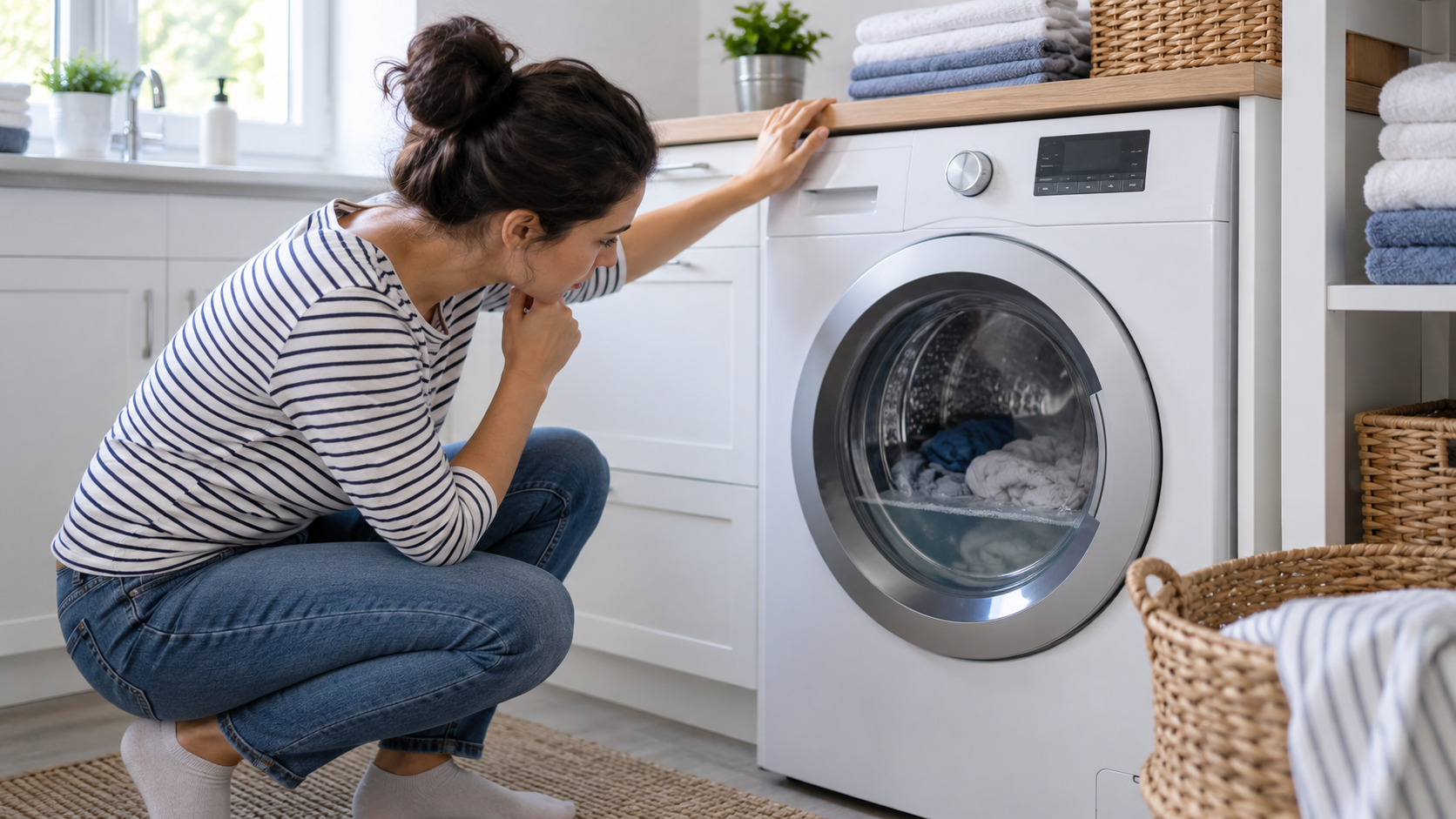
Washing Machine Won’t Drain? Follow the Water Path

Updated: Sep 23
If your washing machine won’t drain, drains very slowly, or leaves water in the tub after the cycle, start by following the water path from the washer to the household drain.
Do not assume the drain pump has failed first.
A kinked or incorrectly installed drain hose, debris in a model-approved pump filter, excessive suds, or a backed-up household drain can all interfere with normal drainage.
First identify which symptom you actually have: the washer does not drain at all, it drains very slowly, most of the water leaves but some remains, it stops with water inside and shows a drain-related error, or you hear the washer trying to drain but the water level does not drop.
1. Make Sure the Washer Is Actually Stuck
A short pause does not always mean the washer has failed to drain. GE Appliances notes that certain models may pause for several minutes during normal operation.
If the display is still active and the washer has only recently stopped moving, give it a short time before canceling the cycle. If standing water remains for an unusually long time, the cycle repeatedly ends with water inside, or a drain-related error appears, continue with the drain checks below.
2. Check the Visible Drain Hose First
Turn the washer off before repositioning any accessible hose.
Inspect the visible drain hose behind the machine for a sharp kink, crushing between the washer and wall, twisting, an obvious blockage at an exposed end, or a hose that has shifted from its normal installation position.
A restricted hose can slow or completely prevent water from leaving the machine. Also check whether the washer was recently moved or installed. A drain problem that began immediately after moving the machine makes hose routing and installation especially useful clues.
Do not pull a heavy washer farther than you can safely control. If accessing the hose requires unsafe lifting, disconnecting fixed plumbing, or working around damaged electrical connections, stop and have the installation checked.
3. Check the Drain-Hose Installation Against the Exact Manual
Drain hoses are not installed the same way on every washer. Samsung provides model-specific guidance for drain-hose setup and drainage troubleshooting.
The hose may need to enter a standpipe or laundry sink at a specified height and depth. Installing it too deeply, sealing the connection incorrectly, or placing it outside the manufacturer’s required range can affect draining or create siphoning problems.
Because these measurements vary by washer, do not use a generic height or insertion depth from another model. Check the installation manual for your exact machine and correct only the parts of the installation that are safely accessible.
4. Does Your Washer Have a User-Accessible Pump Filter?
Some front-load washers have a drain-pump filter designed for routine owner maintenance. Others do not. Never remove an appliance panel just because another washer model has a filter behind it.
If your manual specifically shows an owner-accessible drain filter, follow that exact procedure. Samsung and LG both provide model-specific procedures and warn owners to prepare for retained water.
Before opening an accessible filter, turn off and disconnect the washer as instructed by the manufacturer, prepare for retained water, protect the floor, and be careful if the washer recently used hot water. Water trapped inside after a hot cycle may still be hot enough to cause injury.
Debris such as lint, coins, small objects, or accumulated material can restrict an accessible filter and slow draining. If your manual does not identify a user-serviceable filter, do not remove panels to search for one.
5. Is the Household Drain Backing Up?
The washer may be pumping normally while the home’s drain system cannot accept the water quickly enough.
Watch the standpipe or utility sink only from a safe location during a normal drain attempt. GE Appliances and LG both distinguish appliance drainage from restrictions in the household drain path.
Signs that the problem may be outside the washer include water rising in the standpipe, a utility sink filling or draining slowly, water backing up from another nearby drain, or overflow occurring when the washer pumps water out.
Do not keep running the washer if the drain is overflowing. Repeated testing can cause water damage. A plumber may be the appropriate next call when the appliance appears to discharge normally but the household drain cannot handle the flow.
6. Is There Excessive Foam or a Suds-Related Error?
Too much detergent can sometimes interfere with normal draining, especially in high-efficiency washers. LG explains that excessive suds can interfere with the drain process and contribute to drain-related errors.
Look for a tub full of unusually heavy foam, repeated rinsing, a cycle that keeps getting longer, a Sud, Sd, or similar message, or slow draining after too much detergent was used.
Error codes are model-specific, so do not assume the same letters mean exactly the same thing on every washer. Use the manufacturer’s support page or owner’s manual for the exact code shown on your machine.
7. What If It Drains, but Not Completely?
This is an important distinction because many people experience a washer that is not draining all the way rather than one that does not drain at all.
If most of the water leaves but some remains, check the same external drain path: visible hose, model-specific hose installation, a user-accessible filter if the manual provides one, excessive suds, and household drain performance.
Also note where the remaining water is. A small amount of moisture in certain internal areas may not mean the same thing as several inches of standing water in the tub, but visible water remaining in the main wash drum after a completed cycle is useful evidence that drainage did not finish normally.
If the same amount of water remains after repeated cycles despite a clear external path, service may be needed.
8. What If the Washer Drains Very Slowly?
Slow draining can be easier to overlook than a complete drain failure.
The drain stage takes much longer than before.
The cycle timer appears to stall.
The washer repeatedly tries to continue.
Clothes stay wetter than normal.
A drain error eventually appears.
A partially restricted hose or filter can sometimes allow some water through while preventing the washer from draining fast enough to complete the cycle normally. That is why not draining completely, not draining properly, and slow draining can be different degrees of the same restricted drain path.
If safe external checks do not improve the drain time, avoid repeated long test cycles and arrange service.
9. Do You Hear the Washer Trying to Drain?
The sound the washer makes can provide a clue, but it does not identify a failed part by itself. LG includes pump-sound observations in its drain-error troubleshooting, while GE Appliances recommends service when drainage still fails after the external path is clear.
If you hear a normal drain-pump-type sound but the water level does not fall, recheck the visible hose, accessible filter, and household drain. If the washer makes an abnormal grinding, harsh mechanical, or electrical sound during the drain stage, stop troubleshooting.
If there is no obvious external restriction and the washer repeatedly fails to drain, the problem may involve an internal pump, control, wiring, sensing, or another component that requires diagnosis. Do not remove panels to inspect the pump or electrical system.
Won’t Drain vs. Won’t Spin
Drain and spin problems often overlap. A washer may refuse to enter normal high-speed spin while water is still inside. If water remains in the tub, solve the drainage problem first. If the washer drains completely but still does not spin—or clothes remain soaking wet—continue with the Washing Machine Won’t Spin guide.
If the machine stops at several different points rather than specifically during draining, see Washing Machine Stops Mid-Cycle. For symptoms that overlap, start with Washing Machine Troubleshooting: Start With the Symptom.
If the door remains locked because water is still inside, follow the model’s normal drain/unlock procedure rather than forcing the door.
When to Stop and Call for Service
Stop using the washer and arrange qualified service when the visible drain hose is clear but the machine repeatedly will not drain, a model-approved accessible filter is clear but drainage still fails, the washer makes severe grinding or abnormal electrical sounds, the pump appears to attempt draining but the water level does not fall, a drain-related error repeatedly returns after manufacturer-approved checks, or reaching the suspected blockage requires panel removal.
Stop immediately if water reaches the plug, outlet, cord, or electrical components, you smell burning, see smoke or sparks, or the washer or household drain begins overflowing.
Do not repeatedly reset breakers, bypass safety systems, remove electrical panels, or dismantle internal pumps as part of homeowner troubleshooting.
Bottom Line
When a washing machine won’t drain, follow the water path before assuming an internal failure.
Start with the visible drain hose. Then check the exact installation requirements for your model. If the manufacturer provides an owner-accessible drain filter, inspect it using the manual’s procedure and take precautions for retained or hot water.
Next, separate an appliance problem from a household drain backup and check for excessive suds or a model-specific drain error. If the external path is clear and the washer still will not drain—or drainage is getting progressively slower—professional diagnosis is the safer next step.


Comments