
Washing Machine Stops Mid-Cycle? What to Check First

Updated: Sep 23
If your washing machine starts normally but then stops partway through the cycle, the most useful clue is when it stops. A pause during spin often points to an unbalanced load. A stop with water still in the drum can point to a drain problem. A completely dark control panel points more toward a power interruption. Start with the safe checks below before assuming the washer has an internal mechanical fault.

First, note exactly what the washer is doing when it stops
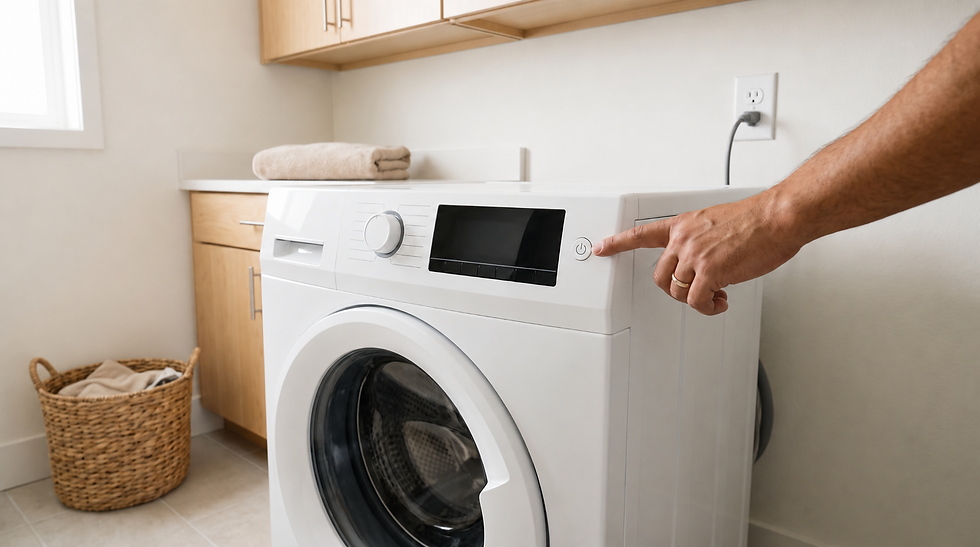
Before pressing buttons or unplugging anything, look at the display and the tub. Note whether the washer still has power, whether water is left inside, whether an error code is showing, and whether the stop happened during wash, rinse, or spin. That small amount of information can keep you from chasing the wrong cause.
1. Check for an unbalanced or overloaded load
A load that shifts heavily to one side can make a washer slow down, retry the spin, or stop to protect the machine. Whirlpool says a significant out-of-balance condition can stop spinning and require the load to be redistributed, while Samsung notes that poor balance can show up as stopping mid-cycle, slow spinning, or unusually long cycle times.
Open the washer only when the machine allows it safely, then redistribute bulky or tangled items. If the drum is packed tightly, remove a few items and restart the appropriate cycle. Do not force a locked door or bypass a lid or door switch.
2. Look for an error code before resetting the washer
If an error code or flashing light appears, photograph it or write it down before restarting the machine. The code may point to a load-balance, water-supply, drain, door-lock, or other condition. Clearing the display too early can remove the best diagnostic clue you have.
3. If water is still in the drum, check for a drain-related stop
Also useful: Washing Machine Won't Start: What to Check First
A washer may pause or fail to advance if it cannot remove water as expected. Check the visible drain hose for a sharp kink and make sure the drain area is not obviously blocked. Do not dismantle the pump, remove internal panels, or reach into electrical parts.
If the main symptom is standing water, use our step-by-step guide: Washing Machine Not Draining: Causes and Simple Checks.
4. If the washer loses all power, treat it as a power problem first
If the control panel goes completely dark, confirm that the plug is fully seated and that the household circuit has not tripped, but only if the area is dry and there is no sign of heat, burning, damaged wiring, or water near the outlet. LG notes that a washer can power off mid-cycle because of a power interruption or tripped breaker.
If a breaker or GFCI trips again immediately, stop resetting it. Repeated tripping needs professional electrical or appliance diagnosis.
5. A long pause may be the washer trying to correct the cycle
Not every apparent stop is a failure. Some washers pause while redistributing a load, checking water level, or attempting to correct an imbalance. Give the machine a few minutes and watch for drum movement, water flow, or a changing display before canceling the cycle.
6. Check whether the cycle was paused or a special cycle was selected
On some models, pressing Pause and leaving the washer idle can cause the machine to shut down after several minutes. Certain soak or partial-cycle selections can also make the washer appear to stop before a full wash-and-spin routine is complete. If you are unsure, check the cycle name on the display and restart using a normal cycle according to the owner’s manual.
7. When the stop happens during spin, compare it with a vibration problem
If the washer becomes loud, shakes hard, or repeatedly tries to rebalance just before stopping, the root problem may be excessive vibration rather than a general cycle-control issue. Make sure the machine is stable on the floor and the load is evenly distributed.
For that symptom, see Washing Machine Shaking Violently During Spin Cycle: What to Check.
When to stop troubleshooting and call for service
The washer repeatedly stops at the same point in every cycle after basic load, power, and drain checks.
The control panel goes dead even though the outlet and circuit remain stable.
You smell burning, see sparks, find melted plastic, or notice unusual heat at the plug or outlet.
A breaker or GFCI trips repeatedly.
The door stays locked with water inside and the model’s normal safe drain or unlock procedure does not work.
The washer shows a persistent error code that the manufacturer directs to service.
Avoid opening electrical compartments, bypassing safety interlocks, or disassembling the motor, control board, pump, or internal wiring. Those repairs are better left to a qualified appliance technician.
Bottom line
A washing machine that stops mid-cycle is often reacting to something specific: an unbalanced load, a drain delay, a power interruption, a paused cycle, or an error condition. Identify the stage where it stops, preserve any error code, and work through the safe external checks first. If the same stop repeats after those checks, service is the safer next step.
If the washer has more than one symptom or the stopping point is unclear, return to Washing Machine Troubleshooting: Start With the Symptom and choose the branch that best matches what the machine is doing now.

Comments