
Electrical Burning Smell in Your House? What to Check Safely—and When to Get Out

Updated: Aug 31
An electrical burning or hot-plastic smell is a warning sign, not something to ignore. Common possibilities include overheating at a receptacle or switch, overloaded or damaged wiring, or a plug-in device or cord that is failing. The first safe check is visual only: from a safe distance, look for smoke, active sparking, unusual heat, discoloration, buzzing or sizzling, or a smell that is strongest at one outlet, switch, appliance, or wall area. Do not remove covers, open a panel, or touch anything hot or damaged.
What to do next: if you see smoke or flames, active arcing or sparking, rapidly increasing heat, or a smoke alarm sounds, get everyone out, stay out, and call 911 or your local emergency number. If there is no active fire but the odor is coming from a switch, receptacle, wall, electrical panel, or an unknown source, stop using the affected equipment or area and arrange a qualified electrician. Do not keep testing the circuit to see whether the smell returns.
If the odor is actually a gas or rotten-egg smell rather than a hot electrical or plastic odor, leave immediately and contact the local gas authority from outside. Do not operate lights, phones, or other electronics before leaving.
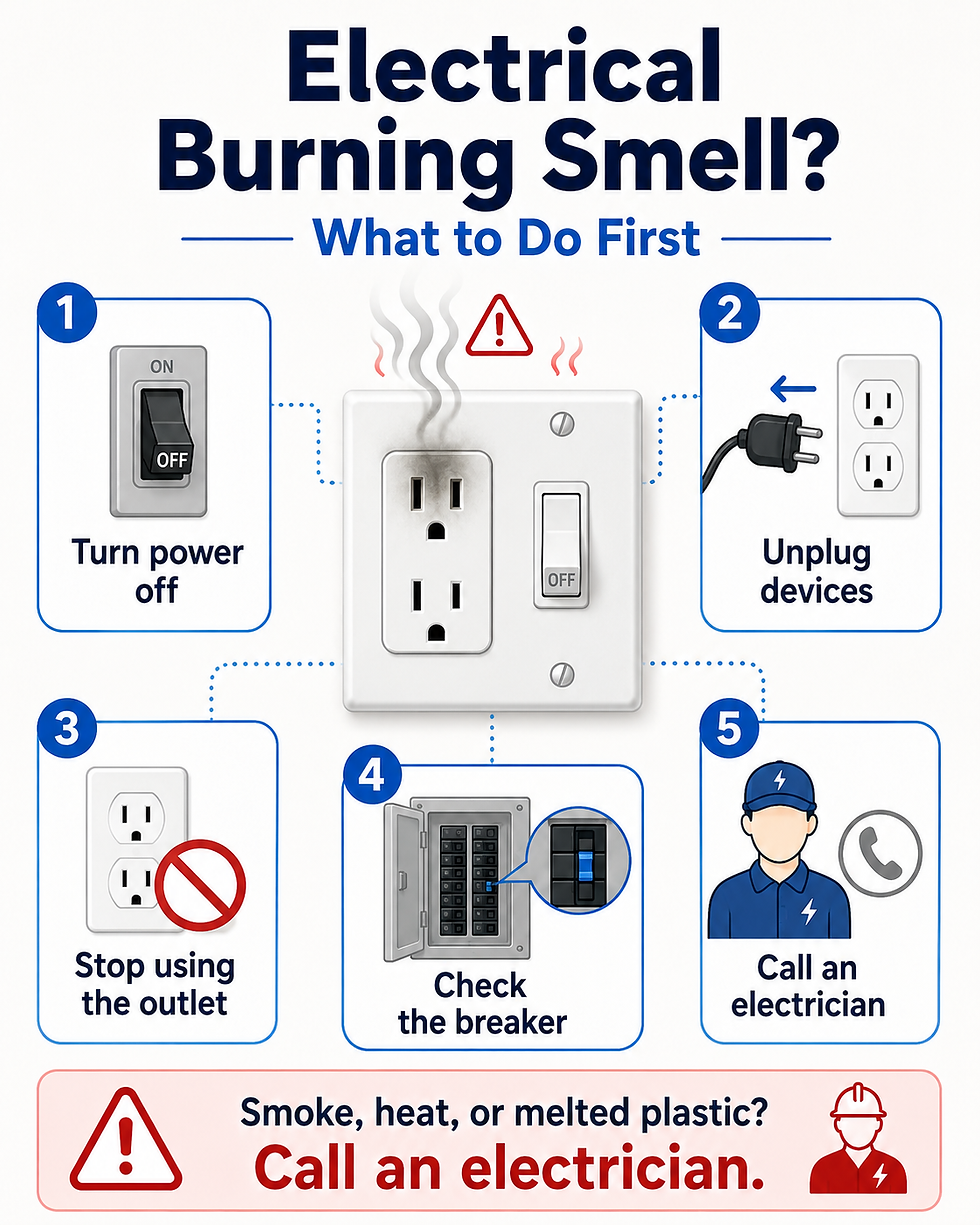
What an electrical burning smell can mean
A hot or burning-plastic odor near a switch or receptacle can accompany an electrical wiring problem. U.S. Consumer Product Safety Commission guidance identifies warm switch or receptacle plates, smoke, sparks or arcing, unusual odors such as burning plastic, flickering lights, and repeated breaker or fuse operation as warning signs that need expert attention.
The smell can also be associated with overheating from an overloaded circuit or damaged electrical equipment. The important point is that smell alone cannot tell you whether the problem is only a plug-in device or hidden inside a wall or electrical box, so the safe response is to stop use and narrow the location without disassembly.
Safe homeowner checks
1. Keep your distance and look only. Note whether the odor is strongest near one appliance, power strip, cord, receptacle, switch, wall area, or the electrical panel. Do not touch a cover plate that looks discolored or feels as though it may be hot.
2. Look for visible warning signs. Smoke, charring, melted plastic, active sparking, buzzing or sizzling, and repeated breaker trips all raise the urgency. If smoke, flames, or active arcing are present, leave the home and call emergency services.
3. Stop using the suspected device or area. Do not repeatedly switch it on, reset a breaker, or move plugs around simply to reproduce the odor. A smell that disappears after a device stops running does not prove the wiring or outlet is safe.
4. Check whether water is involved. Do not touch an appliance, outlet, cord, or other electrical equipment that is wet or has been exposed to water while it is connected to power. Electrical equipment affected by water should be evaluated by a professional or utility before reuse.
What not to do
Do not remove outlet or switch covers, open the electrical panel, tighten terminals, probe wiring, bypass a breaker or safety device, or attempt internal wiring repairs. Those steps can expose you to shock, arc, and fire hazards and are professional-only work in this situation.
When to call an electrician—and when to call 911
Call a qualified electrician promptly when the odor comes from a receptacle, switch, wall, panel, or an unknown location; when a cover is warm or discolored; when you hear buzzing or sizzling; when a breaker keeps tripping; or when the odor returns. These are warning signs that should not be treated as a normal nuisance.
Call 911 or your local emergency number and leave the building if there is visible fire, smoke that is increasing, active arcing or sparking, or another sign of an immediate fire. Once outside, stay outside.
The practical resolution path
No smoke or sparks and the source appears to be a plug-in product: stop using that product and have the product, cord, plug, and the receptacle evaluated as appropriate before reuse. Odor strongest at an outlet, switch, wall, panel, or no clear source: stop using the affected area and call a qualified electrician. Smoke, flame, active arcing, or rapidly worsening heat: evacuate and call emergency services. Gas or rotten-egg odor: leave immediately and contact the gas authority from outside without operating electronics on the way out.
Official sources
Electrical warning signs and qualified-electrician guidance — U.S. Consumer Product Safety Commission: https://www.cpsc.gov/Newsroom/News-Releases/1974/CPSC-Safety-Recommendations-For-Aluminum-Wiring-In-Homes
Electrical wiring fire-hazard warning signs — U.S. Consumer Product Safety Commission: https://www.cpsc.gov/Newsroom/News-Releases/1980/CPSC-Staff-Suggests-That-Homeowners-Check-Electrical-Wiring-For-Potential-Fire-Hazards
Gas-leak and wet-electrical-equipment safety — U.S. Consumer Product Safety Commission: https://www.cpsc.gov/Newsroom/News-Releases/2025/As-Winter-Weather-Impacts-Millions-CPSC-Issues-Safety-Tips-to-Help-Families-Prevent-Carbon-Monoxide-Poisoning-and-Fires
Emergency fire safety — U.S. Fire Administration: https://www.usfa.fema.gov/prevention/life-safety-hazards/burns-first-aid-911/index.html
Related troubleshooting guides
If the odor appears with repeated breaker trips, see Circuit Breaker Keeps Tripping? Safe Checks Before You Reset It Again.
If a dead receptacle is part of the same issue, see Outlet Not Working but Breaker Isn’t Tripped? 6 Safe Checks Before You Call an Electrician.
Browse more Electrical troubleshooting guides for related problems and safe checks.


Comments