

Refrigerator Door Not Sealing? Try the Paper Test First

A refrigerator door that will not seal is often being held open by a package, a drawer, a shelf, debris on the gasket, or a folded seal. Start with the door path, then clean the contact surfaces and use a simple paper-strip test around the perimeter. Do not heat, stretch, glue, remove, or adjust the gasket or hinges unless your exact owner’s manual identifies the step as normal user maintenance.
Stop first if: the cabinet rocks or tips, the door is sagging, a hinge or gasket is torn, the door repeatedly pops open, you smell burning, or water is near the cord or outlet. Keep the door shut as much as possible and arrange qualified service. If the refrigerator cannot stay at or below 40°F (4°C), move perishable food to safe cold storage and follow official food-safety guidance.
The quickest safe diagnosis
Door hits something: Move tall containers, overfilled door bins, protruding drawers, and shifted shelves out of the closing path.
Gasket is dirty: Wipe the gasket and cabinet contact surface with a soft cloth and mild soapy water unless your model manual specifies another method; dry both surfaces.
Paper pulls out easily at one spot: Look for a visible fold, debris, or a local gap. Do not reshape the seal with heat.
Paper is loose around much of the door: Check model-specific leveling and door-loading instructions, then schedule service if the gap remains.
Door sags, binds, or will not stay shut: Stop testing and book service rather than loosening hinges or removing the door.

1. Clear the entire closing path
Open the door and look from top to bottom. Check for a milk jug or food container extending past the shelf edge, an overfilled door bin, a crisper drawer that is not fully seated, or a shelf or basket that has shifted. Packaging left from a recent installation can also interfere.
Close the door slowly while watching the last inch of travel. If it closes normally after one item is moved, repeat the test several times. A door that needs a hard push, rebounds, or opens when the other door closes still needs more investigation.
Whirlpool’s official freezer guidance specifically calls out food packages, shelves, baskets, and packaging as closure problems. The same external check is useful for a refrigerator because it does not require disassembly.
2. Clean the gasket and the cabinet contact surface
Sticky residue, crumbs, and dried spills can prevent even contact. Wipe the flexible gasket and the flat frame it touches with a soft cloth. Use mild soapy water only when your owner’s manual allows it, then wipe with clean water and dry the surfaces.
Avoid bleach mixtures, petroleum products, abrasive pads, lubricants, adhesives, boiling water, hair dryers, and heat guns. Heat can deform the seal or damage the liner, and improvised glue can prevent correct replacement later.
After cleaning, close the door and wait a minute. Then check whether the gasket touches the frame evenly all the way around. On a French-door model, also confirm that the vertical hinged seal, or mullion, folds into its normal position. JennAir’s official guidance notes that an outward-folded mullion can prevent proper closure.
3. Use the paper-strip test
Cut or fold a clean sheet of paper into a strip. Place it between the gasket and cabinet, close the door normally, and pull the strip straight out. You should feel resistance. Repeat the test at the top, both sides, and bottom; do not assume one good spot represents the whole seal.
This test is a diagnostic clue, not a universal force specification. Whirlpool’s official door-seal procedure says to retest around the entire seal and notes that very little tension can indicate a poor seal. Compare locations on the same door rather than trying to measure an exact pulling force.
If the paper is loose only where the gasket is visibly folded or dirty, correct only that external condition and retest. If it is loose in several areas, or the door face looks uneven, stop before trying hinge or door adjustments.
4. Check the visible gasket without removing it
Look for a tear, split corner, hardened section, permanent wave, pulled-out edge, or a section that does not sit in its channel. Do not pull the gasket out to inspect behind it. A removable gasket may still require a model-specific part and installation method.
A brief fold after the door has been held open may relax when the door closes, but a persistent gap is different. On some French-door refrigerators, the center mullion is the issue rather than the perimeter gasket. JennAir’s built-in refrigerator guidance explains how that hinged seal should fold inward before closure.
5. Check level and door alignment only as your manual allows
A refrigerator that leans the wrong way, rocks, or sits on an uneven floor may not close as designed. However, leveling hardware and door alignment vary by model. Use the owner’s manual for the appliance’s exact model number before touching feet, rollers, or any adjustment screw.
Do not loosen hinges, remove a door, lift a built-in unit, defeat a door switch, or work around water and electrical connections. A sagging door, damaged hinge, cabinet distortion, or repeated misalignment is a service call, not a gasket-cleaning task.
What the results mean
Seal improves after moving food or reseating a drawer: The problem was likely a closing-path obstruction. Watch the door for the next day.
Seal improves after cleaning: Residue was preventing contact. Keep the gasket and frame clean and dry.
One small area fails the paper test: A local fold, tear, or alignment problem is likely. Use the model manual or service support.
Many areas fail: The door, cabinet level, hinge, or gasket may need model-specific diagnosis.
Condensation or frost returns: Warm, humid air is still entering. Minimize door opening and arrange service if the seal does not remain even.
Temperature is rising: Treat this as a food-safety issue as well as an appliance issue.
Protect food while the door problem is unresolved
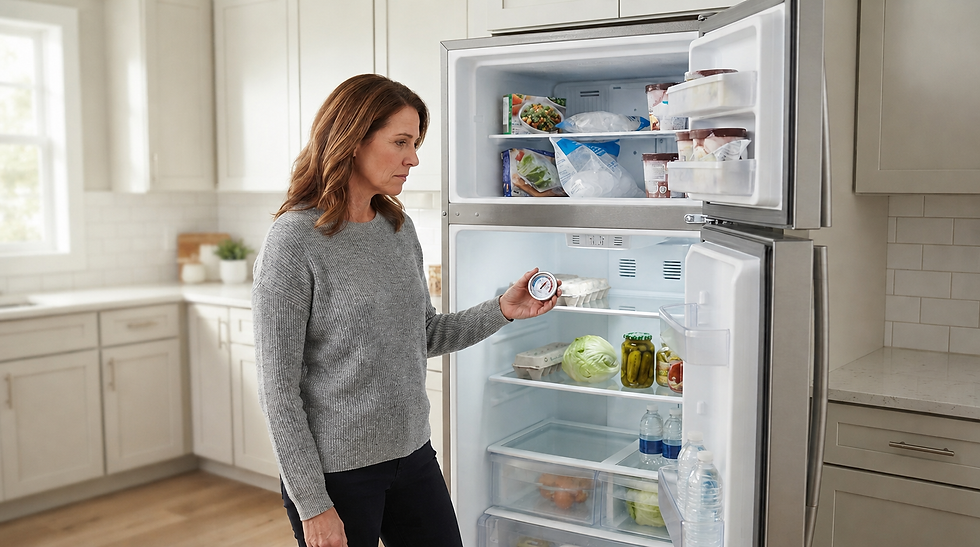
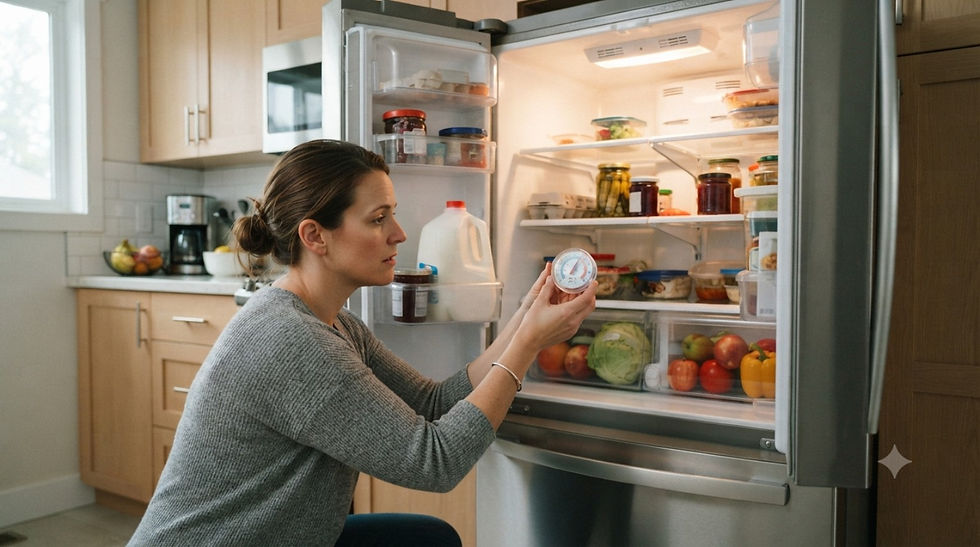
Use an appliance thermometer. The FDA recommends keeping the refrigerator at or below 40°F (4°C) and avoiding overpacking so cold air can circulate. If the door will not stay closed, transfer perishable food to another refrigerator or an insulated cooler with enough ice or cold packs.
Do not taste food to decide whether it is safe. FoodSafety.gov’s chart says many refrigerated perishables should be discarded after more than two hours at 40°F or above; the exact decision depends on the food. Use the chart rather than guessing.
If the refrigerator is also warm despite running, use our Refrigerator Running but Not Cooling guide. If the freezer remains cold while the refrigerator section warms, follow Refrigerator Warm but Freezer Cold. For a wider symptom map, start with Refrigerator Troubleshooting.
Stop and request qualified service when
The door is sagging, bent, cracked, or visibly out of alignment.
A hinge is loose, damaged, or binding, or the refrigerator cabinet rocks or tips.
The gasket is torn, hardened, pulled out, or will not contact the frame after cleaning.
The paper test fails in several places or the door repeatedly pops open.
Condensation, frost, or warm temperatures return after the external checks.
You smell burning, see sparking, hear abnormal grinding, or find water near the plug or outlet.
The next step would require removing panels, hinges, wiring, the door, or any refrigerant-system component.
What not to do
Do not warm the gasket with a hair dryer, heat gun, boiling water, or open flame.
Do not stretch, glue, tape, lubricate, or cut the gasket.
Do not loosen hinges or remove the door to chase alignment.
Do not bypass door switches or safety features.
Do not keep food in a refrigerator that cannot maintain a safe temperature.

Comments